


/file/publisher-c1a3f893382d2b2f8a9aa22a654d9c97/2024/03/e6114f156cfc298c96bddf46c23aaa50.jpg)

COMMENT | Houston, we have a 'reality' issue!
COMMENT | Malaysia is planning to build a rocket launch site - maybe even two. One in Sabah, another in Pahang.
By 2026, if all goes according to plan, we’ll be blasting payloads into orbit alongside the likes of Nasa, SpaceX, and the Indian Space Research Organisation.
You heard that right - we’re aiming for the stars, even as many Malaysians can’t afford to put avocados on the table.
Science, Technology and Innovation Minister Chang Lih Kang said a feasibility study is underway. He promises it will examine “multiple angles” before any concrete is poured.
But here’s an angle that might have been missed: reality!
COMMENT | Malaysia is planning to build a rocket launch site - maybe even two. One in Sabah, another in Pahang.
By 2026, if all goes according to plan, we’ll be blasting payloads into orbit alongside the likes of Nasa, SpaceX, and the Indian Space Research Organisation.
You heard that right - we’re aiming for the stars, even as many Malaysians can’t afford to put avocados on the table.
Science, Technology and Innovation Minister Chang Lih Kang said a feasibility study is underway. He promises it will examine “multiple angles” before any concrete is poured.
But here’s an angle that might have been missed: reality!
In a nation where the B40 can barely afford ikan kembung, let alone internet data for their school-going children, we’re talking about rockets.

In a place where potholes are considered landmarks, and schools in rural areas still have leaky roofs, we want to launch satellites.
Our fantasy on overdrive?
Are we building a launch pad for science, or launching ourselves into a fantasy?
Yes, satellite technology powers modern conveniences - GPS, smartphones, smartwatches, agriculture, and more. We’ve heard all the right reasons.
We also heard, once upon a time, about flying cars, a third national car, and something called Vision 2020.
But here we are, five years past 2020, and most Malaysians still dream of vision, in the form of affordable spectacles for primary school children.
I’m not anti-technology. Far from it. I love science. I admire vision. I even believe Malaysia should have a role in the regional space race - eventually.
But can we please stop trying to look futuristic when our foundations are still falling apart?
‘Mak, what is a rocket?’
Let me paint you a picture. Somewhere in Pahang, a kampung mother is boiling tapioca leaves for dinner.
Her child, bright-eyed and full of dreams, asks what a rocket is. She points to the sky and says, “It’s something rich countries send up there.”
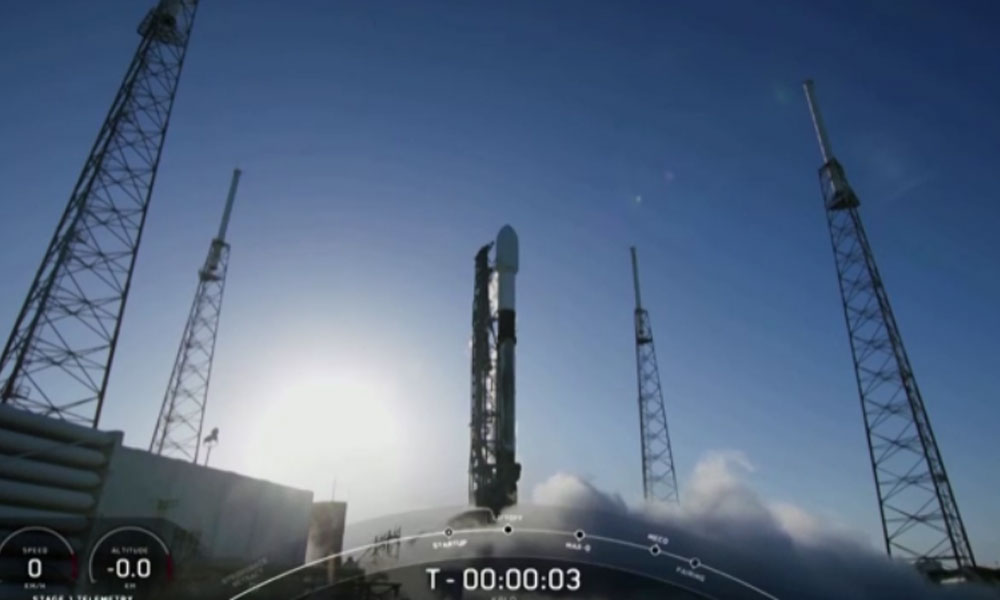
And now, Malaysia wants to join them, while that same family still walks a kilometre to fetch clean water.
And who could forget Veveonah Mosibin, the bright Sabahan teenager who had to climb a tree just to sit for her online university exams during the pandemic?
Her story shook the nation. For all our grand talk about digital transformation, she was literally risking her life to catch a bar of internet signal.
While urban Malaysia debated 5G, rural Malaysians were still stuck in the branches, quite literally.
That was 2020. Now, in 2025, we are launching rockets before we can launch reliable access to education?
It’s hard to be excited about outer space when families in Sabah still rely on gravity-fed pipes, or when Orang Asli communities are fighting for basic land rights.
Our schoolchildren are sitting in overcrowded classrooms. Our young graduates are underpaid and underemployed.
Our public hospitals are running out of beds, and civil servants are working two jobs just to make ends meet.
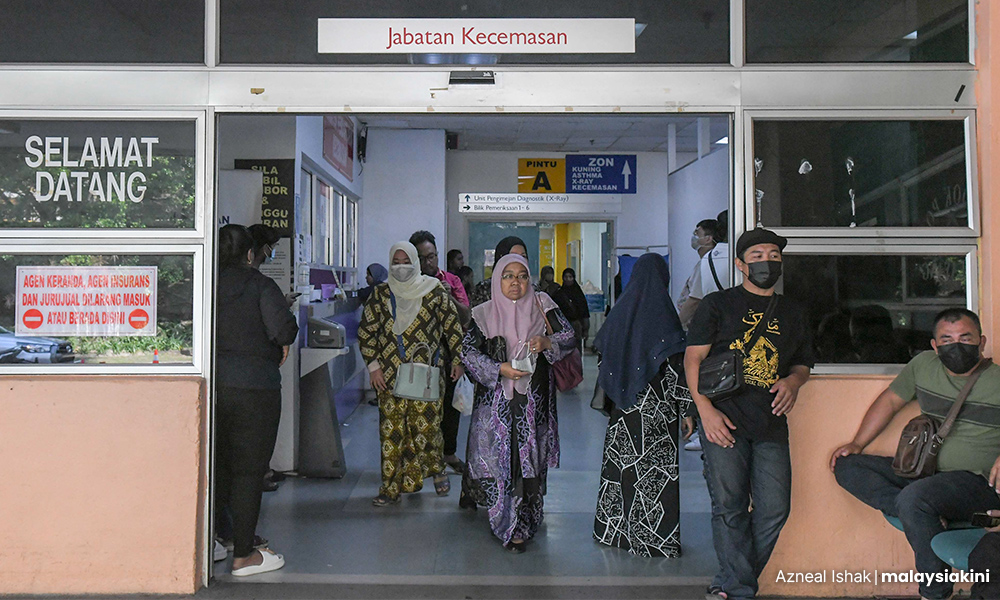
Try talking to them about low-Earth orbit - chances are, they’ll laugh, not out of amusement, but from the sheer absurdity of it in the face of their daily struggles.
Do we have a payload?
And what exactly are we launching? Do we even have a national payload programme to support such a facility? Or will we be renting out the launchpads to foreign players while Malaysians watch from the sidelines?
Let’s not forget - building a rocket site isn’t just about pouring concrete. It’s about safety protocols, aerospace law, environmental impact assessments, international liability, and a highly skilled workforce.
That’s a lot of rocket science for a country still struggling to manage recurring floods.
Remember the day the earth moved in Putra Heights - quite literally - unleashing a fiery blast that ripped through homes, lives, and any illusion that the ground beneath us was safe?
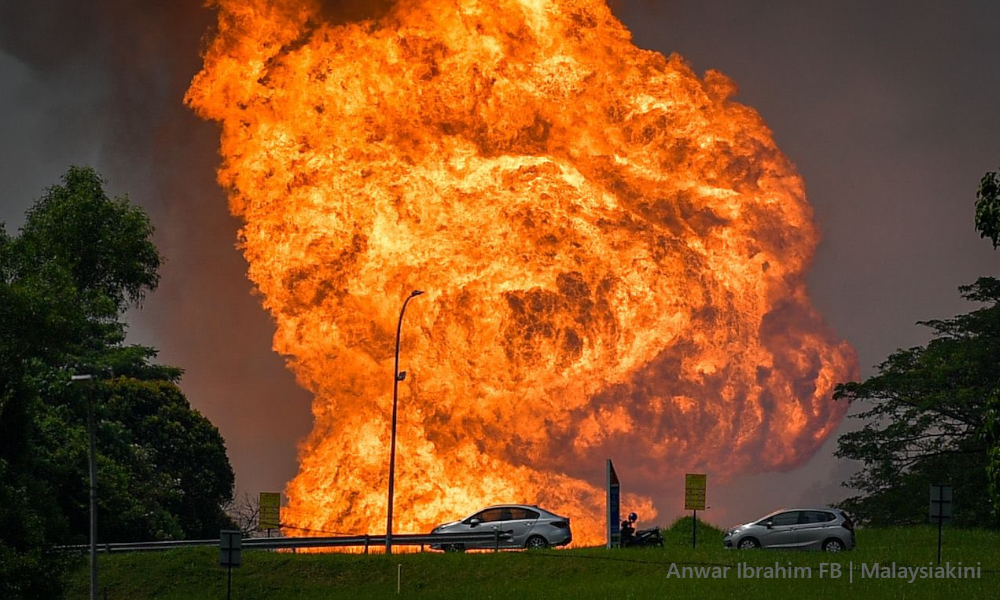
And when the dust settled, the final report essentially shrugged and said, “Well… the earth moved.” As if Mother Nature just sneezed and everyone else was excused.
Results, not ribbon-cutting
Chang said Malaysia is strategically located - outside earthquake zones, free from volcanoes, and blessed with electrical and electronics expertise.
All true, but we’re also located in a federation where public scrutiny is growing louder, and rightfully so. The people want results, not just ribbon-cuttings and CGI concepts.
Politically, the timing doesn’t help either. The rakyat have been told to tighten their belts while the government eyes the stratosphere.
Parents are budgeting down to the last ringgit at the pasar malam, and ministers are talking about boosters and launch windows.
Is this the Malaysia Madani model - rockets for the few, rice struggles for the many? But we have been there before, no?

And speaking of rockets - let’s remember, we’ve already been to space.
In 2007, Malaysia proudly sent Sheikh Muszaphar Shukor into orbit aboard a Russian Soyuz spacecraft.
He became our first astronaut, a national icon under the Angkasawan Programme. It was a proud moment.
But what happened after? Not much.
The programme fizzled out. There was no second wave, no sustained push in aerospace R&D, no national space curriculum rolled out in schools.
What could’ve been the launchpad for a thriving space sector became a one-time joyride - cheekily dubbed a “kereta sapu” ke angkasa, tied to a defence deal for Sukhoi fighter jets.
To his credit, Sheikh Muszaphar became a science ambassador, visiting classrooms and inspiring kids. But systemically, the mission lacked follow-through.
We had a symbolic achievement, but no strategy to scale it.
Now, nearly two decades later, we’re back with ambitious space talk - but still without a clear national plan or people-first vision.
Fix what’s broken on Earth
Meanwhile, down on Earth, something else happened recently.
On June 28, civil society leaders and student activists gathered in Kuala Lumpur - not to launch rockets, but to demand anti-corruption reforms.
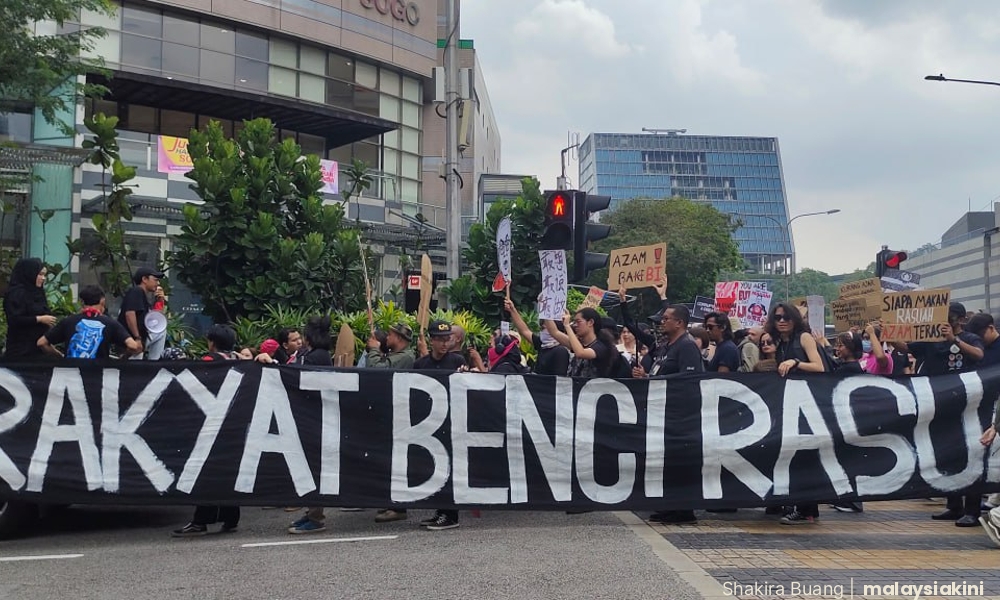
They marched peacefully, calling for the separation of powers between the attorney-general and the public prosecutor, and for the MACC to operate independently, free from political influence.
They weren’t aiming for the stars - they were demanding we fix what’s broken right here on Earth.
Because national pride doesn’t come from punching holes in the atmosphere. It comes from creating a just society - one where policies put food on the table, schools equip minds, and institutions stand on integrity.
You don’t need a telescope to see that. You just need political will.
When to aim for the stars
So here’s a plea to our leaders: by all means, dream big. Aspire for orbit, build launchpads, imagine the future. But please, don’t do it at the cost of the present.
First, ensure no Malaysian child goes to school hungry. Ensure every village has clean water. Ensure no flood victim is left without a roof.
Then, and only then, aim for the stars. Until then, let’s keep our feet firmly planted on Earth. Because if we can’t get things right down here, we have no business reaching for the heavens.
JOSEPH MASILAMANY believes national ambition must never come at the expense of everyday realities. This op-ed explores the disconnect between policy promises and the lived struggles of ordinary Malaysians, urging leaders to get their priorities right - on Earth - before orbiting in space.
The views expressed here are those of the author/contributor and do not necessarily represent the views of Malaysiakini.
/file/publisher-c1a3f893382d2b2f8a9aa22a654d9c97/2021/01/3ac09b8b55bc3e7666c06802325a88f5.jpg)
/file/publisher-c1a3f893382d2b2f8a9aa22a654d9c97/2024/01/af21f1c102a65db0700d60122dec2152.png)
/file/publisher-c1a3f893382d2b2f8a9aa22a654d9c97/2023/10/49ce5bdb48a878ffc9b2248ad2588ba6.jpg)
/file/publisher-c1a3f893382d2b2f8a9aa22a654d9c97/2025/04/bc554c1c8f1f0ec30f357b4f6ec65556.jpg)
/file/publisher-c1a3f893382d2b2f8a9aa22a654d9c97/2025/06/64ce91719d4091168ee465b67bd73da2.jpg)


Report this comment
Are you sure you want to delete this comment?
This action cannot be undone.