


/file/publisher-c1a3f893382d2b2f8a9aa22a654d9c97/2025/07/d0a0ae33f75e3c39620d131b467006de.jpg)

COMMENT | Who guards the guardians of Constitution?
COMMENT | The prime minister, the chief justice, and other constitutional appointees are all guardians of the Federal Constitution. If one falters, what happens?
When a prime minister faces a suit in court, yet it is he who must pick the senior judges who will head the judiciary, he is immediately placed in an irreconcilable position of conflict.
Three constitutional paths emerge from Malaysia’s deepest democratic paradox. What are they? There is no point in cursing the darkness - one must try to suggest a way forward. These are my suggestions.
COMMENT | The prime minister, the chief justice, and other constitutional appointees are all guardians of the Federal Constitution. If one falters, what happens?
When a prime minister faces a suit in court, yet it is he who must pick the senior judges who will head the judiciary, he is immediately placed in an irreconcilable position of conflict.
Three constitutional paths emerge from Malaysia’s deepest democratic paradox. What are they? There is no point in cursing the darkness - one must try to suggest a way forward. These are my suggestions.
I. The conflicted PM
Picture this:
A prime minister is sued as a defendant in a civil suit: serious allegations are made against his person.
Yet, he still holds the key to deciding which senior judges ascend to the highest ranks in the judiciary: the latter will decide how and before whom the suit is to be conducted. And that choice he has not made.
If he does nothing – as he has done so far (“omission”), he is in conflict of interest. If he acts, (“commission”) he is also in conflict.
So, what next? What protocols should the institutions created for this purpose, follow? What if there is no such protocol? What then?
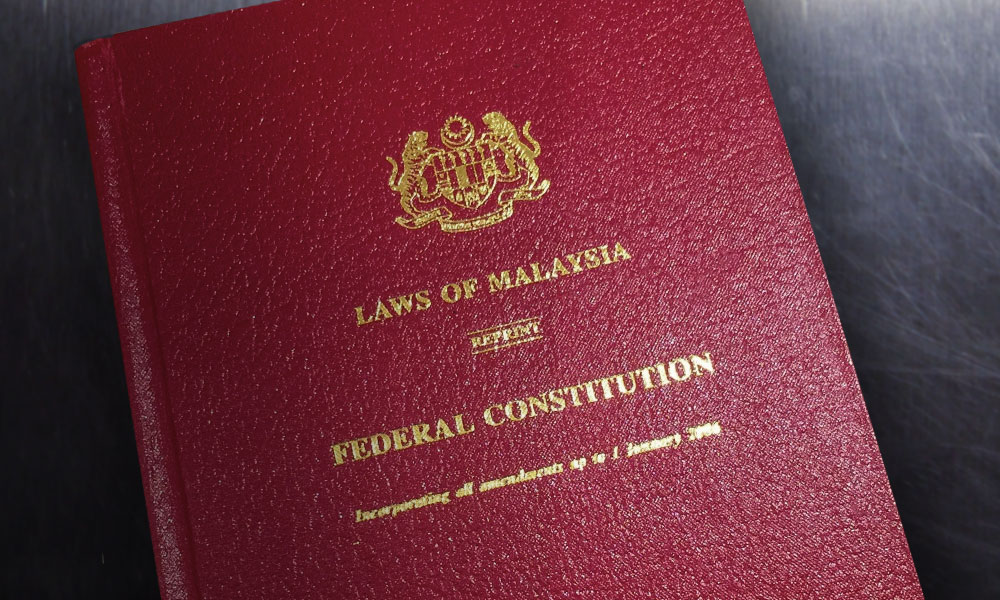
Article 122B of the Federal Constitution gives the prime minister enormous authority over judicial appointments: Article 122B(1) provides that judges, “shall be appointed by the Yang di-Pertuan Agong, acting on the advice of the prime minister, after consulting the Conference of Rulers”.
But the Constitution says nothing of a situation when the prime minister’s constitutional responsibility - and power - clash with theirs self-preservation.
The ripple threatens the very foundations of justice.
We have three solutions in hand. As we go down the list, each one gets better than the previous.
II. The stopgap road - leaders step aside
A. The most honourable path is to step back. Throughout history, prime ministers have resigned when conflicts of interest became unbearable. Boris Johnson stepped down in July 2022 after losing party confidence, saying it was “the breaks”.
Theresa May bowed out in 2019 once she could not deliver Brexit. David Cameron left after the referendum result went against him.
Malaysia has its own example: Dr Mahathir Mohamad resigned in 2020, allowing an interim government to form.
A smart leader will always step aside.
B. Temporary recusal can transform conflict into clarity. Under the Westminster convention, if the lord chancellor is conflicted, another minister advises the monarch on judges.
Canada, Australia, and New Zealand follow the same practice: the deputy prime minister or a senior minister steps in when the prime minister is unable to act without bias.
C. How would this work in Malaysia? Collective cabinet responsibility provides the footing.
The cabinet, not the prime minister alone, can advise the Yang di-Pertuan Agong, while the prime minister abstains. Such a move preserves public confidence and the appearance of justice.
The doctrine of collective responsibility, enshrined in Westminster practice, allows the cabinet to function as a collective executive when individual ministers face conflicts.
D. Quick checklist for a stopgap. The prime minister recuses himself expressly. The deputy or senior minister assumes the single task of advising on appointments.
Cabinet minutes record the abstentions to ensure transparency. Yang di-Pertuan Agong is informed formally of the temporary arrangement.
These simple steps buy time and safeguard integrity while deeper cures are prepared.
III. The constitutional road - Parliament as guardian
Band-aids cannot cure deep wounds. Structural reform is the long-term remedy.
A. Amend Article 122B, Federal Constitution
Redistribute power so that no single hand controls the gavel.
Article 122B(1) reads: “The chief justice of the Federal Court, the president of the Court of Appeal and the chief judges of the High Courts and (subject to Article 122C) the other judges of the Federal Court, of the Court of Appeal and of the High Courts shall be appointed by the Yang di-Pertuan Agong, acting on the advice of the prime minister, after consulting the Conference of Rulers.”
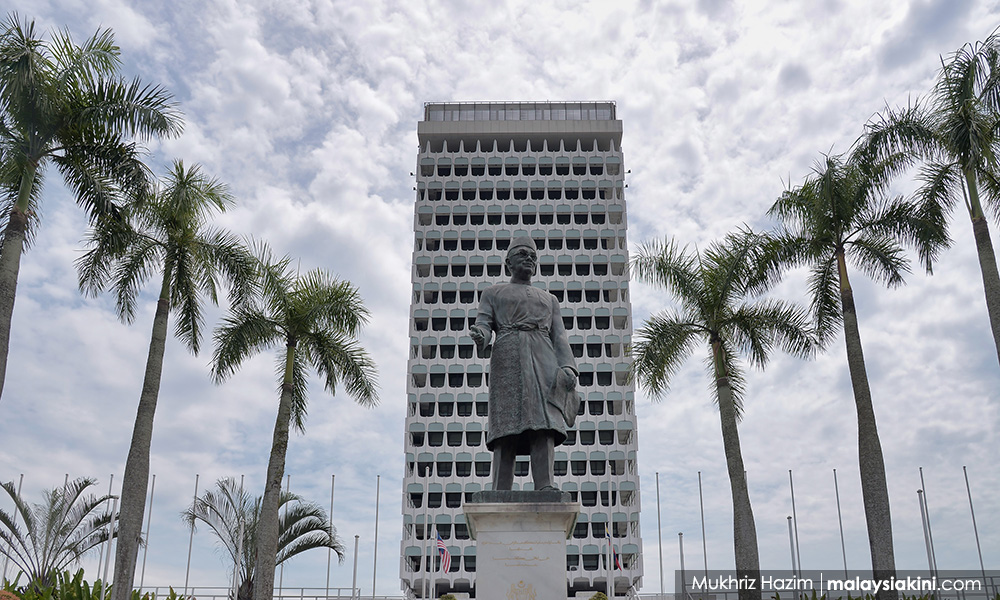
A redrafted Article 122B should read: “(1) The chief justice of the Federal Court, the president of the Court of Appeal and the chief judges of the High Courts and (subject to Article 122C) the other judges of the Federal Court, of the Court of Appeal and of the High Courts shall be appointed by the Yang di-Pertuan Agong, acting on the advice of the prime minister, after consulting the Conference of Rulers.
(1A) Before tendering his advice under clause (1), the prime minister shall:
(a) receive recommendations from the Judicial Appointments Commission (JAC) established under federal law;
(b) submit such recommendations to a Parliamentary Select Committee on judicial appointments;
(c) table the committee’s report in Parliament;
(d) if disagreeing with the committee’s recommendations, provide written reasons to Parliament and the Yang di-Pertuan Agong.
(1B) The prime minister’s role under this Article is limited to transmitting the Parliamentary Select Committee’s decision with written reasons if he disagrees.”
This amendment requires the JAC to send names to a Parliamentary Select Committee.
It obliges the committee to table the list in Parliament, before it reaches the king.
It limits the prime minister’s role to transmitting the committee’s decision, with written reasons if he disagrees.
IV. Reforge the JAC Act 2009
A. PM’s stranglehold
The JAC Act 2009 was a direct result of the VK Lingam issue (2008). It was Anwar Ibrahim who released the damning video.
Today, the prime minister appoints five of nine JAC members under section 5(1)(e) and (f), controls funding, and may reject any shortlist under Section 27.
Section 27 provides that: “The prime minister may, after receiving the report under section 26, request two more names to be selected and recommended for his consideration”.
Reform should amend these provisions:
B. Proposed amendment to Section 5 should include legal professions
“(1) The commission shall consist of 10 members as follows:
(a) the chief Justice of the Federal Court, who shall be the chairperson;
(b) the president of the Court of Appeal;
(c) the chief judge of the High Court in Malaya;
(d) the chief judge of the High Court in Sabah and Sarawak;
(e) one judge of the Federal Court appointed by the Conference of Rulers;
(f) a representative each from the legal professions, namely from the Malaysian Bar, Advocates Association of Sarawak and Sabah Law Society, respectively;
(g) Two eminent persons appointed by Parliament through a two-thirds majority, both of whom shall be lay members representing civil society, well recognised for their contribution to the nation.”
That balance of power, 50:50, should be enough to create a check and balance.
There are other amendments that need to be made to JAC Act 2009, and they are to be found here, here, and here, but those require a different treatment - so we leave them aside for a bit.
For the moment, the proposed amendments to the JAC Act 2009 will clear the deadlock.
C. Proposed amendment to Section 27:
“The prime minister may reject the commission’s recommendations only with the concurrence of a two-thirds majority of Parliament, stating reasons in writing.”
D. Proposed amendment to Section 19 (new):
“The funding of the commission shall be a charge upon the Consolidated Fund and shall be determined by the Dewan Rakyat.”
E. Effect of proposals
Let Parliament, not the prime minister, appoint lay members. Make JAC recommendations binding unless rejected by a two-thirds parliamentary majority. Place JAC funding under the charge of the Dewan Rakyat.
The Latimer House and Cape Town Principles endorse such transparent, independent appointment bodies with minimal executive reach.
The Cape Town Principles specifically state that “the appointment process should be designed to guarantee the independence of the judiciary”.
V. Parliamentary oversight in practice
A standing Parliamentary Committee on the Judiciary would hold annual hearings, summon JAC members, and review criteria openly.
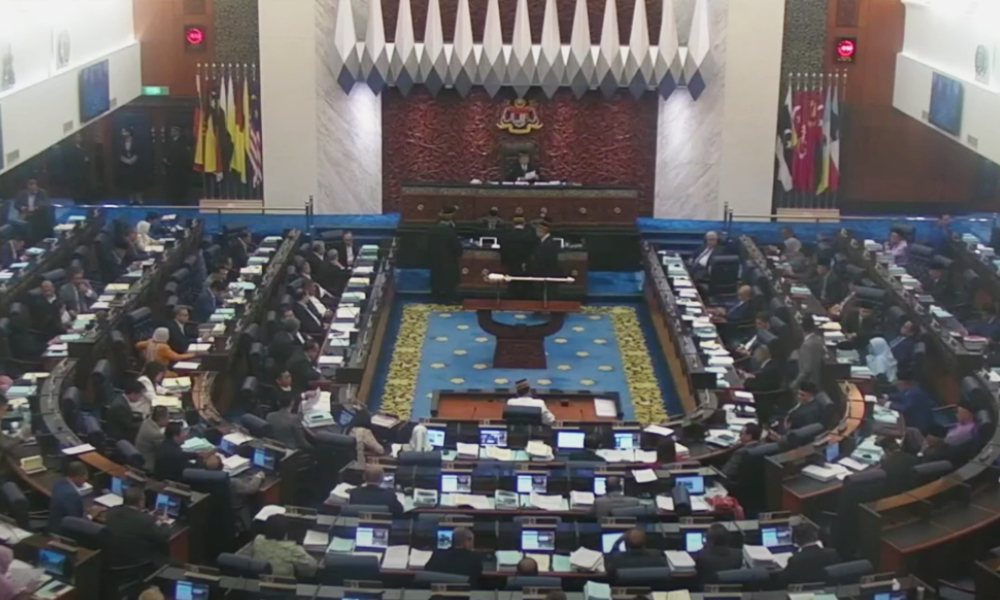
The Standing Orders of the Dewan Rakyat should be amended to include:
Proposed Standing Order 85A:
“(1) There shall be a Select Committee on Judicial Appointments consisting of not less than 10 members appointed by the house.
(2) The committee shall:
(a) examine recommendations from the JAC;
(b) conduct annual reviews of judicial appointment criteria;
(c) summon JAC members for hearings;
(d) report to Parliament on the transparency and effectiveness of the appointment process.
(3) The committee shall not vet individual candidates but may examine patterns of appointments and systemic issues.”
Such a committee would never “vet” individual candidates, thus avoiding politicisation, but it would expose any pattern of bias.
VI. The historical road - lessons from crises
History shows that constitutions under stress can emerge stronger.
Malaysia 1988: Executive pressure led to the removal of then lord president Salleh Abas.
The episode still casts a long shadow, reminding us of the cost of unchecked power.
The crisis exposed fundamental weaknesses in the balance of power between the executive and the judiciary.
Australia 1975: Governor-general John Kerr dismissed then-prime minister Gough Whitlam amid a supply deadlock, proving that leaders unable to function effectively must resign or face removal.
The Kerr dismissal established the principle that constitutional officers must act when democratic processes fail.
Canada 1926 (King-Byng Affair): When then-prime minister Mackenzie King lost confidence but refused to resign, the governor-general denied dissolution, clarifying that the head of government must command majority confidence.
This crisis established clearer conventions about when constitutional heads of state must act independently.
New Zealand 1984: An outgoing prime minister’s refusal to follow incoming government instructions sparked reforms that now govern caretaker conventions.
The crisis led to the codification of caretaker conventions and clearer rules about transitional governments.
Each crisis ended with adjustments that curbed the very power that had caused trouble. Malaysia can follow suit by codifying recusal rules and parliamentary oversight.
The pattern across Westminster systems shows that constitutional crises, while painful, often produce stronger safeguards.
VII. The hidden formula - democratic vigilance
Immediate recusal keeps the system breathing; constitutional surgery cures the disease; historical memory warns us never to forget.
Yet none of these roads matter unless citizens stay alert.
Civil society and the Malaysian Bar have pushed tirelessly for reform, proving that public engagement is the ultimate guardian of justice.
The Group of 25 Eminent Malays consistently advocates for constitutional reforms that strengthen judicial independence.
Professional bodies play a crucial role in this vigilance. The Malaysian Bar’s persistent advocacy demonstrates how legal professionals can safeguard institutional integrity.

The Bar’s submissions to parliamentary committees and public statements create accountability pressure that politicians cannot ignore.
Think of justice as a three-legged stool - urgent action, structural reform, and historical wisdom. Remove any leg and it topples. Keep all three and the judiciary stands firm, whatever tempests blow.
The Commonwealth experience shows that robust democratic institutions emerge from the crucible of crisis, but only when citizens demand accountability and leaders have the courage to reform.
VIII. The ultimate test of any constitutional system
The ultimate test of any constitutional system is not whether it prevents all conflicts, but whether it provides mechanisms to resolve them without destroying the underlying principles of justice.
Malaysia’s path forward requires not just legal reform, but a renewed commitment to the democratic values that make such reforms meaningful.
GK GANESAN is a lawyer and an international commercial arbitrator.
The author thanks UK Menon, G Naidu, KN Geetha, TP Vaani, JN Lheela and Lydia Jaynthi.
Malaysiakini has obtained permission to republish this article, which first appeared here.
The views expressed here are those of the author/contributor and do not necessarily represent the views of Malaysiakini.
/file/publisher-c1a3f893382d2b2f8a9aa22a654d9c97/2025/07/b916a13eb1aacd3c4faf9947ab378de3.jpg)
/file/publisher-c1a3f893382d2b2f8a9aa22a654d9c97/2022/01/b0a598a3b470cf5030913c4d08f8adb7.jpg)
/file/1169/adfa3c09494ead48b4b6f5caf9a3ad4b.jpeg)
/file/publisher-c1a3f893382d2b2f8a9aa22a654d9c97/2025/07/3a6b3e4eb148de9d227e1d83e8eb5b0b.jpg)


Are you sure you want to delete this comment?
This action cannot be undone.