


/file/publisher-c1a3f893382d2b2f8a9aa22a654d9c97/2020/01/9b2f2f8f086f60d35210d15c602cce6b.jpg)

COMMENT | Ageing society: M'sia must act now
In 2025, more than 21 percent of South Korea’s population was aged 65 and above, placing the country firmly in the United Nations’ “super-aged society” category.
The demographic shift has intensified pressures on healthcare services, social support systems and family caregivers. Malaysia may not be there yet, but it is moving in the same direction.
Having crossed the threshold of an ageing society in 2020, Malaysia is projected to become an aged society by 2044 and a super-aged society by 2056, as pointed out by the World Bank.
The real question is not whether Malaysia is ageing, but whether its institutions, workforce and laws are evolving quickly enough to meet the challenge.
An ageing population demands far more than...
COMMENT | South Korea’s rapid ageing offers a stark and grim warning tale for Malaysia: a society can become old long before it becomes prepared.
In 2025, more than 21 percent of South Korea’s population was aged 65 and above, placing the country firmly in the United Nations’ “super-aged society” category.
The demographic shift has intensified pressures on healthcare services, social support systems and family caregivers. Malaysia may not be there yet, but it is moving in the same direction.
Having crossed the threshold of an ageing society in 2020, Malaysia is projected to become an aged society by 2044 and a super-aged society by 2056, as pointed out by the World Bank.
The real question is not whether Malaysia is ageing, but whether its institutions, workforce and laws are evolving quickly enough to meet the challenge.
An ageing population demands far more than hospitals and nursing homes. It requires a gamut of a robust ecosystem: from doctors, nurses, social workers, caregivers, community support services and legal protections.
Yet Malaysia is already experiencing worrying shortages in some of these critical sectors.
The healthcare system continues to grapple with the fallout from the contract doctor policy introduced in 2016 - as pointed out by the Malaysian Medical Association, which has described the system as a failed policy.

Meanwhile, other reports indicate that some doctors are declining permanent appointments due to concerns over career progression, workplace conditions and uncertainty.
If retaining medical professionals is already difficult today, the situation could become far more severe when the elderly population doubles over the next two decades.
A ‘tsunami’ coming
If one looks through several lenses, the magnitude and scale of the challenge is quite a tsunami.
The World Bank estimates that the number of Malaysians aged 65 and above will rise to approximately 5.6 million by 2044, with annual increases of between 130,000 and 210,000 older persons.
In tandem, the number of individuals requiring assistance with daily living activities would be expected to increase significantly, creating an overarching demand for healthcare workers, social workers and long-term care services.
Equally concerning would be the shortage of qualified social workers. As ageing brings greater risks of isolation, neglect, dementia, financial exploitation and mental health challenges, social workers will become increasingly indispensable.
Stakeholders have rightly argued that mechanisms should be established to recognise experienced practitioners who have spent years serving communities despite lacking formal academic qualifications.

While professional standards remain important, policies should not disregard practical expertise accumulated through decades of service.
Malaysia needs both professionalisation and inclusivity if it hopes to build a workforce capable of supporting a rapidly ageing society.
New law a good step
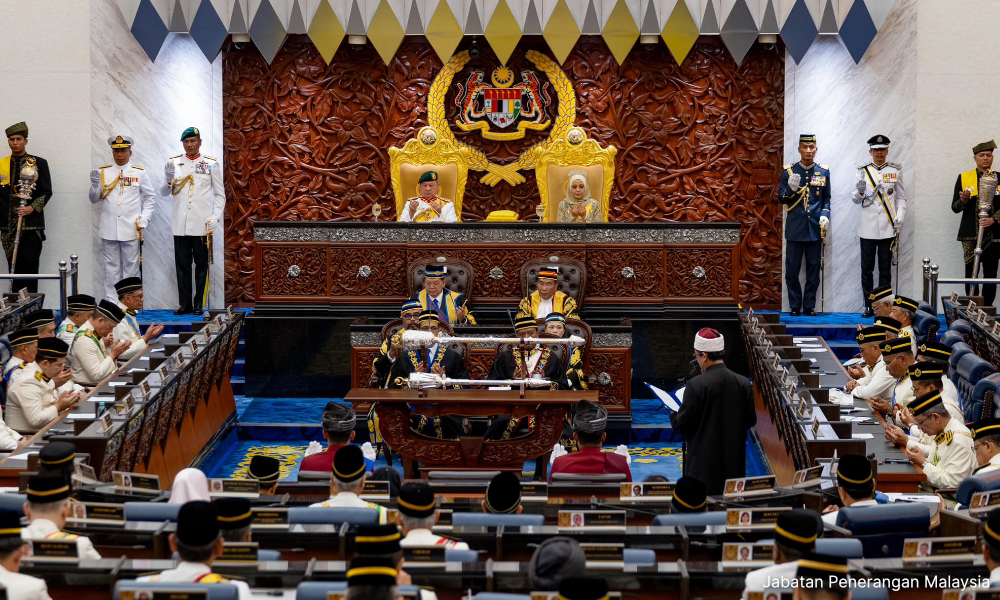
To meet this objective, as pointed out by the Malaysian Association of Social Workers, the Social Work Profession Bill 2026, which was passed by the Dewan Rakyat on July 14, is a crucial step towards recognising social work as a profession and establishing clear standards and accountability.
In line with this bill, the setting up of a Malaysian Social Work Profession Council and the call for minimum requirements of a degree or equivalent qualification for social workers is indeed commendable – but it should take into account all stakeholders' views, including the Malaysian Coalition on Ageing (MCOA).
Legislation must also evolve alongside demographic realities. The long-discussed Senior Citizens Bill should be enacted as a comprehensive framework that protects older persons’ rights, dignity and wellbeing.
However, legislation alone cannot place the burden solely on families. Discussions surrounding a potential Parental Care Act reveal the complexity of balancing filial responsibility with modern social realities.
Many adult children face financial pressures, rising living costs, housing constraints and caregiving burdens of their own.
Any Parental Care Act must therefore be accompanied by practical support measures, including caregiver allowances, tax incentives, community care centres, respite services and affordable long-term care options.
In short: families need empathetic support, not solely legal obligations.
Meeting international standards
Malaysia’s response to ageing should also align with the United Nations Sustainable Development Goals - as ageing is not simply a social issue; it is a sustainability issue that affects economic productivity, social cohesion and national resilience.
The coming wave of ageing also presents an opportunity to harness technology responsibly.
Comprehensive artificial intelligence (AI) policies should be incorporated into both the Senior Citizens Bill and any future Parental Care Act - similar to South Korea.
Among a plethora of AI capabilities, it includes telemedicine, fall detection, medication management, predictive healthcare, social companionship and care coordination.
Yet safeguards are equally essential to prevent privacy violations, algorithmic bias, financial scams and digital exclusion among older adults.

Responsible governance must ensure that technology empowers rather than marginalises seniors.
Malaysia still has time to prepare but demographics are relentless. The lesson from South Korea is clear: demographic change moves faster than policy reform.
The World Bank has warned that Malaysia’s transition from an ageing society to an aged society will take just 24 years - roughly the same pace experienced by Japan and far faster than countries such as France and the US.
Unless Malaysia strengthens healthcare capacity, expands and professionalises social services, supports family caregivers, embeds ethical AI governance and enacts forward-looking legislation, the nation risks ageing before it is truly prepared.
Growing old is obviously inevitable, but growing old gracefully and actively, with dignity, requires deliberate choices today.
R THANASEELEN is an academic at the Faculty of Creative Industries at Universiti Tunku Abdul Rahman (Sg Long campus), and a member of the Third Age Media Association, a non-profit organisation dedicated to providing information and advocacy for seniors.
The views expressed here are those of the author/contributor and do not necessarily represent the views of Malaysiakini.
/file/publisher-c1a3f893382d2b2f8a9aa22a654d9c97/2021/04/884dab2472e1fd9da8fe35b51a669392.jpg)
/file/publisher-c1a3f893382d2b2f8a9aa22a654d9c97/2020/11/3604c1dc1a038fa73bf877e84349728a.jpg)
/file/publisher-c1a3f893382d2b2f8a9aa22a654d9c97/2025/07/fa051093d3d35c3164bb2a8bf4e8ff67.jpg)


Report this comment
Are you sure you want to delete this comment?
This action cannot be undone.