




Disaster looms for Malaysia's 'Titanic'
A month after the general election, the Umno leadership is still groping for answers as to what exactly has hit them so hard.
While former party president Dr Mahathir Mohamad and his supporters are baying for blood, one-time vice-president Tengku Razaleigh Hamzah (Ku Li) is sounding the alarm bell over the potential loss of political power among Malays.
Other Umno leaders are talking vaguely about “reforming”, “reinventing” or “strengthening” the party, without going into specifics.
A month after the general election, the Umno leadership is still groping for answers as to what exactly has hit them so hard.
While former party president Dr Mahathir Mohamad and his supporters are baying for blood, one-time vice-president Tengku Razaleigh Hamzah (Ku Li) is sounding the alarm bell over the potential loss of political power among Malays.
Other Umno leaders are talking vaguely about “reforming”, “reinventing” or “strengthening” the party, without going into specifics.
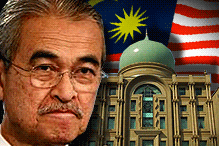 Perhaps the nearest to any policy response came from Umno president and premier Abdullah Ahmad Badawi (Pak Lah) when he delivered his first major post-election speech on March 25. He conceded that the failure to fulfill reform pledges was a major factor in the electoral shock and vowed to re-energise reform against corruption, crime rate and judicial rot, among other issues.
However, his resolve was instantly thrown into doubt when, in the same breath, he said his “biggest mistake” was to have failed to wage a successful cyber-war, just as the opposition did.
This reminds us of the doubtful admission of guilt by former MCA vice-president and health minister Dr Chua Soi Lek, who resigned in disgrace after a secret video recording of his sex exploits was circulated. He said his biggest mistake had been to stupidly use the same hotel room each time he had a romp with his “personal friend”.
BN/Umno was sunk by its atrocious mismanagement of the country, not by the influence of the Internet - the latter is only the messenger, not the message itself.
If Umno’s so-called reforms or rejuvenation mean only a revamp of an antiquated racist formula without genuine rehabilitation of impaired democratic institutions - as appears to be the case, judging from the tenor of the rebellion that is brewing - then the ‘Titanic’ (read: Umno) is on course to meet that fateful iceberg.
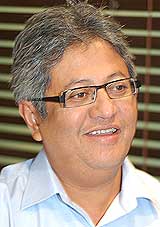 Indeed, the first indication of the shakiness of Pak Lah’s reform pledges came when his so-called “reform cabinet” rejected
de facto
law minister Zaid Ibrahim’s attempt to initiate judicial reform.
Indeed, the first indication of the shakiness of Pak Lah’s reform pledges came when his so-called “reform cabinet” rejected
de facto
law minister Zaid Ibrahim’s attempt to initiate judicial reform.
Zaid (photo) had proposed an apology to former Lord President Salleh Abas and other Supreme Court judges who had been unjustly sacked in 1988, leading to the collapse of integrity in the judicial system.
No less than the second- and third-highest Umno leaders - deputy president Najib Abdul Razak and vice-president Muhyiddin Yassin - publicly slapped down the initiative.
Ku Li's racial logic
While there is no visible movement on the reform front, there seems to be much action in camps that champion race-based causes - presumably the ‘revival’ of Malay power through Umno, with an apparent convergence of purpose between former party stalwarts Dr Mahathir and Ku Li.
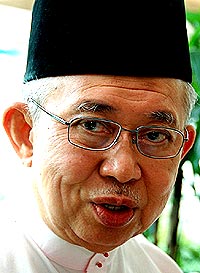 Ku Li is agitating for a EGM and has declared his readiness to challenge the presidency in the party polls in December. It is pertinent to look into his line of thinking when he invokes the fear of “losing political control to non-Malays”.
He theorises that Penang, Perak and Selangor are already under non-Malay control, by numerically adding the non-Malays in PKR to those in DAP in the respective Pakatan Rakyat (PR) state governments. This narrow interpretation of racial power is both illogical and unhelpful in forging racial integration.
First, a party member’s first allegiance is to the party (where members share the same ideology), not to race. It is the policies of the party that determine the treatment accorded to various races, not the racial identities of the officers executing the policies - any member that strays from policy cannot survive within the party.
Second, these state governments are ruled by coalitions of PKR, DAP and PAS, with none having won enough seats to govern alone. So, policy decisions are, by necessity, arrived at by consensus under a collective leadership.
 In fact, Malays should be least worried of being marginalised under the PR governments, for is it conceivable that PKR and PAS would allow Malays to be so treated?
Ku Li has equated Malay power with Umno. So in his logic, Malays lose political power when Umno loses control of the government. Why should it be so? Aren’t both PKR and PAS led and controlled by Malays? Aren’t Anwar Ibrahim and Abdul Hadi Awang not Malays?
Malays should logically be more worried about whether the elected government is good or bad, rather than whether the government is or is not Umno-controlled.
Discarding Umnoputraism
Perhaps the issue that invokes greatest concern among Malays is the fate of the New Economic Policy (NEP), which has come to be identified with Malay privileges.
Admittedly, the NEP had considerably contributed towards uplifting the status of Malays in the economic and educational fields, resulting in the creation of a respectable and sizable Malay middle class.
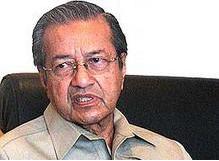 However, as Umno increased its hegemonic power under Mahathir, the NEP degenerated into a gigantic camouflage for massive corruption and cronyism that sustain the political patronage system. In turn, this sustains the Umno hierarchy with the president-cum-premier at the apex - a phenomenon we call Umnoputraism and which has become the plague of economic competitiveness and rule of law.
When PR proposes to do away with NEP, it actually means to discard Umnoputraism. In its place, a genuine affirmative policy known as the Malaysian Economic Agenda will be implemented to uplift the economic and social status of those who are in such need, irrespective of race or creed, in an ambience of transparent and frugal rule that will surely revive investors’ confidence in this country.
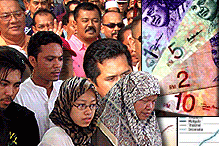 Malay confidence in PR should further be reassured by the avowed intent of the three component parties through their respective manifestos to uphold the constitution, in which the special position of Malays and natives of Sabah and Sarawak is safeguarded under Article 153. There is no reason to believe that this status quo will change any time in the future.
The greatest urgency for PR is to quickly bring into shape the style and substance of its liberal and pro- rakyat governance, as a contrast to the BN’s self-enriching elitist rule. The perception of the goodness of PR’s rule must be quickly and firmly established so that it can face off with confidence any sudden political challenge that may erupt in this time of transition and fluidity of political power.
In this connection, PR must follow through with determination its top-priority agenda of public declaration of assets of elected leaders, reinstatement of open and transparent tenders and legislative initiatives in judicial and electoral reforms and restoration of civil rights.
The people have spoken loudly in the election of March 8. Has BN understood the message and does it possess the political will to make the necessary changes?
And Is PR up to the challenge of fulfilling the people’s wishes? The people are keenly watching for answers.
KIM QUEK is a retired accountant and a PKR member.


