




A world of suspense
The news is so full of cliff-hangers and unresolved twists-in-plots right now that I can’t concentrate on the here-and-now for wishing I could fast-forward to see what happens next.
Will the unfolding economic situation, for example, the sub-prime mortgage crisis or whatever you choose to call it, trigger a global recession or even a replay of the Great Depression? How pressing a concern this is depends on your perspective, I guess.
Citizens of Zimbabwe, on the one hand, are surely past caring, as Mugabe and his Zanu-PF have already rendered their situation about as depressing as it gets, with inflation at over 100,000 percent and unemployment of around 80 percent.
The news is so full of cliff-hangers and unresolved twists-in-plots right now that I can’t concentrate on the here-and-now for wishing I could fast-forward to see what happens next.
Will the unfolding economic situation, for example, the sub-prime mortgage crisis or whatever you choose to call it, trigger a global recession or even a replay of the Great Depression? How pressing a concern this is depends on your perspective, I guess.
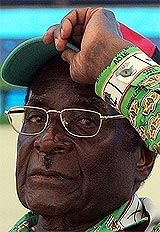 Citizens of Zimbabwe, on the one hand, are surely past caring, as Mugabe and his Zanu-PF have already rendered their situation about as depressing as it gets, with inflation at over 100,000 percent and unemployment of around 80 percent.
Malaysia, if you’re trusting or naïve enough to take the Barisan Nasional (BN) government’s figures at face value, enjoys what could well be the world’s lowest inflation rate of two percent.
But lots of punters on Bursa Malaysia and most other stock markets have experienced considerable deflation in the value of their investments, as have shareholders in financial institutions including Bear Stearns in the US, Northern Rock in the UK, Sachen Landesbank in Germany, UBS in Switzerland and failed brokers Opes Prime and Tricom in Australia.
Meanwhile many of the rich, like the hedge funds and other financial manipulators, get richer, and the poor, like you and me, get poorer.
Poverty is relative, of course, and I’m fortunate that my closest relative, my wife, has a steady income from relatively secure government job. Otherwise, as my personal economy has been in deep recession ever since I fled the gilded cage of advertising for garret-style subsistence as a freelance writer, I’d likely be starving.
Millions if not billions of people around the world are going hungry for reasons ranging from overpopulation and primitive agricultural practices to the incompetence and corruption of the regimes under which they live.
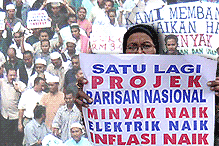 The global economy isn’t helping them much. It pays them peanuts for the products of their sweated labour. And with Opec and energy speculators pushing oil prices to record levels on the pretext of the growing demand from China and India, seed, fertilisers and transportation grow ever more expensive.
Other factors threatening farmers and pushing up the prices of food, according a worried World Bank, are droughts worsened by global warming, increasingly rapid loss of arable land to urbanisation, and the catastrophic diversion of grains, sugar and cooking oils away from the food chain and into the wasteful production of bio-fuels.
Speculators and hoarders are predictably playing their part in driving up food prices too, triggering panic-buying, unrest and outright riots in countries including - from reports I’ve seen so far - Bolivia, Cameroon, Egypt, Haiti, Indonesia, Ivory Coast, Mauritania, Mozambique, the Philippines, Senegal, Uzbekistan and Yemen.
Of course, the current financial crisis and closely-related food shortages are really nothing new - just the latest symptoms of the eternal struggle between human need and greed. Whether this latest round of hostilities will trigger wars, as World Bank President Robert Zoellig has warned if the rich countries don’t come to the aid of the poorest ones, is anybody’s guess.
It’s certainly happened in living memory. The Great Depression is credited with creating the conditions that led Germany to invade its neighbours and start World War II. Japan joined in that conflict largely because it was starved of natural resources. And the US has not only long supported Israel and tolerated totalitarian Saudi Arabia, but has more recently ‘liberated’ Kuwait and invaded Iraq, to safeguard its supply of Middle East oil.
Stand-off in politics
But perhaps the highest-profile current conflict between need and greed, and the one I’m personally finding most frustratingly suspenseful, involves not oil, but oligarchy.
More than a fortnight following parliamentary and presidential elections in Zimbabwe, the (former?) Zanu-PF government still refuses to release the results, Mugabe denies there’s any crisis and a meeting of other African heads of state has resulted in a total anti-climax.
When this slow-motion stand-off will be resolved, and how, is anybody’s guess. Will Mugabe and his goons steal the election or simply discount it, the way the Burma’s generals did when they lost in a landslide to Aung San Suu Kyi’s pro-democracy party back in 1990? Or will his people’s hunger for justice, freedom, financial reform and food force them into civil war?
An altogether preferable third outcome, of course, would be for Mugabe to accept his old pal Mahathir’s invitation to join him in retirement in Malaysia.
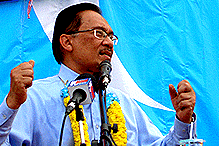 But on second thoughts, Malaysia could well become a lot less former-dictator-friendly before too much longer. With the humiliation if not defeat of the BN in the general election and the triumphal return of Anwar Ibrahim to full participation in politics after April 14, the whole nation is holding its breath in anticipation of what happens next.
Pundits are predicting everything from the highly unlikely possibility of BN reforming itself and making a comeback in the next general election, to Pakatan Rakyat sweeping to power through a no-confidence motion supported by the requisite 30 or more renegades from government ranks.
All will be revealed, no doubt, when the new Parliament convenes on April 28. Or maybe not.
As frustrating as it may be to me and others who are impatiently awaiting the results of this and every other unresolved situation - from the financial and food crises to problems in Iraq, Afghanistan, Palestine, Darfur, Zimbabwe, Kenya and elsewhere - the plotting and politicking could conceivably drag on for years.
Anwar, meanwhile, is keeping his plans and intentions quiet, claiming only that he’s in no hurry and has no desire to avenge himself on his erstwhile tormentors.
Though both sentiments make good sense and do him credit, they’re far from good news for those of us who feel we can’t stand the suspense a moment longer.


