




Bringing 'Impian LRT' down to earth Pt 2
The main question to be asked is why KTMB making this proposal and not Prasarana nor RapidKL? After all, Prasarana and RapidKL were given the task to integrate the public transport networks in the Federal Territory of Kuala Lumpur and the Inner Klang Valley while KTM Komuter were expected to move people in and out of KL.
There are proposals to build a KL-Kepong-PJ-Seri Petaling LRT ring line, by extending the Ampang line from Seri Petaling through Petaling Jaya and from Sentul to Sg Buloh. These lines would meet in the Damansara area.
While the proposed KTM Outer Ring Rail line would serve a wider area than the KL-Kepong-PJ-Seri Petaling LRT ring line, there still will be areas where KTM and RapidKL will end up as direct competitors.
The main question to be asked is why KTMB making this proposal and not Prasarana nor RapidKL? After all, Prasarana and RapidKL were given the task to integrate the public transport networks in the Federal Territory of Kuala Lumpur and the Inner Klang Valley while KTM Komuter were expected to move people in and out of KL.
There are proposals to build a KL-Kepong-PJ-Seri Petaling LRT ring line, by extending the Ampang line from Seri Petaling through Petaling Jaya and from Sentul to Sg Buloh. These lines would meet in the Damansara area.
While the proposed KTM Outer Ring Rail line would serve a wider area than the KL-Kepong-PJ-Seri Petaling LRT ring line, there still will be areas where KTM and RapidKL will end up as direct competitors.
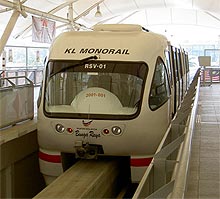
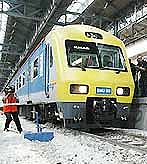 Thus we have to ask, why should the government still allow KTMB and RapidKL to compete when we want to build an integrated public transportation network? We must not forget that ‘competition’ is what gave us the poorly integrated, loss-making Star, Putra and KL Monorail lines, not to mention our ‘bus nightmare’.
Another factor that needs to be considered is the costs associated with this proposed line. KTMB is proposing a 65-70km line that would be elevated so the costs are simply going to be immense. We have to ask if there are ways to cut costs. For example, if the KTM line uses their existing KTM technology it would be possible to build some of the lines at ground level which would cut costs substantially.
Another thing we have to consider is passenger demand. There is currently no example of a long distance ring line anywhere in the Klang Valley. RapidKL's attempt to create bus services linking suburban areas was a failure because of lack of demand. If there are aren’t enough passengers for a successful bus service, how can an investment in rail services for the same route succeed? The proposed Outer Ring Rail Line may follow the MRR II in some areas but in other areas there will be lower commuter density and therefore, fewer passengers.
KTMB and the government must realise that commuters’ travel patterns are not going to change just because an LRT/monorail/KTM elevated rail line has been built. That is just ‘Impian LRT’ distracting us and telling us that ‘if we build it, they will come’.
Say no to loss-making lines
I submit to everyone that we should face reality. If we build it, they may not necessarily come. Are we prepared for a long wait? Are we prepared for this line to fail because there are few passengers? Are we prepared for another bailout? I certainly am not prepared to see this happen again.
It should be clear by now that high-cost, loss-making lines in KL gobble up money which could otherwise be used to improve public transportation elsewhere in this country. That is why KTMB and Prasarana/RapidKL and the federal and state governments need to sit down and plan a realistic, integrated public transport service that will serve the needs of the people, instead of allowing separated and independent proposals that do not create a real integrated network.
It is rather easy to do. Start with reliable buses and encourage people to use the service by providing good, high quality service that is frequent and reliable. Increase the reliability by having bus lanes. For this ‘Outer Ring’ service, buses can follow the MRRII and link with the existing rail lines at Seri Petaling, Batu Tiga, Kepong Sentral, Batu Caves.
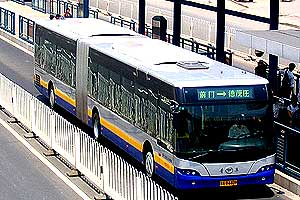 We can start thinking about replacing this bus service with a rail line after the demand is in place and growing. This system has succeeded throughout the world. It has worked and is currently working in countries like Canada and the UK and the US and Australia. It has worked and is currently working in other developing countries like China, South Africa, and even our neighbours Thailand and Indonesia.
If we follow this system, we can build a solid foundation instead of a fantasy. This is the way to turn our dreams into reality. YTL Corporation is experiencing the downside of reality as their dream of a high-speed rail link to Singapore has again been deferred by the federal government after the Economic Planning Unit could not find justifications for the project.
KTM Berhad has also seen the effects of reality. Their hopes of a fast train service between KL and Ipoh has been unceremoniously delayed because KTMB had not bought the trains yet.
Not to be outdone with the delay of the fast train, KTMB has also introduced another version of the ‘Impian LRT’ in the form of the Outer Ring Rail line.
Of course, a harsh dose of reality makes it clear that KTMB has no business attempting to build another Komuter rail line when they cannot make their existing one work. Last year they reached a truly low point with only 20 train-sets available. Normally 35 are needed to provide reasonable service.
Serious opposition in Penang
‘Impian LRT’ has reached as far as Penang, with the proposed Light Monorail Transit service. The new government of Penang remains enchanted just like the previous one with ‘Impian LRT’ and continues to review proposals for monorail services.
But it is in Penang that the ‘Impian LRT’ might face its most serious opposition yet. From the residents of Penang rather than their state government. What is it about Penang? Indeed, this question has been tickling the back of my mind since I arrived in Malaysia three years ago.
Penang residents are different from other Malaysians. They have a very healthy civic consciousness and appear to be very skeptical, practical, wary and critical of government proposals. The thinking of Penang residents is really focused on local issues and local interests. Most Penangites I have spoken to show little interest in mega-projects originating from Putrajaya.
 When the results of the March 8 general election became evident some people saw a crisis and others saw an opportunity. It became an open question whether or not the federal government would ‘punish’ the electorate of Penang for voting opposition, by taking away the goodies promised in the run up to the election.
Even the federal government has appeared unsure in the days since March 8. They are testing the waters to see what the people are willing to accept. As fears and promises and worries are traded back and forth, it is quite interesting to take a look at what Penangites actually want. And, surprise, surprise, it seems that many in Penang don’t necessarily want an LRT dream.
The Bus User’s Group is sticking to its true calling and demanding improvements on the existing bus services, including more accountability for RapidPenang. They are exerting strong pressure on the state government. In return, the government of Penang is talking about reviving the proposed government-owned Syarikat Bas Pulau Pinang(SBPP).
Some say that SBPP, also known as Bas Negeri Pulau Pinang might be operated as a direct competitor to RapidPenang. Others believe that SBPP should be created just in case the federal government decides to stop running the RapidPenang service.
Another idea that has been mooted is to supplement the existing car/passenger ferry service with a larger scale passenger ferry service. It is believed that ferries serving more points on the island and mainland, each ferry wharf served by public transport services, would be a viable option for travel between the island and mainland. Some hopeful people suggest that an improved ferry service would make the Second Bridge link unnecessary.
Other transport solutions
Additionally blogger Anil Netto has started to promote the use of trams in Penang. He is echoing the proposal of Ric Francis, namely a tram project costing approximately RM4 million, with a single loop of track covering the inner city.
What happens afterwards with this tram line is anyone’s guess. Some are suggesting that tram lines can be expanded throughout Georgetown. There is even a suggestion of putting tram tracks on the Penang Bridge and linking service across the bridge to Seberang Perai.
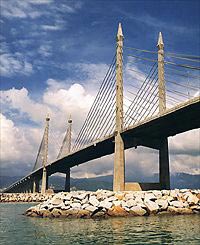 What was predictable was the call to convert some lanes on the Penang Bridge for public transport uses being immediately shot down by people concerned about their precious road space. These people generally don’t seem to mind the presence of parked cars taking up precious road space, but public transport vehicles are a definite a no-no.
The new Penang State government has even proposed doing away with the Light Monorail Transit and replacing it with a subway, an underground train.
This author is not sure if the new Penang government has already been infected by the LRT dream. It would certainly make sense to focus on improving the basic bus services before planning for anymore LRT lines, irrespective of them being elevated, on-ground or subterranean.
Public transport projects are never going to be successful unless you have a lot of people to move.
MOAZ YUSUF AHMAD, a regular user of public transport, is deeply concerned that government plans to encourage the use of public transport will ultimately fail because of poor planning and lack of support from the public.


Are you sure you want to delete this comment?
This action cannot be undone.