




Bringing 'Impian LRT' down to earth Pt 3
If we want to see a real solution for public transport woes, we might have to stop dreaming.
All of us have be clear in our thinking and remain aware of reality when it comes to developing public transportation structures.
If we want to see a real solution for public transport woes, we might have to stop dreaming.
All of us have be clear in our thinking and remain aware of reality when it comes to developing public transportation structures.
Anil Netto in his blogsite, offers some ideas :
• Come up with a state-wide public transport master plan to make sure systems are integrated. Don’t repeat KL’s mistake with its piecemeal LRT and monorail systems
• Get the interchanges right between ferry terminals and trams/buses, between trams and buses, between cross channel over-sea rail link and buses/trams, between KTM rail on the mainland and buses/trams. This is crucial for an integrated system.
• Think of a cross-channel rail link instead of the second road bridge. The additional lane on the Penang Bridge could be used for rail transport or build a parallel rail link.
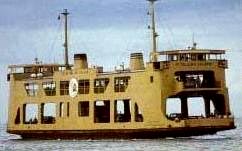 • Expand the ferry service and build more terminals at other locations on both the mainland and the island. Remember, the ferry service has been intentionally neglected ever since the Penang Bridge was built, contributing to the congestion on the bridge. The old ferry terminal (which operated alongside the new one) that collapsed in Butterworth was never rebuilt. In fact, today there are only about half the number of ferries compared to the number plying the channel in the 1970s.
• Allow for trams and buses to complement each other. For an excellent bus network, check out the Curitiba rapid bus transit system.
• Appoint independent public transport consultants with no vested interests in monorail/LRT/subway/bridge related businesses. The prime objective should be what’s good for the people of Penang including local communities, and the state rather than for the order books of giant infrastructure firms.
• Discourage private vehicle ownership and stop building infrastructure for cars and other private vehicles. This will be easier to do once we have an excellent public transport system so that people have a viable and attractive alternative.
• Remember pedestrians and cyclists. Make the streets safer for them. Turn some of the streets in Penang into pedestrian walkways with sidewalk cafes.
• Don’t reinvent the wheel. Learn from Curitiba’s rapid bus transit system and its innovative urban development programme. Small can be beautiful and visionary too!
Attitude change
You cannot build public transport services in a vacuum. Public transport services, to be successful, require the cooperation of many different people and many different systems.
The first thing needed is a change in attitude. We must stop the idea that road space is for cars alone. We must start optimising the amount of space and the number of people who are being moved.
We have to ask ourselves how many people we plan to move per hour, using the transport systems that we have today. Then we have to look at how many people we will need to move in the future. We can then plan and look for the solutions and the technology that will best suit our needs.
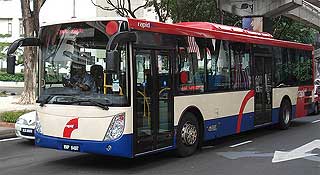 One reliable bus line can move between 2,000-5,000 passengers per hour per direction depending on the design. A tram system can move 4,000-8,000 passengers per hour per direction. A ‘Rapid’ bus or tram system can move between 8,000-15,000 passengers per hour per direction. All of these solutions are very low cost, meaning that more lines can be built.
As soon as we start looking at elevated solutions or underground solutions, costs increase. But we don’t always see the passenger numbers to justify the increased costs. Thus we end up with projects like the KL Monorail, which moves fewer passengers per hour per direction (approximately 6,000) than a reliable, high frequency bus line.
Buses are not what they used to be. With advances in technology and new designs and plans, buses are suddenly capable of far more than they were able to deliver in the past.
The bus rapid transit system in Curitiba, Brazil, was the first system that focused on using buses rather than building LRT lines. It was followed by many exemplary bus rapid transit systems, each capable of moving vast numbers of people.
The Transitway in Ottawa, Canada, the TransMilenio BRT in Bogata, Colombia, the Guangzhou BRT in Guangzhou, China, and even the Transjakarta system in Jakarta, Indonesia, have managed to make bus rapid transit work and work well.
Transjakarta has always caught my attention because Jakarta may be the first city in Southeast Asia that has looked away from ‘Impian LRT’ and come up with other solutions. The system has
expanded to 10 rapid transit lines covering different routes throughout the city, at a far lower cost than any LRT project.
If Jakarta can find a solution, then so can we.
MOAZ YUSUF AHMAD, a regular user of public transport, is deeply concerned that government plans to encourage the use of public transport will ultimately fail because of poor planning and lack of public support.


