




US of Africa
My friend Dan Large at the School of Oriental and African Studies, University of London, now co-runs the Sudan Open Archive that aims to raise public awareness about African nations. Dan’s keen interest in the African continent has brought him to China occasionally for conferences on bourgeoning Sino-African cooperation.
Inevitably, China’s increasingly active oil security policies in Africa sparked some debate between Dan and me when we met recently.
My position is simple: While China’s ambition in Africa is undisputed, its engagement policy with tyrants in Sudan and Zimbabwe severely causes a negative impression globally towards this emergent power.
My friend Dan Large at the School of Oriental and African Studies, University of London, now co-runs the Sudan Open Archive that aims to raise public awareness about African nations. Dan’s keen interest in the African continent has brought him to China occasionally for conferences on bourgeoning Sino-African cooperation.
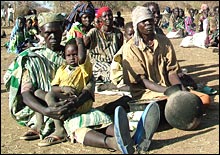 Inevitably, China’s increasingly active oil security policies in Africa sparked some debate between Dan and me when we met recently.
My position is simple: While China’s ambition in Africa is undisputed, its engagement policy with tyrants in Sudan and Zimbabwe severely causes a negative impression globally towards this emergent power.
Still, Beijing is not the only major player courting the continent. That the international media relishes in highlighting China’s ‘charm offensives’ in regards to African leaders only reflects- to a considerable extent- their own anxieties. Dan recognised this and shared his amazement with the voluminous conspiracy theories western journalists were churning out like “the outraged dragon”, “the discontented dragon”, “greedy dragon” etc.
“Never before has the world been populated by so many dragons,” he mused.
Objective information is hard to come by. For instance, the European Union and the United States account for 36% and 33% respectively of Africa’s total oil exports, compared to China’s ‘mere’ 8.7%.
So why should Beijing be portrayed as the only beast out to devour Africa’s oil reserves? The answer lies perhaps in the question as to whether China’s involvement in Africa is compatible with the continent’s search for human rights and better governance.
I can safely say it is not. Then again, one would fall into the dichotomy trap by taking a stance against Beijing simply on account of its acquiescence of human rights violations by the Janjaweed and Robert Mugabe.
For a balanced view, one needs a fuller picture.
Rear base stations
 Early 2007, the Bush administration announced the creation of
US Africa Command (AFRICOM)
in order to oversee all US military and security interests in the region, arousing serious concern that this might be the first step towards the militarisation of Africa.
Early 2007, the Bush administration announced the creation of
US Africa Command (AFRICOM)
in order to oversee all US military and security interests in the region, arousing serious concern that this might be the first step towards the militarisation of Africa.
Washington has confirmed General William Ward as AFRICOM’s first commander, but a headquarters is yet to be finalised. So far, Libya, Morocco and Algeria have ruled themselves out as potential locations, while South Africa is cool to the idea as it may undermine Pretoria’s position as a regional power.
Despite this hitch America has already been carrying out its plans to launch AFRICOM rear base stations on the ground and territorial waters of Africa. As these base stations grow in significance, so will concerns of their legality.
Under the guise of African Contingency Operations Training and Assistance (ACOTA), The Pentagon and the Department of State have been negotiating with countries such as Ghana, Kenya and Zambia to work out ammunition storage accommodations, while the governments of Cameroon, Gabon and Equatorial Guinea have already opened their airdromes to American forces. Washington is convinced these arrangements are necessary for the material and technical support of peacekeepers throughout Africa. But this does not obscure the possibilities of those facilities being transformed into ground battle support bases of American forces for future military operations.
In November 2006, the focus of the world’s media was on the China-Africa Summit in Beijing, but little was reported when Pentagon launched its Africa Partnership Station plan in September 2007, which allows US vessels to patrol African waters under the pretense of training African personnel as part of its AFRICOM initiative.
Petronas in Sudan
US behaviour appears as a reaction to the proactive diplomacy if China, India and even Malaysia. Petronas is an important oil player in southern Darfur . While further hikes in petrol are a certainty, a subterranean energy war is afoot between major powers and not-so-major powers like Malaysia to secure supplies from the African continent. As Salim Lone, a Kenyan journalist, has written, the establishment of AFRICOM is nothing but about oil .
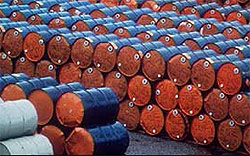 Interestingly, Lone too shares legitimate concerns like many other commentators about China’s intentions, however nothing about AFRICOM has been mentioned in major western media.
American military reinforcement in Africa could potentially alienate public opinion across Africa. President Bush’s reckless intervention in Iraq -supported by his lackeys the world over- has resulted in one million deaths. One truly shudders at the thought of another military initiative in a continent as diverse, resource-rich and strategically significant as Africa.
Before I close, I should do some justice to my friend. Dan is not the kind of aggressive journalist -unlike some of those from BBC and CNN- who delights in naming and shaming world leaders with poor human rights record. Dan speaks some Mandarin and is passionate about Chinese history and culture, and endeavours to find a middle path between fanatical China-bashing and China-praising, a reason why we remain friends.
The Sudan Open Archive is a public forum, and Dan welcomes contribution by Malaysians, although the topic would have to be related to Africa. I told him our knowledge of Africa is likely to be minuscule, but he laughed: “Perhaps some of you can write about how Petronas contributes to improving lives in southern Sudan!”
So, any takers?


