


COMMENT | M'sia must halt planned return of 1,476 Myanmar refugees to danger
COMMENT | Doctors Without Borders/Médecins Sans Frontières (MSF) calls on Malaysia to halt the return of “Myanmar refugees” under its “repatriation” plan announced for Sept 29. There is an urgent need for transparency and clarity regarding the 1,476 refugees at risk of being forcibly returned to the violence and danger they fled.
Although Malaysia is not a signatory to the 1951 Refugee Convention, it remains bound by the customary international law principle of non-refoulement: the obligation not to return anyone to a country where they face persecution.
On Aug 5, Malaysia stated that it would not proceed with returns “if they (refugees) would either be persecuted or their lives would be threatened.” More recent announcements by the Malaysian government indicate that this may no longer be the case, raising grave human rights concerns.
MSF calls on Malaysia to...
COMMENT | Doctors Without Borders/Médecins Sans Frontières (MSF) calls on Malaysia to halt the return of “Myanmar refugees” under its “repatriation” plan announced for Sept 29. There is an urgent need for transparency and clarity regarding the 1,476 refugees at risk of being forcibly returned to the violence and danger they fled.
Although Malaysia is not a signatory to the 1951 Refugee Convention, it remains bound by the customary international law principle of non-refoulement: the obligation not to return anyone to a country where they face persecution.
On Aug 5, Malaysia stated that it would not proceed with returns “if they (refugees) would either be persecuted or their lives would be threatened.” More recent announcements by the Malaysian government indicate that this may no longer be the case, raising grave human rights concerns.
MSF calls on Malaysia to:
Ensure that no Myanmar refugees are returned. Civilians in Myanmar continue to face extreme violence, including relentless aerial bombardment, mass killings, imprisonment, forced recruitment, and deprivation of essential supplies such as food and medicines.
Disclose the nationality, age, and protection risks of those identified for return. Refugees and asylum seekers facing persecution or other serious harm must not be returned.
Ensure that the protection needs of all those subject to return are thoroughly assessed in accordance with international standards.
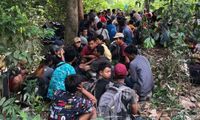
According to the United Nations Office for the Coordination of Humanitarian Affairs, Myanmar ranked second globally for conflict intensity and fourth for danger to civilians in 2025, with more than half of the population exposed to violence. The country continues to face a severe humanitarian crisis driven by intensifying armed conflict, natural disasters, and economic instability.
MSF has worked in Myanmar since 1992 and remains present in Rakhine, Kachin, northern Shan, and Yangon, providing healthcare as well as water, sanitation, and hygiene services. Our teams directly witness how conflict and insecurity continue to severely disrupt healthcare, food supplies, education, and livelihoods across many parts of the country.
Refugees should not be returned to the places they fled when their lives remain at risk.
Rohingya refugees and other persecuted minorities have endured - and continue to survive - decades of oppression, violence, restricted living conditions, and prolonged uncertainty while awaiting resettlement from Malaysia, if it ever comes. Refugees do not leave their homes by choice: they flee persecution and must not be treated as criminals or convenient targets for political gain.
MSF calls on Malaysia to halt all returns of refugees to the dangerous and violent conditions they fled, and to ensure that any such process is fully transparent and in accordance with international standards.
DOCTORS WITHOUT BORDERS is an international medical humanitarian organisation that delivers emergency aid to people affected by armed conflict, epidemics, natural disasters, and exclusion from healthcare.
The views expressed here are those of the author/contributor and do not necessarily represent the views of Malaysiakini.


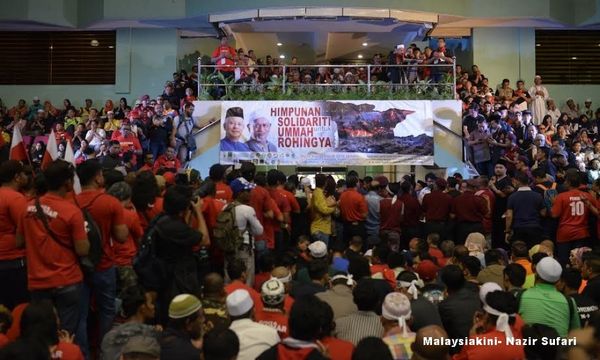


It's obviously a delicate balancing act. A nation showing broad willingness to absorb wartime refugees will just invite more (floodgate argument) vs not doing anything and be seen as inhumane. Meantime, is there clarity on how the repatriation works? Is it all sent back to the "care" of the Junta? As of today, I'm not sure if Malaysians are following the news sufficiently - the junta is just controlling the central part of Myanmar while various rebel factions (who are slowly consolidating) are occupying the rest of Myanmar. The refugees escaping Myanmar understandably are trying to escape violence. But it isn't exactly like there is no other place to go. They could join the rebels. I'm not advocating forcibly sending them back. Honestly my feelings are mixed on this. But there's not only "one" solution.
If the Doctors Without Borders would want to take in those refugees and care for them, think Malaysia would have no problem sending the refugees to them instead of dangerous Myanmar.
~1500 people willing to work hard at market bottom rates. We hv a huge country with lots of land. Surely, there will be businesses very keen to employ these people. You are sending them back to a high chance of torture, rape, imprisonment in squalid conditions. This is not humane. Malaysians are better than that.
Report this comment
Are you sure you want to delete this comment?
This action cannot be undone.