


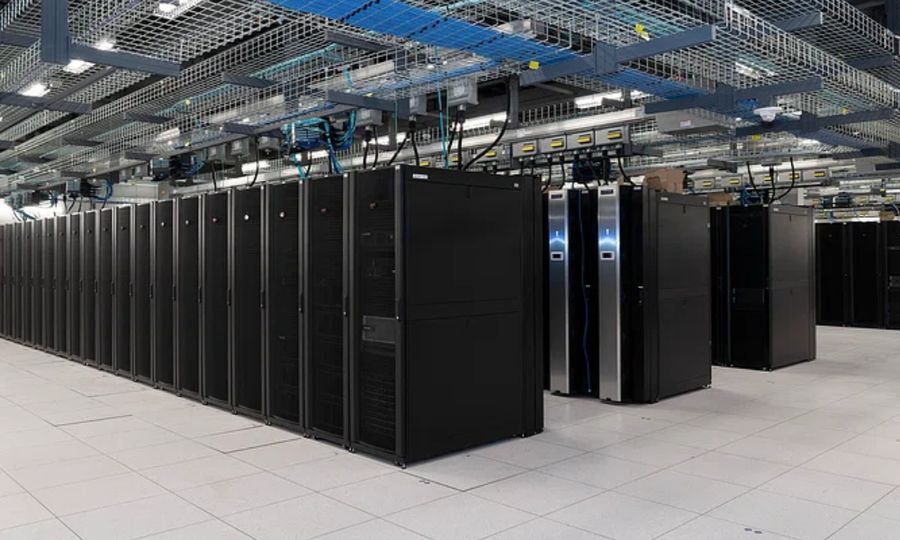

COMMENT | Water woes, energy burdens: Data centres in the age of climate catastrophe
COMMENT | Recently, we received a worrying forecast: “Super El Niño in 2027 could break Malaysia’s 40.1°C record”.
The meteorological department cautioned that with this temperature rise (the highest since 1998), Malaysia could face up to 77 consecutive days without rain, exerting pressure on our water supply.
For context, during previous El Niño episodes (in 1997-98 and 2015-16), drought-induced water shortages had severely impacted populations across Malaysia, especially in Selangor and the Klang Valley.
This warning comes at a crucial time, when the country is grappling with a central conundrum: the immense water needs of our booming data centre industry, positioned as the “leading digital hub in Southeast Asia”.
There are an estimated 118 operational data centres with 835MW of live capacity, with the bulk of facilities in Johor and the Klang Valley. Major industry players such as...
COMMENT | Recently, we received a worrying forecast: “Super El Niño in 2027 could break Malaysia’s 40.1°C record”.
The meteorological department cautioned that with this temperature rise (the highest since 1998), Malaysia could face up to 77 consecutive days without rain, exerting pressure on our water supply.
For context, during previous El Niño episodes (in 1997-98 and 2015-16), drought-induced water shortages had severely impacted populations across Malaysia, especially in Selangor and the Klang Valley.
This warning comes at a crucial time, when the country is grappling with a central conundrum: the immense water needs of our booming data centre industry, positioned as the “leading digital hub in Southeast Asia”.
There are an estimated 118 operational data centres with 835MW of live capacity, with the bulk of facilities in Johor and the Klang Valley. Major industry players such as Google, Microsoft and Amazon Web Services have invested billions in Malaysian data centre infrastructure.

Data centre capacity is expected to double by the end of 2026, with a further 3,500MW planned after 2026, placing it among the top three data centre markets in the Asia-Pacific region behind Tokyo and Beijing.
Water consumption
Data centres consume large amounts of water for cooling purposes. The average 100MW data centre can use up to 4.2 million litres of water per day (MLD). In Selangor, Johor and Negeri Sembilan, data centres are expected to require 445.04 MLD between 2025 and 2030. This is equivalent to the average domestic water consumption of about 1.8 million Malaysians.
Compounding the problem, current modelling identifies water deficit risks in these precise states as climate impacts worsen by 2040, 2080 and 2100 respectively, which will drive long-term water risks for communities living near data centres.
This year, Johor, the data centre capital of Malaysia, was already identified as a high-risk state for drought exacerbated by the ongoing El Niño, with rainfall deficits of up to 60 percent below average.
Therefore, as precipitation patterns in Malaysia are altered due to worsening climate change, domestic and data centre demands for freshwater supply will become increasingly competitive.
Deputy Energy Transition and Water Transformation Minister Abdul Rahman Mohamad recently suggested that the government may require data centres to manage their own water supplies in order to avoid disruptions to domestic and other industrial consumers.

However, several questions remain about the sources of supply and how they would obtain this water, especially given forecasted drought conditions and the suitability of existing infrastructure. Further, extracting their water directly from reservoirs, pools, or other water sources still places data centres in competition with other users.
As former National Water Services Commission chairperson Charles Santiago aptly remarked, it would appear that the government has not carefully planned our data centre ecosystem.
At present, measures for water usage effectiveness and the use of recycled water are mere recommendations, indicating that strict regulations have not kept pace with the growing number of investments and approved facilities. In fact, recycled water usage has also been called into question, with experts pointing out that the use of recycled water would mean it is no longer going back into the base flow of rivers and streams.
Energy grid
Apart from water needs, data centres also place significant stress on Malaysia’s energy grid. Even a small-scale 10MW data centre requires an estimated amount of energy which is equivalent to the average consumption of 67,500 households.
Indeed, the 3,500MW of planned data centre capacity could burden Malaysia’s grid with 15,330 GWh of energy consumption, equivalent to that of 23.65 million households and causing annual emissions of 12 million tonnes of CO2e (approximately the size of Brunei’s annual emissions).
Malaysia has already overshot its fair share of the global carbon budget in January 2023. As such, these considerable emissions from data centres would effectively amount to an appropriation of the atmospheric commons from low-emitting Global Majority nations.
To meet this surge in demand, Malaysia plans to increase its fossil gas-fired power plant capacity by 50 percent to meet data centre demand. This is despite Malaysia’s energy grid already being over-reliant on fossil fuels, the leading driver of global emissions, which accounted for an estimated 79 percent of Malaysia’s energy sources in 2025.
It must be noted that fossil gas, while posited as a destination fuel by government and corporate leaders, is a severe climate risk. Its main component, methane, is a potent greenhouse gas with 25 times the planet-warming potential of carbon dioxide over a 100-year lifespan.
International law
It is clear that to continue down this path would violate Malaysia’s legal obligations under international law.
In its recent Climate Change Advisory Opinion, the International Court of Justice made clear that all countries have a legal duty to prevent significant harm to the climate; to do so, the court made clear that countries must attempt to keep global temperatures below the 1.5 degrees Celsius target set by the Paris Agreement, an agreement to which Malaysia is a signatory.
The Intergovernmental Panel on Climate Change, a United Nations body comprising hundreds of experts worldwide, has clearly explained that these targets cannot be met without “deep, rapid, and sustained reductions in greenhouse gas emissions”. Large and unconstrained construction of data centres clearly flouts this imperative.
Water and energy needs of data centres, amongst many other considerations, must be carefully weighed, especially in light of accelerating climate change, Malaysia’s vulnerability to its impacts and our mitigation responsibilities.
We are already witnessing the terrifying effects of this ongoing climate catastrophe, across the world and at our doorstep. In the lead-up to the Digital Infrastructure (Data Centre) Bill, the government must immediately reassess its stance on data centre investments against the immense ecological strain and overstated economic benefits.
NITHIYAH TAMILWANAN is head of Research and Engagements at RimbaWatch, and KUBERAN HANSRAJH KUMARESAN is head of Legal Advocacy at RimbaWatch.
The views expressed here are those of the author/contributor and do not necessarily represent the views of Malaysiakini.




Report this comment
Are you sure you want to delete this comment?
This action cannot be undone.