




A quality check of the budget
The 2009 Budget is very comprehensive and addresses critical concerns at a cross sectoral levels, taking into account increasing prices, inflation and its impact on ordinary Malaysians.
 There is specific mention of welfare recipients, the poor, farmers, fishermen, disabled people, Orang Asli, lower ranking civil servants and pensioners. The prime minister has taken the trouble to make specific reference to these groups who are the most vulnerable sections during our current economic crisis.
The 2009 Budget is very comprehensive and addresses critical concerns at a cross sectoral levels, taking into account increasing prices, inflation and its impact on ordinary Malaysians.
 There is specific mention of welfare recipients, the poor, farmers, fishermen, disabled people, Orang Asli, lower ranking civil servants and pensioners. The prime minister has taken the trouble to make specific reference to these groups who are the most vulnerable sections during our current economic crisis.
There are so many goodies in the 2009 budget that it would be difficult to mention all, however let me highlight some of the salient points.
First, the change in the eligibility criteria for welfare assistance. The current household income of RM400 is increased to RM720 in Peninsular and RM830 for Sarawak and RM960 for Sabah. The PM could have an additional variation for urban-rural figures for the Peninsular. Klang Valley should be at RM960 - like that for Sabah. The Federal Government could review this as the deprivation in our major centres is really affecting the very poor households.
While some say RM150 is too little a monthly allowance for unemployed disabled people, it is the first time the fund is made available. It will complement welfare assistance above.
The exemption on electricity bills of RM20 or less will assist the real poor. The same should be done for water. Measures for improvements in basic amenities in Sabah and Sarawak are indeed welcomed.
Food security measures especially the assistance to padi farmers and fishermen, are good calls. At the same time a more integrated rural development plan must be redeveloped to reduce rural-urban migration.
Greater investment in rural economy is essential. In addition a more specific and targeted programmes to assist forest based communities to have a more stable source of income through settled agriculture is urgently needed. This is urgently needed in Sabah and Sarawak.
Quality besides Infrastructure
One of our major problems in Malaysia is improvement of quality. We have good infrastructure. However the 2009 budget has failed to clearly spell out quality improvements. Let take the specific allocations made to Ministry of Education, Ministr
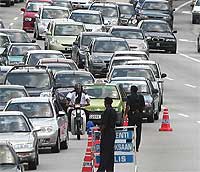 y of Higher Education and the Police Force. Every thing seems to be pointing to physical structure and contracts.
I really thought the 2009 budget will shift the focus to further enhancing quality. I am not sure if in the details of the budget these finer points are mentioned however the general public should be made aware of what is the federal governments plans and allocation to improve the quality, research and development and in the case of the Police the improved forensic science and investigation capabilities of policemen and women.
Voluntary sector
The third sector is the voluntary or civil society sector. Advocacy groups and people empowerment NGOs whom foster a just and equitable society.
The 2009 budget makes very little reference to this sector. The PM did not strengthen this sector as a co-partner in development especially in working alongside the poor, disadvantaged and low income families.
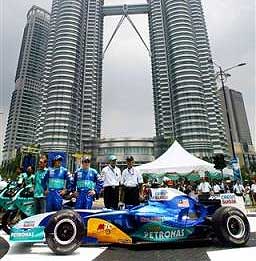 While there is reference Amanah Ikhtiar Malaysia to undertake Urban micro-credit financing programmes and reference to NGOs in conservation works of heritage sites, there is no specific reference to this huge sector and army of volunteers and advocates. They are underfunded and more allocation will enhance their work.
The Federal government must urgently review this matter and build the capacity of the voluntary and civil society sector and recognise them as equal partners in development.
In contrast the 2009 budget makes very strong reference to Corporate Social Responsibility and makes huge provisions to encourage private sector involvement. I think this is very strange. GLCs are one of the biggest companies in the country, why allocate RM20 million to them to do work in schools through the PINTAR Foundation?
The Ministry of Education has an allocation of RM31 billion. How is this money spend? Why does it need more to improve the quality of education by private and voluntary sectors? Should we not hold the Ministry more accountable for delivering higher standards?
Furthermore to allocate RM50 million to palm oil plantations to undertake community programmes is curious. Should not these rich companies be responsible to provide for their workers and children living in plantations? This is both their legal and moral obligation.
Please do not get me wrong, I am all for the private sector for greater involvement in social services and community work but they should be compensated more indirectly rather than receiving direct federal grants. A fundamental approach through tax rebates and incentives should be the approach to get big companies especially the public listed involved in social projects. Cash grant must be given to the voluntary sector including matching grants to money NGOs have raised.
Furthermore the voluntary sector needs to strengthen professional practice including a better pay structure for the full time staff including training opportunities. These are essential for the future and further budgets can take advantage not only to recognise this sector but provide sufficient funds and resources.
Foster Divergent Views
 The prime minister is right in his position of preventing any group from “attempting to seize power through illegitimate means.” However his remarks on the opposition, its ‘populist claims’ and indication that their views ‘would undermine the Government’s financial position’ and ‘bankrupt the nation’ is a political swipe which does not foster greater openness for alternative ideas and divergent views.
If indeed any suggestions by the opposition made are inappropriate then a more substantive analysis as such be presented rather than just a simplistic statement. The Malaysian nation is now more matured and therefore calls for a more intellectual and rigorous approach to economic options. A new dimension of political debate among members of parliament is necessary.
I think in this context three matters which would require further debate and discussion. First, is the matter of reduction in fiscal deficit. Yesterday I was on a panel at Astro on the budget with Ismail Salleh and he indicated that during recession periods the Government could have a higher deficit. Malaysia tends to pride at an overall reduction of deficit from 4.8 in 2008 to 3.6% for 2009. So is fiscal deficit good and for 2009 should government have taken liberty for an even higher deficit to spur the markets or induce it further? This urgently requires further unpacking and rationalisation.
The second is what should be the allocation size of the operating expenditure and that of development expenditure. For 2009 RM154.2 billion is allocated for operating and RM53.7 billion for development. Should the development portion be much higher? How could we reduce operating expenditure?
Third, there is reference to the National Energy Plan. This is indeed urgent and timely especially in the context of depleting oil and gas resources. The PM draws our attention to ‘developing viable alternative energy sources such as solar, wind and biofuels, apart from exploring nuclear energy’.
This is definitely in line with global trends however we must ask the difficult question, wh
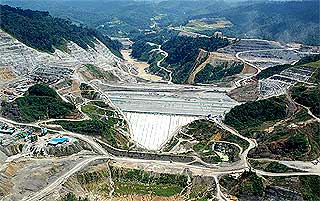 y is the Sarawak state government not developing along the federal lines? Their option is to build more hydro dams and they have plans for another 12 new dams in addition to the Bakun dam? Their justification is that Peninsular Malaysia will not be able to generate required energy levels and therefore the best and cheapest option is hydro dams. However the dams cause tremendous damage to the environment and displace forest based communities. What is the way forward in this context?
Questions for discussions
While these questions might sound like basic economic questions, I think there must be more debate on public spending and how money is spend and what is its net impact for the people of Malaysia. There must be more rigour from our MPs to debate the budget and other options available and tested during the debate time in the House.
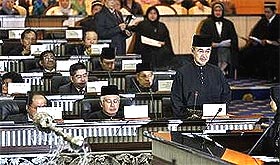 With a majority in Parliament the prime minister’s bill on the 2009 budget will be carried in the House. However I hope that the federal government will continue to have multi-level consultations and dialogues to keep Malaysian society informed but at the same time create the avenue to receive feedback. One major political crisis of our time is the disconnection between the top leadership and the grassroots.
I would tend to belief that all, including those in a government position, the backbenchers and members of the opposition will responsibly debate in the best interest of all Malaysians. In addition every Malaysian must develop our thinking ability and hold all our leaders both the federal government and the opposition in check and balance - holding them accountable for the common good of all Malaysians.
Datuk Dr Denison Jayasooria is a freelance socio-economic analyst. He can be reached at denisonjayasooria@gmail.com


