




Integration through education
There has been much to say recently about the ‘social contract’ that exists between the different races in Malaysia. It has become a major issue among politicians and leaders.
However, there is one ‘social contract’ that has been largely ignored by the Malaysian leadership as well as the people. The education curriculum is, in fact, a social contract between the people and the government on how children are to be educated.
There has been much to say recently about the ‘social contract’ that exists between the different races in Malaysia. It has become a major issue among politicians and leaders.
However, there is one ‘social contract’ that has been largely ignored by the Malaysian leadership as well as the people. The education curriculum is, in fact, a social contract between the people and the government on how children are to be educated.
Therefore, we, the people, have the right to question and take to task the development and progress of the education system. This boils down to what we want and what we have.
In the 50 years since Independence, we are still not able to say that our education system has evolved in accordance with advancements in the world. We have yet to realise a comprehensive curriculum aligned to the needs of the society and the development of the country and the world.
In essence, I expect the curriculum to provide children with mastery of facts, principles and concepts of a discipline, emphasise development of critical and creative thinking as well as provide the context for developing character.
According to Al-Farabi, the whole activity of education is the acquisition of values, knowledge and practical skills leading to perfection and the attainment of happiness. Therefore, I have come to realise that curriculum on our schools is a reflection of our values, choices and perspectives in differing contexts.
 The only significant piece of news to come out of Barisan Nasional’s bottomless pit of foolishness on education is the teaching of Mathematics and Science in English. The fickleness over the issue itself is a disgrace to policy making as well as leadership consistency.
The teaching of the two subjects in Malay, English, Mandarin or Tamil is not very important or significant. It has to be understood that both are fact, principle- and concept-based subjects. Therefore, it is imperative that the emphasis is put on the delivery and understanding of the concepts.
By coupling the subject with English, importance is put on proficiency in the language. This creates a distorted perception that knowing and understanding the language is much more important than learning the subject itself.
Most primary school students are not well versed in the English language and this barrier inhibits their mastery of core principles and concepts. This lack of understanding further translates to reduction of their critical and analytical thinking.
Furthermore, their inability to speak up and voice opinions in a language that is unfamiliar stunts their emotional growth. Students tend to lack the confidence to speak in public.
The most disturbing component of this fiasco is the manner in which the policy was implemented. It was half thought-out, at best. The proper context and environment must be provided before such a drastic change is carried out.
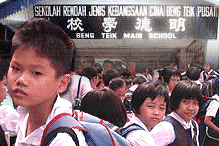 Teachers today need to be fluent in the language and current teaching methods. Students must be trained to not only speak and converse fluently in English, but also trained to communicate the facts, principles, and concepts of Mathematics and Science effectively.
Graduating teachers must be trained to handle dual language usage in the classroom to effectively allow the transfer of information. This should include training on the process of motivating the children to speak confidently in the language and yet feel at ease.
The need for psychological training for the teachers becomes imperative to counter possible resistance and lack of interest among students due to language difficulty.
The inability of the government to pay heed to these requirements had doomed the programme from its infancy. As the cliché goes, ‘if you fail to plan, you plan to fail’.
Much more to learn
So, where do we go from here? I support the establishment of a single schooling system that combines the best of both worlds.
Schools do more than simply transmit knowledge from one generation to another. Students learn things that are not actually taught in the formal curriculum. It is an entire range of educational experiences promoted by schools and teachers through practices that are not necessarily written down.
This unplanned, informal curriculum deals with socio-psychological interaction between students, teachers, administrators, especially in relation to their feelings, attitudes and behaviour.
Utilising the presence of this informal curriculum, I propose a school system that teaches 11 years of Bahasa Melayu, English, Mandarin and Tamil to all students, irrespective of race, religion or nationality. This would create an environment of integration in schools.
 It is hoped that through this ‘forced integration’, a new generation will arise with a unique culture. This might not be the same Malay, Indian or Chinese culture that we know of today. Instead, we would expect a truly ‘Bangsa Malaysia’ culture.
We hope that the children will create their own destiny, future and culture. They will not only learn, but redefine the rules of the game in the canteen, in the playground, and specific relationships between races.
To achieve this, we need to let go of our cultural attitudes toward education (however minute these may be). We have to come to terms that a new culture is needed and our next generation will determine what form and function this will have.
The current situation of vernacular schools will continue to propagate racial polarisation and will thus never allow true integration.
Effective planning essential
To achieve this, the government will need to plan effectively for the growth of students and the number of language teachers. University courses will have to be adapted to include the teaching of Malay, English, Mandarin and Tamil as a second language and as a primary language.
The constant supply of language teachers must also be projected and planned. A detailed compensation plan needs to, in effect, attract more graduates to become language teachers. I would love to see a Malay teacher teaching Tamil, for example.
The new system should be a single session one with additional hours. With this, we expect all children between ages 7 and 17 to be in school from 7am to 5pm.
This will allow the government to monitor the movement of students and prevent truancy. More importantly, it will be able to identify students who are not able to attend school for various reasons. For parents, the single session will ensure that the children’s time is spent fruitfully. This would be mutually beneficial to the government and the people.
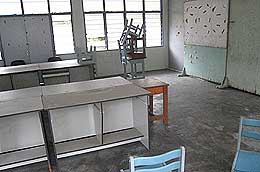 Implementation of single session schools will need to be planned meticulously. The contextual environment such as classrooms, amenities and human resources will need to be addressed.
A significant quantum of the national budget must be allocated to expand schools so that they can accommodate all the students in one session. Amenities such as locker rooms, gymnasiums, and shower rooms also need to be factored in.
Apart from providing subjects of facts and concepts like Mathematics and Science, subjects that encourage creativity and critical thinking such as music, art and outdoor studies should also be included.
Literature, Logic (Mantiq), Geography and History need to be taught at a younger age. Classrooms should also fully utilise available information technology, which itself should also be considered as a subject.
In addition, the government should develop a curriculum to suit this new environment that covers subjects, processes, conduct and character.
Al-Farabi suggests in Talkhis , that virtue is a state of mind in which the human being carries out good and kind deeds such as wisdom, common sense, inventiveness, cleverness, temperance, courage, generosity and justice.
Therefore, the curriculum must include such qualities to be effective. Al-Farabi adds that “virtue can only be attained within society, for it is society that nurtures the individual and prepares him/her to be free”.
The political will and people’s will must converge to ensure that the education system is revamped and that future generations are nurtured and prepared for their destiny.
MOHD PRASAD HANIF is secretary of Klang PAS.


