




Of accountability, transparency and vigilance
After March 2008, with Pakatan Rakyat governing five states and BN still in control of the federal government, both coalitions are now accountable to the people of Malaysia.
I have learned from scholars that in order for someone to be held accountable, that person must first be given authority and responsibility for which he/she will be held accountable. This article intends to look into our government’s accountability, transparency and vigilance and what we could learn from it.
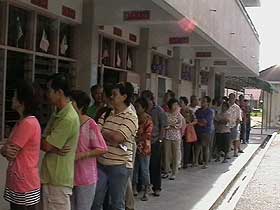 In the March 2008 general election, the Malaysian people granted Pakatan Rakyat the authority and the responsibility to govern five states, including two highly industrialised states.
The voters also gave Barisan Nasional the authority and responsibility to govern the federal government as well as other states. Therefore, both coalitions are answerable to the people of Malaysia.
On April 28, 2008, Malaysiakini reported that the UEM CEO Tajuddin Ali requested all members of Umno to support the prime minister and deputy prime minister. He is the chairperson of the Umno Veterans Club.
UEM was established from the tax coffers of the people to induce growth for the nation as a whole. In terms of accountability, the loyalty of this CEO is clearly compromised.
The goal of economic progress and development becomes secondary, loyalty to the ruling party and government becomes the primary goal. We gave the government the authority to establish UEM and the responsibility to ensure this GLC acts in the best interests of the people, to help the country’s economy to grow and prosper.
When the lines get blurred
Instead, the lines are blurred such that public property is naturally assumed to be a property of Umno and therefore, conflicts of interest such as these are common.
Pakatan must learn from this and clearly establish the line between maximisation of profit for the benefit of the people and the interference of government to gain political mileage.
If this line is clear, the public will be able to clearly gauge the performance of government-linked companies and their effect on the economy of the country. Most importantly, it is expected that a company that has a free and independent management would be able to compete more effectively.
Therefore, Pakatan was given authority and responsibility to act on behalf of - and for - the people of Malaysia, not the coalition.
Let’s revert to older news. On Nov 3, 2000, Asiaweek had this to report: “The outcome will resonate throughout Malaysia’s economy. Halim (Saad) does not have the estimated US$1.3 billion for the purchase.
"Three bank consortiums are reportedly finalising offers to arrange new loans — despite the fact that this will raise the banking system's exposure to Renong and Halim to seven percent."
Because Renong's interests reach a wide spectrum of Malaysia's industries, it is considered a proxy for the economy. But it is also a poster company for the murky corporate-governance practices that foreign investors complain about.
Prime Minister Dr Mahathir Mohamad has asked one of his special advisers, Nor Mohamad Yakcob, to brief analysts and foreigners on what the country is doing to improve corporate transparency and accountability.
All that effort may well go to naught if Halim is seen as enjoying special treatment at the expense of minority shareholders.
“This is an important test for Malaysia,” says Yeoh Keat Seng of the online stock advisory Malaysiastreet.com.
Investor confidence takes a dive
 Why would the banks be willing to make the loan? Halim, 47, was a protégé of Mahathir confidant Daim Zainuddin, who has worked closely with the country’s top leaders for years. Since his company was formed in part from the assets of Umno, Malaysia's dominant party, Halim once described himself as the business proxy for the organisation.
And it may be in the banks' interest to save Renong: “Its debts are so big that if the company failed, the whole financial system would suffer.”
In terms of transparency, despite the “murky corporate governance” reported of Renong, the government supported the idea of the bailout and did not require the company to publish its corporate governance details.
Due to the fact that the CEO reports only to the president of Umno who is also the Prime Minister of Malaysia, the government never requested the information to be revealed. This not only mislead investors but reduces investor confidence in the company and the country.
Another case of a murky deal is revealed by CNN: “Terms of the deal weren't revealed, but the government agreed to pay Malaysia Airlines US$236 million to compensate it for giving up domestic routes.
“Air Asia also got a number of unspecified incentives; including what some say is a US$5 million subsidy to service some rural routes.”
Similarly, in the case of the Bus Station in Klang, Selangor speaker Teng Chang Khim could easily divulge the contract and its processes; without worrying about neither compromising the security of the nation nor causing racial tension.
When public money is used to offer a solution to a problem, the government must be prepared to divulge all information. It is a democratic right to access such information.
Disclose details to the public
Politicians have advisors and civil servants to advise them on a project and are very well informed. However, the public can only ascertain whether proper attention has been paid to the relevant costs and benefits of the project if this information is disclosed. Else, the public cannot gauge the government’s response, knowledge or efficiency.
Vested interests by political parties in public properties breed corruption. The goal of maximising profit such that investors are satisfied is ignored in cases where the decisions are politically motivated and preserves the elite.
The Asiaweek report below shows how our government’s vigilant nature in Malaysia is undermined: “As Renong's finances deteriorated, Halim persuaded subsidiary UEM to buy 32.6 percent of Renong for RM3.24 a share - 35 percent higher than Renong’s then stock market price of RM2.40.
“Naturally, UEM's minority shareholders felt their company was being used to bail out Renong - at an inflated price too. To appease them, Halim promised to personally buy back the Renong shares at the original price by Feb 15, 2001 if the stock was trading below RM3.24 then.
“That pledge is coming back to haunt him. Renong closed at RM1.73 a share on Oct 25 and is unlikely to improve given its debt and negative investor sentiment toward Halim.”
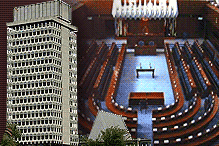 In good governance, the government must act
bona fide
and in the interest of the people, to use powers for their intended purposes, to avoid conflict of interest and to exercise care diligence and skill.
In good governance, the government must act
bona fide
and in the interest of the people, to use powers for their intended purposes, to avoid conflict of interest and to exercise care diligence and skill.
Therefore, the government must be vigilant in utilising public properties and exercising the authority and responsibility granted to it.
Looking at the case above, we notice that Halim has violated every duty and responsibility of a director and the Barisan Nasional Government followed suit by deciding to rescue him. To add salt to the wound, Halim is neither punished nor reprimanded and this sent a distressing signal to investors.
The concerns that have been raised are primarily related to the fact that our representatives’ actions in and outside the government have immense effect on every facet of the people’s lives.
Therefore, it is imperative that each and every one of us demand that our representatives are accountable, transparent and vigilant – whether they are from Pakatan or BN.
Promise a mountain, give a mountain
We must know how to judge the performance of our representatives. The March 2008 political tsunami is not just a victory but it is also very much a reminder to the Pakatan representatives.
Since the Pakatan representatives took over, and with the dust settling, we find meagre performance and much complaining. We have elected the representatives to offer solutions to the problems that Malaysia faces, not inform the public of the problems that they face.
It is imperative that we hold our Pakatan representatives accountable for their actions and words. We expect every promise to be followed through to completion.
It was every easy for the representatives and the political parties to promise the mountain during and immediately after the election. The people, I think, should not accept and expect anything but a mountain.
The representatives should be judged based on the issues they raise and fight for. The representatives should address issues that are vital to us such as democratic freedom and rights, education, health care, private members’ bill, and quality of life.
If hudud is indeed a necessary and important matter to discuss urgently, then discuss it. Else, the representatives should clearly focus on more relevant matters.
Their performance should also be directly proportional to the number of issues and voices raised in parliament and the state assemblies. We definitely do not want to send representatives to Parliament and state assemblies to simply warm the seats.
Therefore, it is also imperative that we should hold ourselves accountable, transparent (by being informed and keeping others informed) and vigilant in judging the performance of our representatives.
I came across this quote from Britain's Lord Denning some time ago, which holds true: “The House of Commons starts its proceedings with a prayer. The chaplain looks at the assembled members with their varied intelligence and then prays for the country.”
MOHD PRASAD HANIF is secretary of Klang PAS.


