


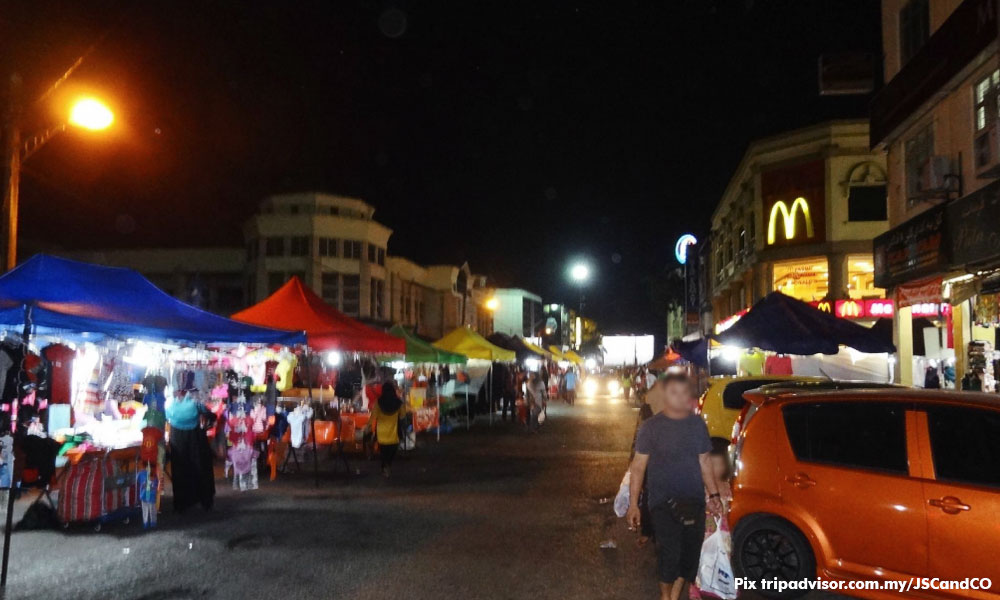

LETTER | Who is the city for after dark?
LETTER | Many cities seem to have two personalities. During the day, offices, streets and public transport are busy.
After working hours, some districts become quiet while activity concentrates in a few restaurants, entertainment areas or shopping centres.
For people who cannot afford these places or cannot reach them safely, the city may effectively close early.
Seoul, South Korea, is now trying to change that pattern. In July 2026, the Seoul Metropolitan Government announced a major night-economy initiative connecting culture, tourism, local business and transportation.
The proposals include special night-economy zones, later opening of cultural facilities, expanded late-night transport and 25 Moonlight Yajang outdoor dining destinations by 2028.
The initiative is exciting because it treats the night as a planning period, not simply as extra business hours.
Rules on opening times, outdoor activity and transport are often built around daytime assumptions.
A museum that stays open late will have little impact if the last train has already left. A night market will struggle if surrounding streets are unsafe to walk.
/file/1087/1bd50e84295cc76081e9a934b04d64d8.jpg "South Korea flag generic 210217")
Outdoor dining may bring energy to a district, but it also requires agreements on noise, cleanliness, operating hours and pedestrian access.
However, an active night economy is not automatically an inclusive night city. If every evening activity requires buying food, paying admission or travelling by private car, the city remains inaccessible to many people.
Economic activity matters, but public life cannot be judged only by how long cash registers remain open.
The ‘third place’
This is where the idea of the third place becomes important. Parks, libraries, cultural spaces, sports courts, waterfronts, community facilities and well-managed night markets can become places where people spend time beyond home and work.
Some may support local businesses, while others should allow people to participate without compulsory spending.
For Malaysia, the idea deserves particular attention. Evening hours may be more comfortable than the hottest part of the day, and our existing culture of pasar malam (night market), food streets, parks and late dining already demonstrates a strong appetite for nighttime public life.
The opportunity is to connect these activities into safer, more inclusive neighbourhood networks rather than treating each venue as an isolated destination.
Imagine a student leaving an evening class and being able to walk along a well-lit route to a library, food area or public space before taking reliable transport home.
/file/publisher-c1a3f893382d2b2f8a9aa22a654d9c97/2025/10/fee154f4c3e2082b86e44000a4836f39.jpg "Rapid KL Rapid bus Klang Valley Lembah Klang generic 221025")
Imagine families enjoying a park after dinner, older residents joining light exercise activities and young people attending free performances without being expected to spend continuously.
To make that possible, land-use planning must allow compatible activities while protecting residential areas from excessive noise.
Transport planning must provide affordable late-night services and safe first-and-last-mile connections.
Urban design must address lighting, crossings, toilets, seating, weather protection, visibility and universal access.
Our own unique programmes
Placemaking must involve local residents and businesses so that nighttime programmes reflect the character of the community rather than copying attractions from somewhere else.
We must also remember the people who keep the night economy running: cleaners, transport operators, security personnel, food workers, performers and delivery riders.
A city that never sleeps should not require its workers never to rest. The Japanese term “karoshi”, meaning death from overwork, is a reminder that longer economic hours must be accompanied by fair scheduling, safe working conditions and reliable transport home.
Perhaps we should aim for more than a night economy. We could also create a night common: a network of safe, accessible and sociable places where culture, recreation, local business and community life can coexist after dark.
The real measure of success would not be how late the city stays awake, but who feels able to take part.
Can a teenager, a lower-income family, a woman travelling alone, an older person or someone with a disability enjoy the city comfortably and return home safely?
When the answer becomes yes, nighttime activity becomes more than an economic strategy. It becomes a new form of urban belonging.
Writers are senior lecturers at the Faculty of Built Environment, Universiti Malaya.
The views expressed here are those of the author/contributor and do not necessarily represent the views of Malaysiakini.
/file/publisher-c1a3f893382d2b2f8a9aa22a654d9c97/2026/02/d4a8c5a0b21c2caf89d97bdf31d2e557.jpg)
/file/publisher-c1a3f893382d2b2f8a9aa22a654d9c97/2026/02/a8e82553348f8cfd8325492dbd092cbb.jpg)


Are you sure you want to delete this comment?
This action cannot be undone.