




Islamic party's bold national ambitions
The dynamics in the PAS 55th Muktamar illustrate significant ongoing changes for PAS as a party. One year after the March 2008 polls, PAS is working to shed its parochialism and portray itself as a national contender.
The political ambition is raw, and it is driving transformations in the party. Despite this yearning for power, there are real obstacles for PAS to become a party that can appeal to Malaysians nationally and these come from within the Islamic party itself.
Many PAS leaders recognise the hurdles, and have been quietly and not so quietly pushing for reforms within the party. Change within PAS, however, will not occur quickly and the internal struggles over the future of the party will be painful and even potentially divisive now that the political stakes are higher.
Based on the election results and floor debate at last week’s muktamar, reforming PAS internally has become even more difficult.
The dynamics in the PAS 55th Muktamar illustrate significant ongoing changes for PAS as a party. One year after the March 2008 polls, PAS is working to shed its parochialism and portray itself as a national contender.
The political ambition is raw, and it is driving transformations in the party. Despite this yearning for power, there are real obstacles for PAS to become a party that can appeal to Malaysians nationally and these come from within the Islamic party itself.
Many PAS leaders recognise the hurdles, and have been quietly and not so quietly pushing for reforms within the party. Change within PAS, however, will not occur quickly and the internal struggles over the future of the party will be painful and even potentially divisive now that the political stakes are higher.
Based on the election results and floor debate at last week’s muktamar, reforming PAS internally has become even more difficult.
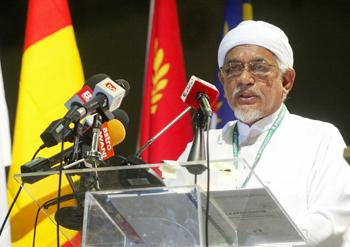 If there was one message that stood out in the muktamar, particularly in the opening speech by party president Abdul Hadi Awang, it was that PAS wants national power. This ambition is an unfulfilled desire that has shaped the party since its founding 55 years ago.
More recently, PAS leaders saw their national target in sight after 1999, when PAS took over Terengganu and Kelantan, and emerged as the largest opposition party in Parliament. They feel closer to their target now more than ever.
This closeness was reflected in the imagery of Abdul Hadi’s speech where he linked PAS with the struggle for national independence – reframing national history – and in his lengthy discussion of national problems, both social and economic, that he felt the party would solve. He even articulated principles of a PAS foreign policy beyond the stalwart issue of Palestine.
For the first time, Abdul Hadi’s muktamar speech was directed toward a national audience, not the delegates themselves. With the use of English (although not a full translation and not timed properly in keeping with the pace of Abdul Hadi’s speech) and reaching out to other ethnic communities in Malaysia, Abdul Hadi worked to make a case for PAS at the national helm.
The push for support in Sabah and Sarawak – a rather unrealistic goal – was illustrative. The ambition was made particularly obvious at the end of the opening ceremony when PAS announced its acquisition of land in Putrajay - Dr Mahathir Mohamad’s national capital. Symbolically and territorially, PAS staked its national claim.
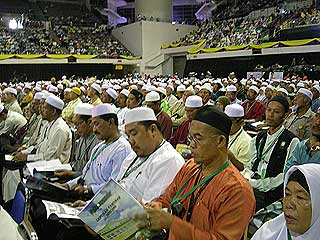 The question is - is this claim realistic? Is PAS capable of making the changes internally that will broaden its appeal nationally?
After Abdul Hadi’s speech finished and the party delegate debate began, the discussion on the floor suggested a mixed picture. The sunny opening was overshadowed by clouds that raise questions about what PAS stands for and how it would govern.
Moves to be a more inclusive party
PAS has come a long way in a relatively short time in how it engages and with whom it engages. The most touted programme PAS highlights is its non-Muslim supporters club.
Although substantively this organisation is minimal (with less than 50 members attending the muktamar and an estimated 20,000 members nationally), it represents a genuine desire within the party to reach out.
Watching the personal interaction of members of the ‘supporters’ club and the delegates representing national divisions at the muktamar, the interaction was warm. It stands in contrast to the pattern practiced by Umno, which continues a form of ethnic segregation.
The level of engagement with the Pakatan partners has also forged stronger multi-ethnic ties. The party delegates and leadership understand how important these are, since they cannot govern without non-Malay support.
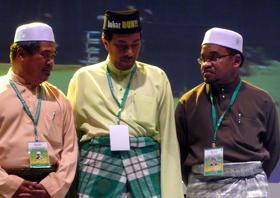 In fact, this was one of the main tenants of Mohamad Sabu’s platform for the deputy presidency. Multi-ethnic cooperation and engagement has been accepted by the overwhelming majority of the delegates despite the charismatic leader’s loss.
Yet, real understanding and mutual respect across races remains elusive, especially among the rank and file. Many PAS delegates believe than non-Malays will convert, and do not appreciate the right to practice an alternative religion. There is a disconnect between being an Islamic party and full acceptance of a non-Muslim alternative.
Consider the narrow minded call by a delegate from Pahang for the women in the media to wear the tudung . It showed a lack of respect for choice for Muslims and non-Muslims alike. While other PAS delegates and leaders called for openness, the struggle for multi-ethnic understanding is ongoing (notably not only within PAS).
Whether the glass is half full or half empty (and whether the obstacle of accepting an alternative religion) is a matter of perspective, one cannot ignore that the charge toward multi-ethnic inclusion has occurred structurally and substantively within PAS with little debate. This is a far cry from developments in the party only a few years ago.
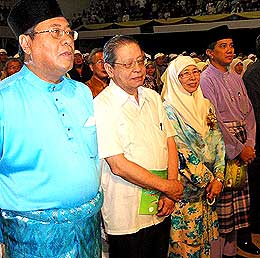 PAS now is also openly engaging outsiders internationally. This practice has been around for some time. Yet, what differentiates the pattern now is that many international actors are coming to PAS. Members joke that Kota Bharu has become the shadow capital (and that was perhaps before the muktamar results which moved the party capital to Kuala Terengganu).
The presence of senior leaders from Hamas and Indonesian Muslim parties at the meeting only touch the surface of its level of international engagement. However, PAS will need broader engagement than just Muslim parties abroad to have any legitimacy.
More importantly for the general public, PAS is leading the way in how it engages with the Malaysian electorate. Through the adoption of electronic media, e-Harakah, and the full embrace of new technology, PAS’ communication has become a well-oiled machine.
While the party faces a challenge in still maintaining its grassroots connections in the rural areas, the tools it has adopted provide the means to share and exchange information with a wider, younger audience, the majority of the national electorate.
The presence of PAS-linked political commentators in alternative media only serves to strengthen the ability of the party to engage.
But major obstacles remain
The problem PAS faces nationally have less to do with the means and willingness to engage, but with the messages it is sending substantively. By far, the main obstacle is one of the most serious issues within the party - the role of the ulama and implicitly the articulation of the form of Islamic governance.
Let’s take the former. The muktamar carefully made the ulama leadership issue out of bounds for debate, recognising the divisions on this issue within the party itself and its sensitivity. The reality is that the ulama within PAS have been sidelined, especially since March 2008, and they have taken on an advisory role rather than policy role.
PAS ulama have little governing experience and their parochial orientation and decision-making style curtail their ability to participate in administration. The party elections results represented a fight against their political marginalisation as the ulama joined ranks to support Nasharuddin for the deputy presidency and returned the conservative Harun Taib to lead the Ulama Council.
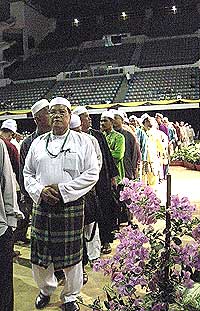 The ulama are back in positions of power and showed their weight in the party, yet what they want is unclear and varied and will have to be negotiated.
The ulama have not yet come to terms that if the party is to play a larger national role, they have to accept a different political role.
Today, there are many ulama within PAS who are unwilling to compromise on their position of power, especially the old guard.
Part of the compromise that PAS will have to address involves Islamic governance. The issue of the Islamic state is off the table from a top-down perspective in terms of the national opposition – at least if the Pakatan Rakyat opposition wants any coherence.
The muktamar showed that there is a move behind the scenes to bring it back. This is taking the form of the ‘unity’ government, although what this unity government is comprised of and how genuinely unified it will be is unclear.
Most of the delegates – and based on contradictory public comments some of the leadership too – are confused.
Pro-unity PAS leaders such as Abdul Hadi seems to fail to understand the contradiction between Islamic government and national power in Malaysia – the minute the Islamic ‘state’ is brought back in any major structural form is the minute PAS can kiss its national ambitions goodbye.
While some PAS leaders, notably those in Terengganu who have taken over the party’s leadership this weekend, remain committed to a top-down Islamic state, most are willing to accept implementing Islamic governance and principles in other forms.
Social justice vs social morality
Now here is where another of the problems facing the party nationally lies – which principles and issues and how should they be implemented?
The strategy that has emerged publicly is to focus on the principles of corruption and justice. This was the theme highlighted at the beginning of the muktamar by Abdul Hadi, but the party has done little to substantively implement these measures within its own party.
PAS would be well served by addressing ethical issues within its own party before the actions of some of its own members discredit it nationally on issues of wealth and corruption. Moreover, the floor debate did not focus on these issues, as it centered on questions of social morality, notably gambling and sex.
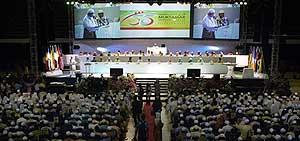 Many PAS delegates want changes in regulating social behaviour to be implemented at the state level. These measures will alienate Muslims and non-Muslims alike, but PAS delegates believe they are doing the “right” thing.
The focus on regulating behaviour rather than on creating conditions for people to have more healthy and just lives puts it at loggerheads with the views of the general public and divides the party internally since these measures undercut PAS’ ability to gain national power.
Ironically, the PAS leaders pushing the hardest for national power are simultaneously pushing for tools that will undermine their ability to appeal nationally.
The issue of the Islamic state and accompanying ulama power will have repercussions for democratic governance within PAS and nationally. Perhaps more than any other party in Malaysia, PAS has healthy competition and democratic practices.
The party polls were competitive and overall clean, despite some back-handed slandering of personalities. Yet, putting in places leaders that believe that their mandate is from god and not the people will cut away at the party’s democratic fabric.
The challenge for PAS is to find a way to accommodate the multiple voices of its ulama, respect its delegates, and importantly, appreciate the views of the general public that differ from their own. PAS has the former, but needs to improve its acceptance of public opinion if it is to realistically hold national power.
Entrenched chauvinism toward women
While the issues associated with Islamic governance are perhaps the most serious for PAS, the leadership appears blind to another major obstacle for the party – its attack on women.
The call for the ban on Sisters of Islam is illustrative of the party’s willingness to target women. These themes played out in the debate itself with ulama chief Harun Taib making a tasteless joke about sleeping with women that showed an entrenched male chauvinism toward women.
Similarly, Nasharuddin highlighted the need for women to follow their traditional roles when he opened the women’s meeting. PAS fails to appreciate that the one area where Islam is seen to curb rights is with regard to women, and in a modern country like Malaysia, such backward male chauvinism will be rejected.
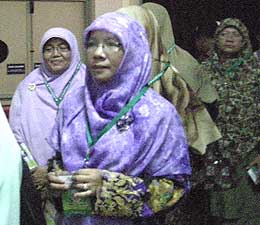 It should learn a lesson from the parliamentary elections in Indonesia, where women voted against PKS (Partai Keadilan Sejahtera) due its endemic practice of polygamy. Women make up half of the electorate and PAS is alienating the majority of them with its insults and close-mindedness of the dark ages.
At issue is how much PAS is willing to be tolerant of different views. Many in PAS are very tolerant. Yet, among the old guard, there is a suspicion of outsiders, and - as the remarks about ‘threats’ suggest - there is a suspicion of those inside who engage with outsiders. It is almost a conspiracy mindset that is tied to the belief that a non-Muslim cannot respect Islam and wants to undermine Islamic parties.
Sadly, this view is not ebbing as the insecurity of the party’s position in the opposition fuels uncertainty. Moreover, since many leaders in PAS believe they are on a mission for god, they feel they have the right to judge others.
This holier-than-though attitude alienates. People ask who is PAS to interpret what it means to be a Muslim, or how a non-Muslim should live. The end result is that such narrow-mindedness leads to narrow public support.
The 55th muktamar revealed how contradictory the tensions between wanting national power and the ability of PAS to reach that goal. While the party is engaging and has opened profoundly in the last few years, the debate about its agenda, structure of power and relations with minority communities undermine it politically in its reach for national support.
Until PAS resolves these internal contradictions, settles its own house in terms of genuinely being an umbrella party accepting of difference, its national ambitions will be unfulfilled, empty platitudes.
Part 1 - Change for PAS or PAS for change?
Part 2 - Islamic party's bold national ambitions
Part 3 - Pakatan's future in wake of PAS muktamar
DR BRIDGET WELSH is associate professor in Southeast Asian studies at John Hopkins University-SAIS, Washington DC. She was an observer at the PAS muktamar.


Are you sure you want to delete this comment?
This action cannot be undone.