




Seeing beyond myths about PAS
comment Much has been written and said about PAS in recent weeks. Yet most of the analyses have turned out to be the same stereotype commentaries as about any other Islamic movements.
The underlying premise of this stereotype is the assumption that there is a dichotomy of ‘conservatives’ and ‘liberals’ in these Islamic organisations, and that it is this constant struggle between the two factions that pushes an Islamic organisation such as PAS to become 'moderate' or 'radical' in its approach and ultimately rehabilitate its image.
comment Much has been written and said about PAS in recent weeks. Yet most of the analyses have turned out to be the same stereotype commentaries as about any other Islamic movements.
The underlying premise of this stereotype is the assumption that there is a dichotomy of ‘conservatives’ and ‘liberals’ in these Islamic organisations, and that it is this constant struggle between the two factions that pushes an Islamic organisation such as PAS to become 'moderate' or 'radical' in its approach and ultimately rehabilitate its image.
In the west, where ‘Islamic experts’ originate, such analyses of Islamic movements are dime a dozen, especially since the Islamic Revolution in Iran in 1979. This single event - later termed as the rise of 'political Islam' - and the Sept 11 attacks on the US in 2001, took the western world by surprise. It propelled the western media into mass-production of ‘expert analyses’ on what they term ‘political Islam’.
The same formula of analysing a political situation involving Islam and Muslims based on the ‘liberals-conservatives’ dichotomy recently went overdrive in the BBC-led propaganda to undermine the presidential elections in Iran.
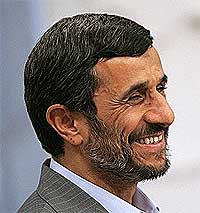 This saw the incumbent Mahmud Ahmadinejad sweeping to victory in a democratic process never seen in any other Muslim countries of the Middle East, certainly not heard of in countries governed by the west's staunchest allies such as Saudi Arabia, Jordan, Morocco, and definitely not in Egypt, where Barrack Obama took the pulpit to deliver his sermon to the Muslim world.
The west and its armada of political experts and commentators, it would seem, have a habit of repeating their mistakes, i.e. believing the myths they created about others, only to discover later how wrong they had been. Of course, the most infamous of such blunders is the one committed in Iran when it armed the despised Shah of Iran to the teeth, pooh-poohing the growing opposition to him and ignoring the immense popularity of Ayatullah Khomeini.
So misled was the west that only months before the Shah was forced to flee amid scenes of mass anger and protests in Iranians cities, the visiting American president Jimmy Carter heaped praise on the Shah, describing his Iran as “an island of stability in one of the more troubled areas of the world…[due] to the respect, admiration and love which your people give to you”. How he must wish now that he had spoken in praise of democracy rather than in praise of a tyrant.
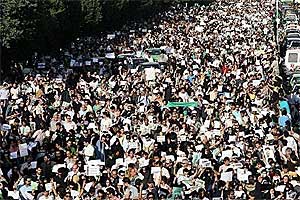 Thirty years later, the same misleading analyses are being mass produced by the western media. This time, yet again, it finds itself in the wrong side of the fence, where a small minority of wealthy and westernised Iranians had been taking to the streets of North Tehran and some Western cities to demonstrate against what they term as their "lost votes".
That their protest movement did not take a life of its own confirms its basic nature: a movement by a small section of people who have a lot more to lose attending rallies in the streets and getting arrested, than in their homes surfing and commenting on social networking sites. As such, any attempt to compare their rallies to the huge sacrifice of lives made by the people of Iran in the days leading up to the fall of the Shah, is a result of a deep ignorance of recent history.
Such ignorance is all the more revealing when it is being argued in the western media that the ‘moderates and liberals’ are up in arms against the Islamic Revolution, something which even they would be embarrassed to find out.
Believing these analyses, groups of Iranian diaspora began waving the old Iranian flags bearing the symbol of the monarchy - an act which ultimately discredited the legitimate Iranian opposition parties in the eyes of the Iranian masses.
Meanwhile, in Malaysia...
Let us now look at how the same formula of analysing Islam and politics has been recycled by dozens of Malaysian commentators during the recent controversy over the ‘unity government’, which opened up a much-publicised ‘rift’ in PAS and brought the party under the radar of ‘expert analysts’.
The rift was supposed to have started in the weeks leading to the PAS general assembly last month. The mainstream, opposition and new media were indulging in that usual and now-familiar analysis of contemporary Islamic political entities: imaginary divisions between ‘conservatives’ and ‘liberals’.
The outcome was that those lumped in the ‘liberal’ category started believing that they were popular, only to find that their ‘conservative’ brethren were far better liked by the younger generation who are often mistaken for seeking to challenge the ‘conservatives’.
The deluge of analyses reached its peak as elections were held for its top positions. Most of the news reports are based on self-styled ‘PAS experts’ whose understanding of Islamic politics and Islamic movement is superficial.
Yet they have succeeded in convincing most people that PAS, not unlike other Islamic organisations subjected to ‘expert’ analyses, is locked in a power struggle between the ulama and ‘liberal’ factions.
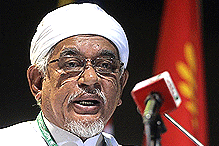 The former in this case are represented by PAS president Abdul Hadi Awang, while the so-called liberals are led by what they describe as ‘younger’ leaders who want closer cooperation with other opposition parties. In the weeks that passed however, it became clear who the ‘liberals’ were: those who display their vehement hatred of Umno. Ironic as it seems, this faction is called the ‘moderates’.
But a quick check would reveal that the experts’ formula for analysing the debate within PAS (as with other Islamic movements) is far from scientific.
For one, lumped together with the so-called ‘liberals’ of the party was also Nik Abdul Aziz Nik Mat, the revered PAS murshidul am who acts as the spiritual leader, and whose opinions and views have always been condemned by the media as conservative (and are therefore ‘backward’). In this instance, Nik Aziz lent his support to those against Hadi, who floated the possibility of cooperation with the Umno.
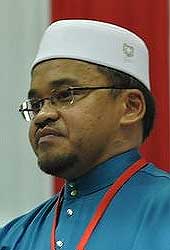 Supporting Hadi’s call was his deputy Nasharuddin Mat Isa, who was widely criticised by other opposition activists not long ago after revelations that he had secret discussions with some Umno leaders to form state governments in Pakatan Rakyat states.
This effectively means Nasharuddin is lumped with the ulama (read: conservative) faction. Yet only four years ago, he was being paraded by the media as the ‘progressive’ face of PAS after winning the deputy president’s post, which was said to have effectively challenged the leadership of ulama in the party.
This time around, when Nasharuddin was challenged for his post, many opposition politicians had discreetly thrown their support behind the ‘liberal’ faction, represented by Husam Musa and seen as being close to Nik Aziz.
Reports and analyses, coupled with blogs, were almost confident of Nasharuddin’s defeat. The result, which saw him win by a large margin, shocked many. Based on their readings of blogs and letters in online portals (including Malaysiakini ), they had expected a victory for Husam whom they lauded as a ‘liberal’. The similarity between this episode and the Iran elections episode is almost striking.
Dangerous situation
The controversy was a godsend for Umno president and premier Najib Abdul Razak. Far from offering an olive branch to PAS, Umno’s tactic has been to create divisions among PAS rank-and- file by praising PAS in the media and calling for dialogue to find common solutions.
Many opposition leaders, especially the younger ones who have a tendency to underestimate Umno fell for this tactic and began condemning PAS leaders who want to talk to Umno.
To date, PAS is the only political party whose elected politicians, in spite of being less ‘savvy’ than other loud politicians, have withstood pressures to jump parties. This was proven during the last two decades of its rule in Kelantan, where Umno has been known to entice PAS state legislators with lucrative offers.
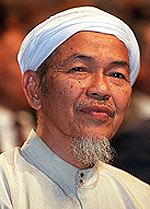 It has failed miserably due to strong discipline and loyalty to the party’s Islamic ideals, apart from Nik Aziz’s charisma as the chief minister. Many would find it hard to contest the argument that the Islamic party’s discipline and credentials stand stark in contrast with other political parties.
Having said that, if a ‘unity government’ does indeed come into existence, its short lifetime is a foregone conclusion. Differences over issues such as Islam and policies related to it mean that it is easier for PAS to fall out with Umno than with, say, DAP. Former premier Dr Mahathir Mohamad rightly acknowledges this fact, saying that a unity government consisting of PAS and Umno would not work.
In Malaysia’s highly racialised politics, a unity government will spell the end of multiracial governance, the battle cry of Anwar Ibrahim’s opposition coalition which earned it the support of voters of all stripes.
Frankly, from the standpoint of its Islamic principles, it is not wrong for PAS to join hands with Umno, if its alliance with the other opposition parties can collapse because of a pigsty. But here is the scenario: there will be a dangerous situation of Muslim-Malays only as the governing race on one hand, and a non-Muslim dominated opposition on the other.
In a multi-religious Muslim country, this can have a destructive effect, especially if the non-Muslim opposition takes their grievances to foreign powers or gets financial backing to wrest power ‘democratically’.
This has been happening in Nigeria and Lebanon, where western governments and Saudi money recently financed Saad al-Hariri’s campaign to win a few more seats than the Muslim-Christians alliance led by the popular Hizbullah. (Oh, and incidentally, no BBC- type ‘revolution’ was reported here.)
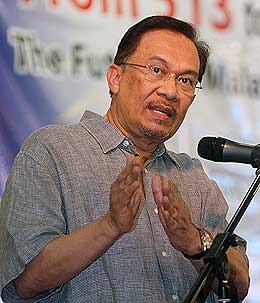 In the long term, the bigger loser, needless to say, would be Anwar. Any recognition by PAS of Umno would mean his road to prime ministership will be rife with even bigger hurdles than the ones he managed to clear so far. His close relationship with Nik Aziz, however, may have paid off during the present crisis in the form of Nik Aziz slamming the door on any move to cooperate with Umno.
‘Expert’ analyses on PAS aside, the bigger question is where PAS sees its ultimate objective - that of Islamising the society - lie. Is it with Anwar - an influential and highly-wired politician with the potential of becoming a popular prime minister, or with Umno - the most powerful party whose influence penetrates every corner of the country?
Or, does it lie in its own ability to recognise why it has so far failed to implement all that it has been fighting for, even when it has a share of power, such as now?
ABDAR RAHMAN KOYA, in his thirties, is Editor at the Islamic Book Trust based in Petaling Jaya, and was News Editor of Harakah’s English Section from 1998-2000. He is also correspondent for Canadian-based Islamic political newsmagazine, Crescent International .


Report this comment
Are you sure you want to delete this comment?
This action cannot be undone.