




MCA and the Tao of 'small things'
comment ‘When you see trouble in advance, it is easily remedied, but when you wait till it is on top of you, the antidote is useless; the disease has become incurable and the organisation is doomed.’
This advice from Niccolo Machiavelli, the Italian founder of modern science cum political philosopher, offers an overdue reminder to MCA, given its cyclical rhythm of internal crises.
comment ‘ When you see trouble in advance, it is easily remedied, but when you wait till it is on top of you, the antidote is useless; the disease has become incurable and the organisation is doomed.’
This advice from Niccolo Machiavelli, the Italian founder of modern science cum political philosopher, offers an overdue reminder to MCA, given its cyclical rhythm of internal crises.
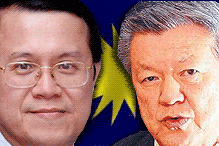 President Ong Tee Keat and his expelled deputy Dr Chua Soi Lek remain on the warpath. Their squabble is complicated by issues involving allegations of impropriety, unjust sacking, bipartisanship and moral complacency.
These allegations and counter-accusations have left little ground for optimism that the MCA is on the path towards reform, as the electorate wants.
Taoism founder Lao Tzu said the hallmark of a strategic mind should firstly examine “small things”.
MCA central delegates appear generally ignorant about how to look at “small things” in electing their leaders wisely. They fail to consider the personality of the candidates, inter-personal conflicts and long-standing differences rooted in party history.
Rather than first subject their mindset to reform, delegates still vote along the lines of shared hatred or prejudice that underscore the existence of factions.
A truly reformed leadership would begin with the delegates focusing on leadership principles, integrity, moral and ethical values.
With the benefit of hindsight, the cause of the on-going leadership crisis lies in the fact that the central delegates were hopeful when they arranged a ‘marriage of convenience’ between Ong and Chua.
Expecting them to work together despite their personality differences has turned out to be a grave error.
“Everybody is against everybody. As a result, the goodwill and unity within the party is disintegrating,” said a leader who stands on middle ground.
Could the problem have been avoided? Should there be a mechanism to resolve conflicts of interest or to overcome personality clashes, or even change a president or deputy, if central delegates desire it?
Resolving the crisis
Prime Minister Najib Abdul Razak has inherited an already ailing Umno. Now, MCA’s sickness - akin to the Influenza A(H1N1) pandemic - is becoming contagious to Barisan Nasional (BN) in electoral terms.
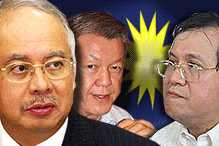 MCA, instead of being Umno’s greatest asset in pulling in Chinese support for the ruling coalition, has instead become an enormous liability.
While Ong is poised to give a police statement anytime now over the allegation that he received a RM10 million donation, the controversy is likely to linger until the next general election.
Chua is left with nothing to piggyback on - and unless he is reinstated as deputy president, his political future is uncertain.
Will the same peace plan applied to Dr Ling Liong Sik and Lim Ah Lek be effective in paving the way for a new leadership regime in MCA?
Would it suffice as a solution if Ong steps down as president and Chua is reinstated as an ordinary member?
It may well be the antidote that Machiavelli would recommend.


Are you sure you want to delete this comment?
This action cannot be undone.