




Sandakan water safe, DAP treads on risky ground
The Sabah Water Department (SWD) says water at the newly-commissioned Segaliud Water Treatment Plant (SWTP) in Sandakan is absolutely safe for drinking and the public have no cause for alarm.
The Sabah Water Department (SWD) says water at the newly-commissioned Segaliud Water Treatment Plant (SWTP) in Sandakan is absolutely safe for drinking and the public have no cause for alarm.
It also says that the quality meets national standards for drinking water and has no foul-smelling odour.
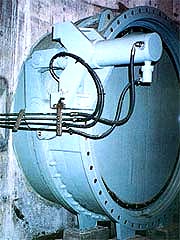 E Coli, the bacterium that causes diarrhoea, is never present in the treated water from SWTP and microbiological tests show that the raw water has low total coliform count, it added.
The department also said, the plant is not malfunctioning as the public have been led to believe "by irresponsible elements".
The SWD was forced to give this assurance after it was inundated with calls from alarmed members of the public.
Earlier, Sabah DAP chairperson Hiew King Cheu had alleged in a media statement, carried widely, that the raw water intake from Sungei Segaliud was unsafe, had a high salt content and was highly polluted.
"Periodic tests of treated water at the plant have found the water is close to that normally associated with a clear mountain stream. This is the best quality water," clarified SWD Director Awang Mohd Tahir bin Mohd."
SMHB Sdn Bhd, a world-renowned water engineering consultant, has certified that the raw and treated water quality at Segaliud is excellent.
Mohd Tahir warned that Hiew and the DAP members, who accompanied him to the SWTP, could be prosecuted for criminal trespass and raising public concern unnecessarily.
No police report yet
However, he did not confirm whether the SWD has any plans to lodge a police report against Hiew for the alleged trespass and his media statement which has been disputed by the department.
"They never asked for permission from us to visit the plant. Water treatment plants are restricted areas and cannot be visited by just any Tom, Dick and Harry at their whims and fancies," complained Mohd Tahir.
"Hiew is ignorant of the whole process of water treatment at the plant."
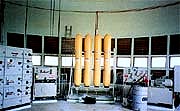 The SWD says it is surprised that Hiew, the MP for Kota Kinabalu, never thought of meeting with department staff officially and getting a briefing before rushing to the media.
The SWD does not want to be used by anyone to score political points.
For starters, said Mohd Tahir, Hiew had failed to differentiate between raw and treated water.
The intake and barrage (river gate) systems at Sungei Segaliud only abstracts raw river water which is then pumped into an impounding reservoir for storage and processing at the treatment plant, he said.
The SWD puts the raw water quality in the reservoir in Class 2 with an Ines of 80.3 to 88.2 i.e. "clean and suitable for water supply".
Aeration, over time, increases the dissolved oxygen level and the water quality reaches Class 1 i.e. clear mountain spring water or "the best water quality".
Salt test to be carried out
"If the people of Sandakan have a higher sensitiveness to saltiness, the Department will carry out even more frequent flushing of the river gate and dilution of the chloride - salt is sodium chloride -- in the dam by pumping fresh water from Sungei Segaliud," pledged Mohd Tahir in dispelling the notion that water from the SWTP was salty.
"Except for the chloride content which is discernible to the Sandakan people, the raw and treated water is of excellent quality."
However, Mohd Tahir does not deny that fish have been found floating dead in Sungei Segaliud "but this may be due to the lack of oxygen in the river".
Organic waste such as fertilisers, weed killers and pesticides discharged by palm oil mills along the Sungei Segaliud compete with the fish for oxygen. However, the waste is biodegradable, adds Mohd Tahir.
"This discharge is caused by overflow of the mill treatment ponds during heavy rain."
"In any case, because of the huge dam capacity, whatever traces of waste discharge in the water will dissipate long before the water reaches the treatment plant for processing."
Still, whenever any fish are found floating in the river, the pumps are stopped immediately and the matter reported to the Department of Environment.
The SWTP can produce 125 million litres of water a day. This is sufficient to cope with increasing demand until 2020. The plant can also be expanded to produce 250 million litres of water a day.


Are you sure you want to delete this comment?
This action cannot be undone.