




Sarawak faces uphill HIV battle
While the number of new transmissions has been relatively low compared to other states like Kelantan, new infections are still on the rise. More worryingly, 57 percent of those newly infected are housewives.
The fight against HIV transmission in Peninsular Malaysia has largely been a fight against intravenous drug use, and rightly so.
Indeed, latest statistics prepared by the Malaysian Aids Council show that intravenous drug use remains the main mode of transmission, far surpassing other modes.
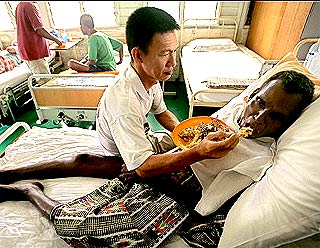 But according to Sarawak Aids Concern Society (Sacs) project manager, Rahmah Wahap-Nicholls, this approach will not aid Sarawak in keeping the number of transmissions low.
This is because the main mode for HIV transmission in East Malaysia is heterosexual sex.
Rahmah addressed representatives of the United Nations (UN), government and civil society at a roundtable discussion about HIV/Aids in Malaysia organised by the UN yesterday.
She said that while the number of new transmissions has been relatively low compared to other states like Kelantan, new infections are still on the rise.
More worryingly, 57 percent of those newly infected are housewives .
‘KL-London trip cheaper than going across Sarawak'
However, Rahmah feels that statistics only tell one side of the story. There are many people in the interiors of Sarawak who have yet to be tested for HIV, and are at risk all the same.
Despite being rich in resources, Sarawak's development has been largely urban-based and many communities are still cut off from basic services due to poor infrastructure.
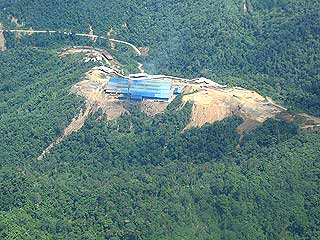 Rivers and timber tracks remain the only routes into the interiors of Sarawak, thus making outreach work very costly.
Indeed, a journey from one part of Sarawak to another can cost more than a return flight ticket from Kuala Lumpur to London.
Poor access is also discouraging villagers from voluntarily undergoing HIV screening at the Klinik Desa.
"It takes many hours and up to RM70 to go up the river to visit a clinic, so who do you think would want to go simply to get tested, even though the service is offered free of charge?" she asked.
But this is only if there is indeed a willingness to get tested. Most of those living in the interior, she finds, have limited awareness of HIV/Aids.
"Sometimes when we see them they ask us, ‘Is it still around? Is it still killing people?'" she added.
This is a view shared by Asia Pacific Network of Sex Workers representative and Sarawakian Khartini Slamah, who said that many rural Sarawakians view HIV/Aids as the peninsular's problem.
Unsafe sex among boarding school students
The low awareness is also prevalent among youth, which Rahmah feel is an indicator of the failure of the government's Healthy Without Aids Programme for Youth (Prostar).
According to Rahmah, secondary school students are practising unsafe sex and are taking drugs because they have no alternative entertainment.
"The teachers told us this themselves and asked us to give talks because they don't know what else to do," she said.
Among the drugs that have grown in popularity among the schoolchildren is methamphetamine, Shabu, which National Anti-Drug Agency's Dr Sangeeth Kaur revealed, can also be taken intravenously.
"We have to get to these children early because by forms five and six, it is too late. We know what to do, but we just don't have the funds," she said.
Indeed funding and manpower is a problem for Sacs, who believes that they are the only Sarawak-based NGO actively championing the cause.
"The state of Sarawak is equivalent to the whole of the peninsular minus the state of Perlis, but there are only six of us (at Sacs) working on the issue," she said.
Political masters are eyeing us
NGOs in Sarawak also have a thorny relationship with the state government, who they believe to have "demonstrated a total lack of concern" for the issue.
"We all know that since the Penan issue...the political masters are eyeing us," she said.
 The
Penan issue
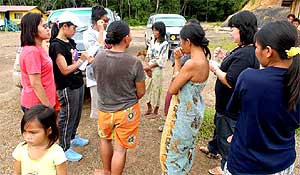
has also made accessing timber camps close to impossible, as companies view NGOs with suspicion, sometimes barring them from entering the camps to run awareness campaigns.
The
Penan issue
has also made accessing timber camps close to impossible, as companies view NGOs with suspicion, sometimes barring them from entering the camps to run awareness campaigns.
Failing to access timber camps mean that awareness campaigns do not reach the large number of migrant workers, whom Sacs feels is a "significant risk factor" in the spread of HIV.
The Sarawak-Kalimantan border is also a hotbed for labour-trafficking, in particular sex workers, as revealed by Mary Huang, the honorary secretary-general of the Federation of Reproductive Health Associations (FRHAM).
"There is an ‘international trade' happening here, with Malaysian pimps bringing in Indonesian sex workers for customers from Brunei," she said.
But at least the outreach programs are reaching out to some of these sex workers, as FRHAM is a larger organisation than Sacs and has the capacity to bring HIV testing straight to the workers' doorsteps.
 If it is true the Sarawak government is lackadaisical about HIV/Aids, then the state's only bet in controlling the virus' spread is through federal government programmes via its Health Ministry.
Particularly if the ministry works hand-in-hand with NGOs in Sarawak, as they do with considerable success with those in the peninsula.
But there is doubt over how much extra funding the ministry can provide, in the current drive to lower government spending.
Despite assurances from the ministry's head of Aids/STD section, Dr Shaari Ngadiman, that "not a single sen will be cut" next year, there is still widespread anxiety among NGOs about the availability of funds for outreach programmes.
Indeed the only specific promise made by Shaari yesterday, was that those who are receiving treatment for HIV will continue to receive free treatment.
As infection numbers continue to rise in Sarawak, it is crucial to recognise that when it comes to HIV/Aids programmes, one size certainly does not fit all.
Will Sarawak and its unique set of problems continue to be overlooked in efforts to prioritise limited funds? Waiting for the number of infections in Sarawak to mirror that of Kelantan would be leaving it far too late.


Are you sure you want to delete this comment?
This action cannot be undone.