




Drug use, HIV cases rife among fishermen
Kelantan, Terengganu and Pahang have the dubious honour of being front-runners in recording new cases of HIV transmission in the country.
Kelantan, Terengganu and Pahang have the dubious honour of being front-runners in recording new cases of HIV transmission in the country.
According to the most recent statistics compiled by the Malaysian Aids Council, Kelantan was worst hit, recording 297 new transmissions between January and June this year.
Pahang followed with 240 new transmissions and Terengganu with 191 during the same period.
 Many factors may have contributed to this scenario, but a study in 2007 by Universiti Malaya (UM) on fishermen in Kuantan provides insight.
Sumathi Govindasamy ( right ) of the UM Centre of Excellence for Research in Aids (Ceria) said that, of the 100 intravenous drug users surveyed, 42 were HIV positive - all of them fishermen.
"We had gone in to research intravenous drug use, but were alarmed to find such high prevalence of HIV among fishermen," she told a roundtable discussion on the incidence of the epidemic.
This discovery led the Ceria team to zero in on fishermen, who make up the second-largest occupational group as far as HIV transmission is concerned.
In a socio-behavioural study, they found a strong link between the community and drugs, with one fisherman describing the two as "inseparable".
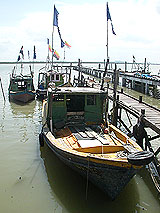 Sumathi said 48 percent of the respondents admitted to taking drugs two to three times a day, while 38 percent had injected drugs. Most began the habit in their early twenties,
The fishermen are mainly deckhands on deep sea fishing boats, and are at sea for nine to ten days at a time. They also admitted to sharing needles, some using the service of ‘port doctors'.
‘Port doctors' are professional injectors, usually other intravenous drug users, who specialise in injecting others and receive drugs or payment for the service.
More alarmingly, 25 percent of the fishermen surveyed said they would continue to use the services of ‘port doctors' even if they themselves have access to new needles.
Sumathi also pointed out that, while the study was undertaken in Kuantan, this is the case in many fishing communities across the nation.
Studies in fishing communities globally have revealed that deep sea fishermen engage in similar behaviour.
In 2004, for example, Philippine health officials were reported to be closely monitoring fishermen believed to have multiple sexual partners and who were using drugs intravenously.
‘ I just don't like using condoms'
The high risk behaviour among Malaysian fishermen can have a detrimental effect on their community, noted Sumathi.
This is because most of the respondents said they do not use condoms, thus exacerbating the risk of HIV transmission.
One fisherman told researchers, in a follow up study in 2009, that while he knows that using a condom reduces the risk of HIV transmission, he does not do so because he simply does not like it.
"It is important thus for us to also look at the hidden sub-population within this community, that is the women in these fishing villages," said Sumathi.
She believes that the incidence of HIV/Aids in these east coast states, which have large fishing communities, must not be viewed as merely a health issue.
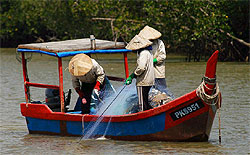 The problem of intravenous drug use by fishermen could be addressed in part through the use of methadone therapy, issuance of new needles; and syringe-exchange programmes, which have been rolled out with a degree of success across the nation.
But a holistic approach must be undertaken, whereby health services are linked with social and welfare services, to ensure the sustainability of treatment and care.


Are you sure you want to delete this comment?
This action cannot be undone.