




Female circumcision a la M'sia
Special report "After I was circumcised, I got up and continued with my game, playing catching and jumping from branch to branch of a ciku (sapodilla) tree. My mother was shouting, Come down! You were just circumcised! "
"After I was circumcised, I got up and continued with my game, playing catching and jumping from branch to branch of a ciku (sapodilla) tree. My mother was shouting, Co me down! You were just circumcised! "
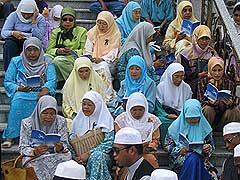 Siti Nora Manaf, circumcised at the age of seven by a village midwife in Negri Sembilan, recalls a memory common to many Malay-Muslim women in Malaysia.
They experience female circumcision at a young age and, to most, this was but a brief and fleeting affair.
This practice however, has drawn criticism in some quarters that equate it with the more drastic technique practised in some parts of the Muslim world and which is defined as ‘female genital mutilation' (FGM).
To understand the issue, there is a need to examine the forms and disparity which exists within the wide spectrum of female circumcision.
According to the World Health Organisation (WHO), the techniques range from the excision of part of the clitoris (Type I); to partial or total removal of the labia (Type II); removal of external gentalia and the sewing shut of the vagina (Type III); and slight scratching of the clitoris (Type IV).
In Malaysia, female circumcision refers to the act of making a small scratch or using a sharp penknife to nick the prepuce of the vagina. It is usually performed on infants within a few months of birth, by medical doctors or midwives.
The practice goes largely unquestioned and is taken as a matter of faith by Malaysian Muslims, most of whom follow the Shafie school of thought.
Interestingly, of the four Islamic schools of thought, only Shafie deems the practice compulsory, while all others say it is unnecessary because evidence for such a requirement is weak.
Both sides trace their view on their understanding of a hadith which reads: ‘Reduce the size of the clitoris but do not exceed the limit, for that is better for her health and is preferred by the husband.'
While a 2007 fatwa in Lebanon has outlawed the practice, the Malaysian Islamic Development Department (Jakim) still deems it compulsory.
A Jakim researcher, who declined to be named, said the decision is based on verses of the Quran, and that the ruling does not differentiate between females and males.
She, however, conceded that proof that circumcision is required for cleanliness only holds true for males.
"To date, there is no scientific proof of the benefits of female circumcision but that does not mean it is not compulsory. The solat has been practised for centuries, but the empirical evidence of health benefits is only now being discovered."
She also said contemporary fatwas against the practice in countries like Lebanon and Egypt are aimed at more severe forms of FGM, which do not exist in Malaysia and which are not supported by Islam either.
"I have spoken to paediatric specialists in the Health Ministry and was told that they don't know of a single case of Types I to III in Malaysia," she said.
Cultural norm, religious practice
However, research done in Kelantan in 1999 by Universiti Sains Malaysia scholars revealed that most women think of the practice - while customary - as only encouraged, but not compulsory in religion.
Out of the 262 women surveyed, only 31.7 percent cited cleanliness as a reason for circumcision while 88.5 percent saw it as a mark of adulthood, despite the fact that it is most commonly conducted on infants within six months of birth.
Most also felt that circumcision can help curb a female's sexual drive while enhancing the male partner's sexual pleasure.
Apart from stating that they saw no harm in the practice, most also said they feared the disapproval of their elders if they do not circumcise their daughters.
Conversations with young mothers in Kuala Lumpur revealed the same need to adhere to what the elders want. However, most admitted to feeling apprehensive that circumcision would cause their daughters pain.
One young mother confided that she entrusted the circumcision to her mother's supervision, as she herself could not stand to see her daughter suffer.
"I inspected my daughter the moment she arrived home, but could hardly find a wound or mark. (The wound) was practically the size of a pinhole," she said.
While young urban Muslim mothers have access to more information, most still rely on older relatives for insight into the issue. The fact that it is encouraged in Islam is reason enough for most of them to accept circumcision.
Those who consulted gynaecologists or paediatricians were generally advised that the procedure could help their daughters curb sexual desire.
Guideline being drawn up
Medical research is quiet on the matter, especially in the Malaysian context.
Research in Sudan found that there is a strong positive relationship between infertility and the severity of FGM.
The damage done to genital tissue compounds the risk of vaginal infection, while damage to the fallopian tubes heightens the risk of infertility.
Pelvic inflammatory disease, for example, is three times more likely in cases where the whole vagina is stitched up.
A 1993 study on the attitudes of Malaysian women towards circumcision showed that there were some cases of infection or bleeding. With circumcision now being conducted by trained professionals in medical settings, such problems are fast diminishing.
There is no official guideline for the procedure, but the Jakim researcher said the Health Ministry is in the process of producing one, based on Islamic guidelines and current practices.
This is despite the WHO having issued a strong warning to all health ministries against the ‘medicalisation' of the practice as early as 1982.
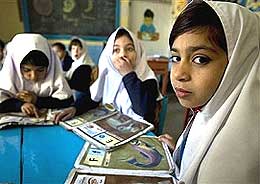 There are those who feel that the act of circumcising children is wrong as it causes irreversible change to the body without the child's legal consent.
This echoes Article 12 of the UN Convention on Child Rights (CRC), which states that the child's view must be considered and taken into account in all matters affecting him or her.
However, the CRC also states that the best interests of the child must be primary consideration for all actions concerning children.
In this regard, all the mothers who spoke to Malaysiakini baulked at the idea of FMG, as practised elsewhere, and maintained that they would never circumcise their daughters if this causes harm.
In a society which places the bulk of responsibility for a child's welfare on the parents, the decision on female circumcision may remain with those who have the child's best interests at heart.
Year-end school holidays, time for circumcision


Are you sure you want to delete this comment?
This action cannot be undone.