




'NEM should honour real NEP's spirit'
The New Economic Model (NEM) can be used as an opportunity to return to the original intentions of the New Economic Policy (NEP), say experts.
The New Economic Model (NEM) can be used as an opportunity to return to the original intentions of the New Economic Policy (NEP), say experts.
But unlike what is commonly believed, staying true to the NEP spirit does not mean retaining ethnic-based affirmative action.
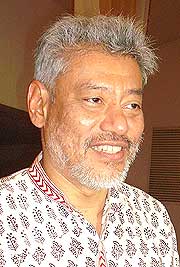 According to assistant secretary-general for economic development in the United Nations department of economic and social affairs, Jomo KS (
left
), this is because the NEP has been largely misunderstood.
According to assistant secretary-general for economic development in the United Nations department of economic and social affairs, Jomo KS (
left
), this is because the NEP has been largely misunderstood.
He says that the NEP, introduced in 1971, was primarily created to address poverty.
However, he adds, it is more commonly remembered for its ‘second prong', that is to restructure society through reducing inter-ethnic income disparity.
At present however, the NEP, which was replaced by the National Development Policy in 1990, has continually been brandished by Malay rights NGO Perkasa.
The group, which some brand ‘neo-NEP', uses the policy to forward the Malay agenda, claiming that benefits doled out to the Malays through affirmative action is their supreme right as Bumiputera.
"No one remembers that (the policy) was supposed to be a means to national unity," says Jomo.
NEM must address income disparity
Indeed, he notes, affirmative action on the basis of supremacy is closer to the principles used in Nazi Germany, than it is to the intentions of the NEP.
While the New Economic Model does not have to focus on inter-ethnic income disparity, it does have to deal with burgeoning disparity across the board.
In 2004 the United Nations Development Program (UNDP) reported that Malaysia has the highest income disparity in South East Asia, with the top 10 percent of society holding 38.4 percent of the nation's wealth.
 Equitable income distribution, says Ratings Agency Malaysia (RAM) chief economist Yeah Kim Leng (
right
), is not only a social goal but an economic requirement.
Equitable income distribution, says Ratings Agency Malaysia (RAM) chief economist Yeah Kim Leng (
right
), is not only a social goal but an economic requirement.
"With growing income disparity, more and more people will not have enough to spend so consumption will drop, posing an economic challenge," he says.
This is because private consumption is generally the strongest driver of economic growth, making up the largest portion of the GDP.
Ethnic-based affirmative action is also a form of wastage in the case where funds do not reach the target groups, Yeah adds.
"(The action) should contribute to all in need, in order for them to contribute to economic growth and for us to maximise their skills and talents," he says.
Otherwise, he adds, the economy will suffer from underutilisation of resources.
Therefore, he says, the best way to tackle the disparity issue to introduce a market-based approach, which uses income as a marker.
Unlike Yeah, Jomo contends that ethnicity plays a role in easily identifying deserving target groups.
However, he agrees that the NEP has been abused to benefit a select few.
Perkasa to influence policy?
"In the first decade of the NEP, stock ownership for Bumiputeras was largely held by the government in trust for the entire Bumiputera community," he says.
However, the subsequent decades have seen a departure in this relatively equitable distribution practice due to the advent of privatisation.
"Privatisation policies have exacerbated cronyism, and many of the biggest cronies are Bumiputera," he says.
While the official announcement on the NEM will only be made next week, sources within the government have revealed plans to repeal such ethnic-based actions.
At the same time, the government has indicated that the policy will seek to address the needs of the bottom 40 percent of the population.
But whether or not this will pan out will depend on its political will to not accede to pressure groups, particularly those from the Malay community.
The apparent rapid-rise in Perkasa's popularity has also convinced some that the group is indeed airing the grouses of the Malay community at large.
This community, analysts believe, is a lynchpin of Malaysian politics and its insecurities are often pandered to for the sake of securing votes.
While the next general election is scheduled to take place in 2013, analysts believe that snap polls may occur as early as next year.
 The upcoming by-election in Hulu Selangor, following the death of MP Zainal Abidin Ahmad (
left),
may also halt reform efforts for the sake of preserving popularity.
The upcoming by-election in Hulu Selangor, following the death of MP Zainal Abidin Ahmad (
left),
may also halt reform efforts for the sake of preserving popularity.
Najib can invoke father's legacy
However, Yeah feels that the government still has the chance to win over any dissenting voices by going to the ground to explain.
"Debates and public discussions on the issue will be healthy as it can help people recognise the greater gains," he says optimistically.
But the government must make sure that there is a public consensus on the policy as strong objections can "derail reforms" and "rattle investor confidence."
"The success of the policy depends on the government's ability to make (each ethnic group) feel secure," Yeah says.
Despite the objections faced, Prime Minister Najib Abdul Razak has at least two things in his favour, says Jomo.
The economic crisis, he says, has given Najib the opportunity to say "business as usual is unacceptable" and push for reforms.
Najib is also the first son of second prime minister and founder of the NEP, Abdul Razak Hussein.
As Razak's son, Jomo points out, Najib can invoke his father's legacy, which to date has been largely undone.


Are you sure you want to delete this comment?
This action cannot be undone.