




In the words of Tun Abdul Razak
comment Every now and then, speeches in the past read many years later suddenly has special significance because their time has come.
Every now and then, speeches in the past read many years later suddenly has special significance because their time has come.
It was indeed fortuitous that a close friend put into my hands a compilation of Tun Abdul Razak's speeches. Published in 1969, Strategy for Action: The Selected Speeches of Tun Haji Abdul Razak , was edited by Victor Morais with an introduction by Tunku Tan Sri Mohamed Burhanuddin.
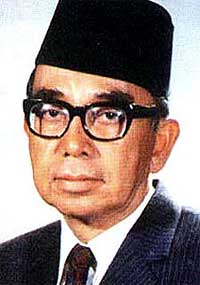 Twelve years after independence, Tun Razak (
left
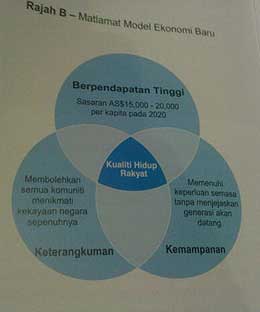
) was still the tireless and loyal deputy prime minister to Tunku Abdul Rahman. His reputation as the ‘father of development' was already firmly established. Some of these speeches highlight the ideas that made his reputation whilst others point to his aspiration for Malaysia. Now, some forty years later, when the focus is on the recently announced the New Economic Model, it might be worthwhile revisiting Tun Razak's more visionary ideas.
Twelve years after independence, Tun Razak (
left
) was still the tireless and loyal deputy prime minister to Tunku Abdul Rahman. His reputation as the ‘father of development' was already firmly established. Some of these speeches highlight the ideas that made his reputation whilst others point to his aspiration for Malaysia. Now, some forty years later, when the focus is on the recently announced the New Economic Model, it might be worthwhile revisiting Tun Razak's more visionary ideas.
Tun Razak, like his colleagues in the Alliance Government, believed that loyalty to Malaysia was imperative going forward as a nation state. He stressed that the foundations of a united and happy Malaysia was the spirit of nationhood, defined as loyalty to the country above race and creed:
"We believe and I personally implicitly believe - that it is imperative that the various races in this country must live peacefully, with goodwill and friendship towards one another if Malaysia is to survive and grow as a strong and united country. The various races must ultimately be integrated into a single united nation whose sole object of loyalty is to Malaysia only." ('The Turning Point in the History of This Country', p 385)
Guiding principle
But what would be the guiding principle defining Malaysia? As a lawyer and a member of the independence negotiations, Tun Razak was a ‘constitutionalist' and there was little confusion in the mind of Tun Razak regarding the spirit of the Malaysian Constitution. It was certainly not a tool to assert the supremacy of one race over the other.
Tun Razak made this very clear when he addressed the Debating Union at the University of Malaya in 1965:
"Many of you must have heard lately of allegations against the Alliance Government, that we believe in the supremacy of one race over the other and that we have not provided for equal rights to all our citizens. I would like to rebut these allegations because clearly our Constitution does not provide the supremacy of any single race or community. All Malaysians of all races are equal under the Constitution and their rights and privileges are zealously guarded.
The Constitution, however, provides for the safeguard of the special position of the natives.
"This does not mean supremacy or privilege but rather a special position which requires special attention...It is known to everybody that the natives are economically backward, and therefore, in order to give them a fair chance to compete with other races they are given this special attention in the Constitution or in plain language a handicap. This handicap gives the natives a chance to have a share in the economic and business life of the country." ('Constitution: Equal Rights to All', p 304)
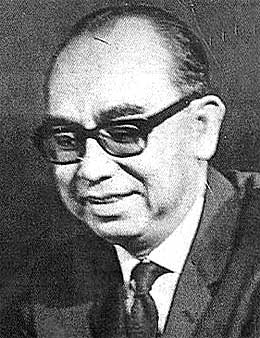 Having established the foundations of a united nation and said that the Constitution was the basis for national unity, Tun Razak explained away the idea that government knew best. He stressed instead that for Malaysia to succeed, time was required for the various races to come together and become one nation:
"We in the Alliance Government and in the Central Government do not pretend to be clever but we know we are sincere and we are practical. We know what our objective is, we know what our concept of Malaysia is because we were the people who conceived and brought this to life. Our nation has just been born. Let us give it time to grow to manhood. Let us all in unity develop and foster its growth." ('How to Build a United Nation', p 308)
He therefore made it very clear that whilst government provided leadership, progress and development required the support of the people. In short, to a certain degree, the responsibility for development rests with the people as much as it is the duty of the government:
"The development of our country, one might say, is a trust which is shown between the Government and you, as individuals. The Government can plan and undertake a limited number of projects, but the real development of the nation automatically rests with young people like yourselves in the skills which you can give and in the effort which you put forward to take advantage of these opportunities." ('Development is a Trust', p 432)
Special assistance
Tun Razak took on the challenge of bringing progress to rural areas but highlighted that the bumiputera business community needed to play its role in developing the Malay economy. He already set up Mara, Felda and many other initiatives to help uplift the bumiputera
economy.
This is the handicap that he was talking about but he wanted to remind the bumiputera that such "special assistance" was only temporary and that if opportunities were not seized to make the community more resilient, the bumiputera would be left further behind. He chose to address the issue in his 1967 speech to the Associated Malay Chambers of Commerce in Alor Setar:
"My concept of a thriving and lively Chamber of Commerce is an association of businessmen who get together not merely with the selfish intention of what they can get for themselves, but also with the more positive and progressive intention of what each and every one of them can give and contribute not only towards the benefit of their own businesses, but also to the benefit of our national trade, commerce and industry for the economic progress of Malaysia!"
('Warning to the Bumiputera', p 259)
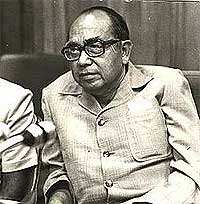 Other than the business community, Tun Razak was keenly aware that he had to win over the civil service if Malaysia was going to move forward. The ultimate obstacle in the civil service that impeded progress was politics. In his speech to senior civil servants in Petaling Jaya in 1967, Tun Razak had this to say:
"Identifying administrative problems between Federal and State Governments. This should be the crux of your coming together. Speak your mind during this discussion, so that we will be able, as a result of your group-findings, to pinpoint any defects in the present administration of Malaysia. On the subject of ‘Politics and Administration', as civil servants, I hope you will stand up to us politicians, and not allow yourselves to be dominated by us, because in a true democracy, the civil servant has a duty to perform." ('The Backbone of the Government', p 267)
Although often credited as a technocrat with little time to devote to 'charming' the people, Tun Razak was also an astute politician. He knew that for government policy to work, he had to confine politicians to the realm of politics. Parliamentarians were lawmakers and should have little business enriching themselves at the expense of national development.
But party politics also had an important role to play for the party is the government's link to the grass-roots. In this speech, Tun Razak advices to his own party, Umno and all Malaysians, on the importance of moderation:
"I ask members of Umno to be loyal to the Party, to the aims and objectives and to the top leadership. To all good friends of Umno of other races, I ask them to help Umno because it is the duty of us in Malaysia today to help strengthen the sensible, moderate leadership
which alone can lead this country in peace, harmony and unity towards meeting the rising expectations of our people of various races for a better life and a more just society. If this sensible and moderate leadership were to fail, then the country would veer either to the right or the left. If this happens then I am certain that misunderstanding and misfortune await all of us.
"Let us therefore rally to the help of this middle-of-the-road leadership - the right road towards peace, happiness and stability of our people and our beloved country, Malaysia." ('The Turning Point in the History of This Country', p 386)
Advertisers and advertising agents
One particular speech that Tun Razak made in 1968 about the role of advertisers and advertising agents has special significance to our current political situation especially now that our political masters have given out contracts to public relations agencies to help spruce up their image. For those who engage these specialists, the following observation by Tun Razak should be heeded:
"I must say that your occupation, advertising agents, and mine have one important thing in common. We both have to serve our masters and produce results. If we don't, in your case you will be thrown out of jobs, and in my case, I will be thrown out of office. However, there is, I admit, one difference - a good politician advertises on the basis of results he has produced; whereas you, ladies and gentlemen, advertise to get results." ('Politicians and Advertising Agents: The Difference', p 389).
 Undoubtedly, not all that Tun Razak said can be captured in this short article and not all of it is relevant.
His last remark about being results-oriented before advertising the fact whilst sensible may not make sense to our politicians today.
But some fundamentals remain quite true: good politicians are results-oriented; and good citizens puts nation above race and creed. There was little doubt as to what the Constitution stood for and absolutely no ambiguity as to the fact that all Malaysians are equal.
It can only be hoped that the New Economic Model will have these fundamental values as its basis; one of the most important being development with equity, and progress one can trust.


Are you sure you want to delete this comment?
This action cannot be undone.