




New probe called into Sabah CM's 1976 air crash death
Opposition leaders in Sabah are demanding a new probe into the June 6, 1976 air crash which killed Chief Minister Donald Mohd Fuad Stephens.
Opposition leaders in Sabah are demanding a new probe into the June 6, 1976 air crash which killed Chief Minister Donald Mohd Fuad Stephens.
A connection is seen between the air crash and the unpopular oil agreement between the Sabah state government, Petronas – the national oil corporation, and the Federal Government.
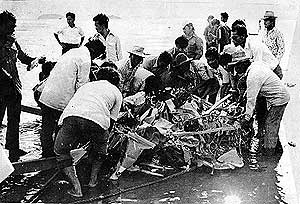 The air crash (
left)
, dubbed the
‘Double 6’
tragedy, also took the lives of nine others.
The air crash (
left)
, dubbed the
‘Double 6’
tragedy, also took the lives of nine others.
Demands for the new probe follow dramatic new disclosures by former Petronas chairman and Finance Minister Tengku Razaleigh Hamzah during a talk, Minyak Sabah Untuk Siapa (Sabah’s oil for whom?) – in Kota Kinabalu last Friday.
“Razaleigh admitted during his talk that he was still haunted by the tragedy especially when he comes to Sabah,” pointed out Common Interest Group Malaysia (CigMa) chair Jeffrey Gapari Kitingan who was present. “What he said is enough for the authorities to re-open the probe into the air crash.”
CigMa is an ad hoc apolitical NGO dedicated to “reversing the re-colonisation of Sabah and Sarawak since 1963”.
The new probe, according to Jeffery and several other opposition leaders, would clearly establish that the oil agreement “was void in law” as he thought there were elements of ‘coercion’ and ‘fraud’.
“An agreement is something that is valid and exists in law,” pointed out Jeffrey, a Phd graduate in law and international diplomacy from the Fletcher School of Law at Harvard University.
“An agreement must demonstrate offer, acceptance, no revocation, capacity, intent, consideration, certainty, free consent i.e. no coercion or fraud, it must not be illegal or against the law.”
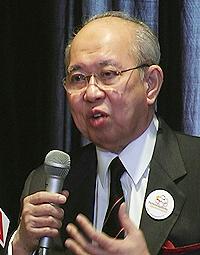 He noted that Ku Li (
right
), in response to a question from
Malaysiakini
after his Friday talk, had stressed that “the oil agreement exists and is valid in law”. However, Ku Li did not cite any evidence to support his contention besides referring to legislation on the matter.
He noted that Ku Li (
right
), in response to a question from
Malaysiakini
after his Friday talk, had stressed that “the oil agreement exists and is valid in law”. However, Ku Li did not cite any evidence to support his contention besides referring to legislation on the matter.
Questions raised
Several questions were raised on the air crash, according to Jeffrey, in relation to the oil agreement. Why Stephens refused to sign the oil agreement in Labuan as scheduled, was one.
The Sabah strongman noted that Ku Li had insisted during his talk that Stephens planned to sign the oil agreement later that night in the Sabah capital. The Kelantan prince’s belief, continued Jeffrey, was merely based on the presence of Sarawak Chief Minister Abdul Rahman Yakub who had earlier signed the oil agreement.
Hence, Sabah had been expected to “meekly follow the Sarawak example perhaps with a little persuasion from Rahman Yakub who was already beholden to the Federal Government as a proxy.
“However, everyone knows that Rahman Yakub was being propped up by the federal government,” said Jeffrey. “This was after the ouster of the independent-minded Sarawak National Party and Chief Minister Stephen Kalong Ningkan under an emergency decree.”
He does not believe that Donald Stephens promised to sign the oil agreement later in the night in Kota Kinabalu. Had Stephens any intention to sign the agreement, he would have done it in Labuan as scheduled, believes Jeffrey. “Since he refused to sign in Labuan, it’s highly unlikely that he would have agreed to sign it a few hours later.”
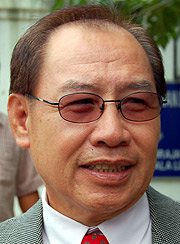 There is no way that Stephens would sign something that his predecessor and childhood friend Mustapha had earlier rejected, believes Jeffrey (
left
). “These two, like many Sabah leaders, always consulted each other privately even as they clashed in public.”
There is no way that Stephens would sign something that his predecessor and childhood friend Mustapha had earlier rejected, believes Jeffrey (
left
). “These two, like many Sabah leaders, always consulted each other privately even as they clashed in public.”
He opines that another disturbing feature of June 6, 1976 was why the signing ceremony for the oil agreement was scheduled to be held in Labuan and not the state capital for such an important legal undertaking.
This raised the question of whether the signing ceremony facilitated the implementation of Plan B - the air crash to wipe out almost the entire anti-oil agreement Sabah state cabinet in one fell swoop.
Sabah, stressed Jeffrey, was a repeat of Sarawak. “Ku Li financed and allegedly masterminded the ouster of the Mustapha government after it refused to accept the words ‘in perpetuity’ in the draft oil agreement.” He added that his recollection and understanding of the Double Tragedy is also backed up by the 1976 book, The Politics of Federalism – Syed Kechik in East Malaysia.
Belted up
Other recollections of people on the ‘Double 6' tragedy ( memorial below) are not that certain, admits Jeffrey.
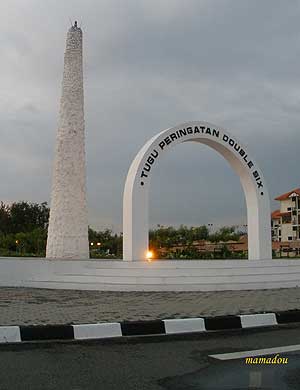 What is certain, he notes, is that Ku Li was already seated and belted up in the ill-fated aircraft before he was pulled out by then Deputy Chief Minister Harris Salleh.
There appears to be some confusion, in Jeffrey’s view, on whether Harris was also initially seated in the same aircraft or he wasn’t one of the passengers.
If he was not among the passengers, did he get only Ku Li out in the nick of time or did he also invite Rahman Yakub and one other unnamed person to exit the aircraft?
Ku Li’s account last Friday appears to suggest that it was he who invited Rahman Yakub and the third person to follow him after being invited by Harris to abandon the aircraft.
Finally, what cannot be disputed is that Harris’ invite to Ku Li, if not Rahman Yakub, was a clear breach of protocol as his boss, Stephens, was the host aboard the ill-fated aircraft, sums up Jeffrey.
“Besides, the oil agreement was more important than a cattle-rearing project in Pulau Banggi, still the poorest place in Malaysia.”
There was no reason for Harris and Ku Li to give priority to visiting the cattle-rearing project over the oil agreement being signed in Kota Kinabalu. It is as if some people knew that there would be no signing ceremony there.
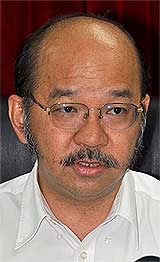 Jeffrey’s stand has also struck a chord with Sabah Progressive Party (Sapp) President Yong Teck Lee (
right)
, among others. The Sapp chief feels that how the past is remembered will help shape today’s Sabah and the future.
Jeffrey’s stand has also struck a chord with Sabah Progressive Party (Sapp) President Yong Teck Lee (
right)
, among others. The Sapp chief feels that how the past is remembered will help shape today’s Sabah and the future.
“Tengku Razaleigh’s account of how he left the ill-fated aircraft at the very last moment opens up old speculation of how the plane crashed in Sembulan,” said Yong in a statement.
Yong also wants the continued ban on the book, Golden Son of the Kadazan , to be lifted so that it can aid public understanding of the air crash as well.
The book, by former Malacca DAP leader Bernard Sta Maria, is on the life and times of Peter Mojuntin, a noted Kadazan nationalist who met a fiery death on the Stephen’s aircraft.


Are you sure you want to delete this comment?
This action cannot be undone.