




Gangsters haunt Sibu by-election
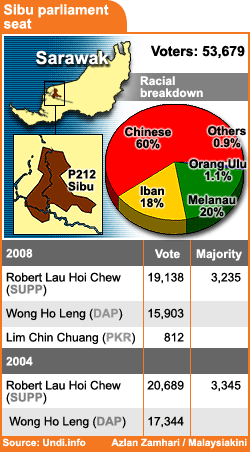
The parliamentary by-election on May 16 in Sibu is expected to be a close contest, a straight fight between BN and Pakatan Rakyat.
We may witness the usual fistful of ‘independent’ candidates, perhaps even one from the oddly named Parti Cinta Malaysia, on nomination day May 8. Some independents will of course be hoping to cash in by being spoilers, but these are unlikely to affect the outcome.
Thanks to a new-born, slightly wobbly-kneed agreement among Sarawak Pakatan parties - DAP, PKR, PAS and now Snap - three-cornered fights between the ruling BN and two opposition parties may now be avoided for the upcoming state elections...
The parliamentary by-election on May 16 in Sibu is expected to be a close contest, a straight fight between BN and Pakatan Rakyat.
We may witness the usual fistful of ‘independent’ candidates, perhaps even one from the oddly named Parti Cinta Malaysia, on nomination day May 8. Some independents will of course be hoping to cash in by being spoilers, but these are unlikely to affect the outcome.
 Thanks to a new-born, slightly
wobbly-kneed agreement
among Sarawak Pakatan parties - DAP, PKR, PAS and now Snap - three-cornered fights between the ruling BN and two opposition parties may now be avoided for the upcoming state elections, expected within the next couple of months, and the 13th general elections. Sarawak is the only state that currently holds staggered state and parliamentary elections.
Thanks to a new-born, slightly
wobbly-kneed agreement
among Sarawak Pakatan parties - DAP, PKR, PAS and now Snap - three-cornered fights between the ruling BN and two opposition parties may now be avoided for the upcoming state elections, expected within the next couple of months, and the 13th general elections. Sarawak is the only state that currently holds staggered state and parliamentary elections.
However, observers say local politics in Sibu does not readily conform to the simple national narrative of BN vs Pakatan engaged in a race to Putrajaya. There are many local nuances, and a few unique characteristics of the election in Sibu.
The incumbent Sarawak United People’s Party (SUPP) and the Democratic Action Party (DAP) are old foes.
Both are ostensibly multi-racial parties, but essentially represent Chinese interests. Since racial politics is the business of counting heads, both BN and Pakatan have played it safe by choosing a Chinese candidate in a 60 percent Chinese-majority seat.
Racial overtones not prominent
Even so, Sarawak’s politics are not as racially charged as in the peninsula. This is amply demonstrated by the furious tub-thumping in the on-going Hulu Selangor by-election campaign, and the hysterical onslaught on leading opposition figures as “traitors to the Malay race” for alleged transgressions, ranging from sexual deviancy to social drinking.
 In contrast, the
opening salvoes
from Pakatan leaders - Anwar Ibrahim (
above
), Lim Kit Siang and Nasaruddin Mat Isa - during their visit to Sibu on Sunday emphasised the major themes of corruption and dispossession of land. These are the Pakatan’s most powerful weapons against the SUPP and BN, cutting across the racial divide.
In contrast, the
opening salvoes
from Pakatan leaders - Anwar Ibrahim (
above
), Lim Kit Siang and Nasaruddin Mat Isa - during their visit to Sibu on Sunday emphasised the major themes of corruption and dispossession of land. These are the Pakatan’s most powerful weapons against the SUPP and BN, cutting across the racial divide.
Many observers say DAP’s surprising success in the 2006 state assembly polls, wresting an unprecedented six seats from the ailing SUPP, was fueled mainly by urban resentment against the allegations of graft and cronyism surrounding state BN leader and long-time Chief Minister Abdul Taib Mahmud.
Taib has been described as the driving force behind corporate land grabs, allowing the economy to be dominated by a handful of well-connected, colossal companies. These include Cahya Mata Sarawak (CMS), owned in large part by his children, and Naim Cendera, helmed by his first cousin.
Sarawakian political analysts say the “jobs for the boys” policies have led to stagflation for the common man – scant economic opportunities, combined with ballooning costs of living, and one of the worst poverty rates in the country.
Taib’s reputation was a tremendous liability for BN among urban voters in 2006. These voters have enjoyed access to a broad range of media, including online news portals and widely-read Chinese newspapers. This led to the remarkable result of urban SUPP members voting en masse for the DAP, and against their own party’s candidates, allowing the DAP to clinch six urban seats and the PKR, one.
It may also explain why Taib is expected to take a back seat in the Sibu campaign. Nonetheless, his family’s fortune remains a potent campaign issue.
Discontent brewing within SUPP
SUPP, the second largest component in the state BN, plays a similar role to MCA in the peninsula. Like the MCA too, SUPP has recently suffered acrimonious bickering between factions, despite a gag order from the party leadership stifling public dissent.
SUPP began life as a multi-ethnic party formed by the vestiges of the communist insurgency in the state in 1959. Its socialist credentials attracted the support of many working-class Chinese, but in the last two decades, the upper echelons of the party have become increasingly dominated by the business elite, leading to some disenchantment among rank-and-file supporters.
Local politicians have also become embroiled in controversies concerning gangsterism, corruption and decadent living.
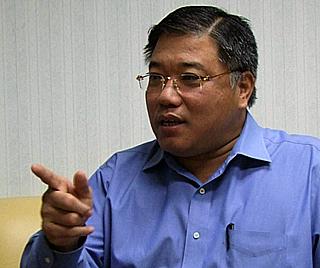 In 2007, for example, Bintulu MP Tiong King Sing (
right
) engaged in a war of words with the late five-term Sibu MP Robert Lau Hoi Chew.
Tiong claimed Sibu
was a haven for gangsters, and insinuated that the gangs had influence with the local police.
In 2007, for example, Bintulu MP Tiong King Sing (
right
) engaged in a war of words with the late five-term Sibu MP Robert Lau Hoi Chew.
Tiong claimed Sibu
was a haven for gangsters, and insinuated that the gangs had influence with the local police.
His claims prompted Bukit Aman to launch an anti-gangsterism operation in the state. The police then announced an official investigation into an unnamed deputy federal minister and several other local political figures, for alleged involvement in gangsterism, illegal logging and attempted bribery of senior police officers. Lau was one of the five deputy federal ministers from Sarawak at the time.
The day after the police statement, Lau took the unusual step of insisting publicly that the police ought not to announce the name of the politicians, unless there was enough evidence to charge them in court. The name of the deputy minister under investigation was never released. Lau succumbed to cancer on April 9, and was honoured as a noted philanthropist.
The underworld’s powerful influence
Local gangs or secret societies retain a powerful influence in Sibu society, on both sides of the political divide. Many gangs contribute their logistic support and humanpower during election campaigns, putting up posters and ferrying supporters around, for a price.
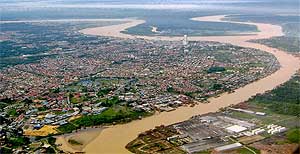 The underworld also plays a significant role in determining the outcome of urban elections in the state. Election observers say rich politicians can influence voters’ decisions by providing conventional payment for votes, as well as employing more creative methods of vote-buying.
A rich politician might place large bets on his opponent using illegal gambling syndicates, so that the odds on his opponent would shorten, while the odds on the wealthy politician would lengthen. As a result, punters would place more wagers on the wealthy politician, and would then canvass for votes for that politician among their families and friends.
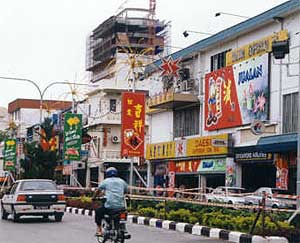 Yet despite the impediments of gangsterism and gambling, the voters of Sibu will still have an opportunity to have their voices heard in the next three weeks.
They will speak out on national issues of corruption and governance, as well as local issues, such as recurrent debilitating floods, under-employment, rural-urban migration caused by of the loss of native land, street crime and gangsterism, and fear of the safety of the mammoth Bakun dam upriver.
In the midst of all the sound and fury from both political camps, the people of Sibu can only hope that BN or Pakatan are listening.
KERUAH USIT is a human rights activist - ‘anak Sarawak, bangsa Malaysia’. This weekly column is an effort to provide a voice for marginalised Malaysians. Keruah Usit can be contacted at keruah_usit@yahoo.com.


