




Regulate gaming by nationalising it
It is said that the Chinese would place bets on almost anything. The most famous being a tale attributed to the father of a famous Singaporean, who was said to be such an avid gambler that he would place a bet with a friend if he saw two lizards crawling up the wall.
It is said that the Chinese would place bets on almost anything. The most famous being a tale attributed to the father of a famous Singaporean, who was said to be such an avid gambler that he would place a bet with a friend if he saw two lizards crawling up the wall.
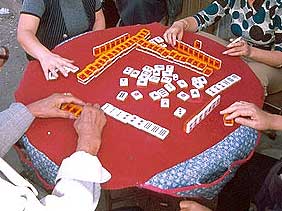 It would be more accurate to say that the Chinese are avid risk-takers and are willing to risk all for a big break in life. This is the same “gamble” our ancestors took when they migrated from China, often fleeing unbearable living conditions for a brighter future.
The recent controversy over gaming or more accurately the alleged provision of football betting licence to Ascot, a Berjaya-related company, brings to the fore some serious self-righteous posturing.
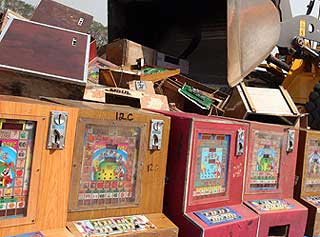
Malaysia is a country that actively promotes gambling. We have a casino, daily cruise-ships to international waters that happen to have casinos on board, 4D draws, quite a number of turf clubs for horse-racing and all sorts of “one-arm” bandits.
Apparently there is a moral issue here. Gambling, it seems, destroys lives. Compulsive gamblers borrow money and put their families in jeopardy. Football betting will make things worse. We have to stop it to prevent individuals from falling into a vicious cycle of gambling and indebtedness.
To make things worse, studies have shown that those who are poor and usually not so well-educated are more prone to gamble. Apparently, the less one has, the bigger the risks one is willing to take. Here is the case of having literally “nothing to lose”.
It is therefore better to protect the individual from himself. In short, all the clamouring to prevent football betting lies with the basic idea that we must protect the individual from himself.
Gaming goes way back
This is a very old argument, one that goes back some 200 years. Even the British had problems with gaming. In 1823, Stamford Raffles banned gambling, then a lucrative source of revenue for the Straits Settlements government (including Penang and Malacca). However, this flew in the face of “free private enterprise” and the basic ideology of the freedom of the individual, that were the bases for the founding of Singapore.
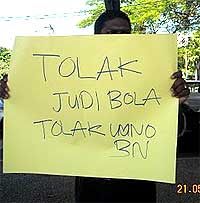 The controversy over gaming has never been resolved. Our present-day dilemma is but a continuation of this longer history except that instead of Christian moral crusaders, we now have Muslims objecting to gaming. Having this debate in a Muslim-majority modern nation state governed by a secular constitution makes it more problematic.
If we were to proceed with the debate on the premise that the state has a responsibility to “protect” the individual from him/herself, we must then put an end to the casinos, the racing clubs, the lotteries, special draws and all other forms of irrational risk-taking. What about the stock market? Aside from the machinations of the financial sector, the stock market is little more than a hall of roulette tables.
Like Raffles’ 1823 edict, the reality is that risk-taking will happen regardless of prohibition. Although gaming was officially illegal, it flourished throughout British Malaya.
In the early 20th century, the United States went through a period of Prohibition. Alcoholic beverages were banned. It lasted for a while but then folks just made their own moonshine and the gangsters got rich providing the stuff on the black market.
Gaming bad, but revenue good
The state also has another conundrum. Gaming, like other activities that are bad for you, generates a lot of revenue. In the early colonial period, government monopolies over arrack, opium and gambling were farmed out to the highest bidder.
 The revenue generated was used to pay administrators, build roads and government houses, and hospitals. In fact, the opium farms were so lucrative that it totaled nearly 40 percent of total revenue generated in British Malaya for nearly a century.
After World War II and during the Emergency, when the British were fighting the communists, the Malayan Chinese Association organised the first national lottery to raise funds to build the ‘new villages’.
The lottery is nothing new to the Chinese, the oldest evidence tracing back to the Han Dynasty, some two thousand years ago. The oldest running national lottery is Holland’s Staatsloterij (state lottery), first started in the 17th century. Basically, this was the most painless form of taxation.
The fabulous museums and art institutions in the United Kingdom and the United States are funded directly or indirectly from lottery money. It is only with this funding that they were able to acquire their extensive collections, maintain them and open their doors free to the general public. These arts institutions are also the basis for these nation’s ‘creative economies’ including tourism, as they attract talent to live in these cities.
In short, we should regulate gaming by nationalising it. All forms of gaming licences should be administered by a state agency like the national lottery in the United Kingdom. Just as we have the Securities Commission to regulate the stock market, we should also have a Gaming
Commission to regulate all forms of alternative “entertainment-related” risk-taking.
The enormous revenue generated can be funnelled to funding education, hospitals, arts institutions and the provision of scholarships for non-Muslims. As the revenues generated are from non-Muslims (Muslims are not allowed to partake in gambling activities except in the stock market), the government will be able to satisfy the needs of Indian students asking for scholarships and much more.
Revenue can help non-Muslims
Berjaya tycoon Vincent Tan recently said that he would donate over RM500 million to his Better Malaysia charity fund. If a Gaming Commission was set up, we would be able to use the revenue generated from gaming to address the needs of non-Muslims very effectively.
If football betting can generate at least RM500 in revenue, imagine all casinos, cruise ships, turf clubs, and one arm bandits? It can be easily estimated that the total revenues generated from gaming would be at least RM 2 billion per annum.
Once legalised, we can incorporate current illegal betting players into the system. Whether we like it or not, they exist. They are more than able to bribe our poorly paid civil servants and police officers.
The British were not able to eradicate them in the age before human rights. Malaysia does not have the resources or the inclination to clean the streets of them. It is better to legalise all forms of gaming and set up a special body to regulate them.
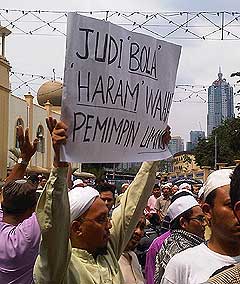 Only one problem: Malaysia is an Islamic state, so claims the BN. We cannot have such an institution and we definitely cannot legalise gaming on a big scale. So, we rather exist in the twilight zone, working through concessionaires and relying on them to be charitable with whatever revenue they generate.
The problem is that for Muslims, revenue generated by tainted sources is not halal. How then is the government able to isolate taxes on alcoholic beverages, Genting Highlands’ casino, cruise ships and one arm bandits?
It would appear to me that to the pious Christian or Muslim, the entire government budget is already tainted with revenue from gaming. How the government and these individuals can reconcile themselves with all this moral posturing is quite impressive. In some other societies, we would just label them hypocrites but not in Malaysia, we are too polite for that.


