




Who selects the councillors in Selangor?
Most columns or opinion pieces are meant to be timely. They are also written not as reactive responses to recent events but are to be more measured, analytical and insightful.
I originally wanted to write a piece on the process of selecting local councillors two weeks ago, a few days after the swearing-in of all the local councillors in Selangor. Little did I know that the postponing of my article to this week would coincide with the explosive allegations that the letterhead of an exco member of the Selangor state government had been used by a councillor to procure contracts.
These allegations have subsequently led to the sacking of Tee Boon Hock, a DAP councillor in Klang. But his sacking have not cleared the clouds hanging over the head of Ronnie Liu, DAP’s executive councillor in charge of local government affairs. In fact, the continued allegations against Liu led to what may be the first case of disciplinary action taken against a sitting speaker of a state assembly over a ‘tweet’ where Teng Chang Kim seemed to imply that real culprit had not been punished.
Instead of peeling away the sordid layers of political intrigue and contestation within the DAP in Selangor, I will choose to focus on the process by which councillors are selected. This, I think, is one of the core underlying issues which was not sufficiently investigated, understood or explained when the swearing-in of councillors in some of the key local councils including Petaling Jaya and Subang Jaya were inexplicably delayed a few weeks ago...
Most columns or opinion pieces are meant to be timely. They are also written not as reactive responses to recent events but are to be more measured, analytical and insightful.
I originally wanted to write a piece on the process of selecting local councillors two weeks ago, a few days after the swearing-in of all the local councillors in Selangor. Little did I know that the postponing of my article to this week would coincide with the explosive allegations that the letterhead of an exco member of the Selangor state government had been used by a councillor to procure contracts.
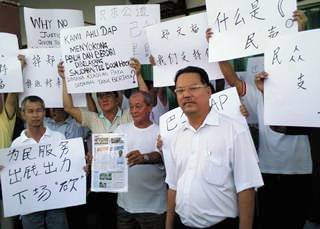 These allegations have subsequently led to the sacking of Tee Boon Hock, a DAP councillor in Klang. But his sacking have not cleared the clouds hanging over the head of Ronnie Liu, DAP’s executive councillor in charge of local government affairs.
In fact, the continued allegations against Liu led to what may be the first case of disciplinary action taken against a sitting speaker of a state assembly over a ‘tweet’ where Teng Chang Kim seemed to imply that real culprit had not been punished.
Instead of peeling away the sordid layers of political intrigue and contestation within the DAP in Selangor, I will choose to focus on the process by which councillors are selected. This, I think, is one of the core underlying issues which was not sufficiently investigated, understood or explained when the swearing-in of councillors in some of the key local councils including Petaling Jaya and Subang Jaya were inexplicably delayed a few weeks ago.
To understand the delay, one has to understand the process by which these councillors are appointed, the evaluation process for incumbent councillors, the intra and inter Pakatan Rakyat party dynamics and the dynamics between the NGOs and the political parties.
To prevent these problems from being repeated in the future and to minimise the probability of the kind of intra-party schism demonstrated by the Liu-Tee episode, Pakatan needs to make the process of appointing and reappointing councillors as transparent as possible.
In fact, at the end of this article, I will recommend one possible method by which Pakatan can achieve this objective of transparency and at the same time partially fulfill its promise to hold local elections without stepping into the thorny political problems associated with having a representative council line-up, especially in the non-Malay majority urban areas.
The 3 C’s in councillor selection
But before we come to that, let me first start with describing the process by which councillors are selected. According to a document obtained from the Selangor Menteri Besar’s office, the councillors are selected based on 3 C’s – capacity, capability and character.
Capacity is defined as having the time to ‘carry out his or her duties in the manner expected’ which includes ‘having sufficient time to spare in attendance of meetings both formal and informal, and to communicate with local residents’. Capability is defined as being ‘capable of the functions in his or her respective abilities’ which includes ‘some technical, professional and /or communitarian knowledge’. Finally, the ‘individual must also be of sound and good character’.
The 3 C’s here are actually more stringent criteria, in my opinion, compared to Section 10 Clause 2 of the Local Government Act 1976 which simply states that ‘Councillors of the local authority shall be appointed from amongst persons the majority of whom shall be persons ordinarily resident in the local authority area who in the opinion of the State Authority have wide experience in local government affairs or who have achieved distinction in any profession, commerce or industry, or are otherwise capable of representing the interests of their communities in the local authority area.’
The question then becomes who decides the extent to which an individual appointee fulfills each of the 3 C’s. This becomes especially tricky in making the judgement call of whether an individual is of ‘sound and good character’. If this criterion was strictly adhered to, some of the more dubious cases of abuse of power and corruption (not all of which have surfaced, I’m sure) among certain councillors would not occur.
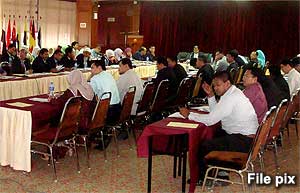 Similarly, having sufficient time to attend meetings and meet local residents is also a difficult judgement call. Most professionals who are qualified, i.e. have the capability to serve as local councillors, would probably not have the time to attend all or even most meetings, much less attend to the needs of demanding residents, especially in the more urbanised areas. More often than not, it is a question of whether these busy professionals want to make time so that they can do the job of a local councillor responsibly and with dignity and honesty.
Under the Pakatan state government in Selangor, three quarters of the councillor allocation are given to political parties, namely PKR, DAP and PAS (with PSM receiving a very small share). The remaining quarter is reserved for NGO representatives.
Given that the opposition parties did not expect to win the Selangor state government in the March 2008 general elections and given the weak political base of some of these parties in Selangor, it should not surprise us that there would not be many qualified candidates for the position of councillors from within the opposition parties.
What invariably happens in such situations is that party loyalty trumps most of criterion and it is those who have been with the respective political parties for the longest time and who get along best with the top leadership, be it at the state or national level, who are appointed as councillors.
Picking the NGO councillors
The next question to ask here is the process by which each political party in Pakatan is supposed to select its list of potential candidates. Each party (PKR, DAP and PAS) is supposed to have its own five-member selection committee which nominates a list of potential candidates from within their respective parties. The list is then forwarded to the state exco, and after discussion, the list is approved for each respective local council, and then finalised.
The remaining one quarter of councillor positions are allocated to representatives from the NGO community. The practice of appointing non-political party representatives as councillors is not a new one. The BN was also doing this in various state governments except that the one quarter ‘quota’, so to speak, was not in existence, which meant that the state governments did not need to appoint NGO councillors if they didn’t feel like it.
Members of the NGO community send in their respective list of candidates to the state exco for positions within any of the 12 local councils in Selangor. These names will be evaluated by the state exco committee responsible for local councillor selection and evaluation (currently chaired by Liu) and the shortlisted candidates are then brought up to the full state exco to be approved and finalised.
While the process of appointing these councillors from the political parties as well as from the NGOs may seem simple on paper, the reality ‘on the ground’ is much more complicated. Lobbying for positions, which forms part and parcel of the democratic process, is already complicated enough in a ‘normal’ democracy. What more in a not fully democratic country like Malaysia, especially in the context of a newly-formed opposition coalition that is made up of three very diverse parties from an ideologically and ethnic composition perspective.
In such a context, different actors use different channels to lobby to become or to remain as a local councillor. Sometimes the process gets personal and ugly. I myself have observed how one particularly desperate councillor, who knew he was not going to be re-appointed, would go to every single meeting, wedding, gathering and concert in which there would be a member of the state exco, or Adun (state assembly), or MP, and of course the MB, to lobby to be re-appointed.
To the credit of the Selangor state government and the party to which this person belongs to (I wonder for how long?), he was not appointed despite (or perhaps because of) these desperate attempts.
A number of NGOs have also complained that some of the positions that were supposed to be allocated to their quota (one-quarter of total positions in a council) were instead given to representatives of political parties instead. In addition, some of the more vocal councillors from the NGOs were also not re-appointed ostensibly because of their outspoken attitude especially when it came to dealing with development projects or the allocation of local government contracts.
Given the large number of leaders within PKR with an NGO or an activist background, it is not surprising that fingers were pointed to PKR-linked representatives who were/are also NGO reps appointed as councillors under the NGO quota.
Hopefully, as party politics within the opposition parties become more mature, i.e. the separation between party politics and NGO work becomes clearer, the re-occurrence of such accusations will also decrease over time.
In terms of outspoken NGO representatives who were not re-appointed, ostensibly because of their outspoken nature, it becomes a case of he said she said. One can always point to examples of NGO representatives who, not being used to the responsibilities of being a local councillor, often did not show up for meetings or attend to the problems of the residents.
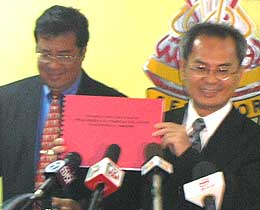 With this in mind, it would not be correct to point fingers to one person, such as the state exco in charge of local government, Ronnie Liu (
right in photo
), as the root of all the problems associated with the appointment of local councillors in general and some of the bad apples specifically.
With this in mind, it would not be correct to point fingers to one person, such as the state exco in charge of local government, Ronnie Liu (
right in photo
), as the root of all the problems associated with the appointment of local councillors in general and some of the bad apples specifically.
Other exco members and state leaders also have some power in deciding candidates from their own parties as well as the menteri besar, and perhaps the state advisor, Anwar Ibrahim, over some of the more sensitive cases.
The process of appointing councillors may be akin to the process of law-making – you don’t really want to see how it’s done or how it’s made.
What then can the Selangor state government do to minimise the re-occurrence of the problems it faced which led to some council representatives not being sworn in until very late? What processes can be put in place to increase the quality and standard of local councillors, both from the political parties as well as from the NGOs?
Mini-local elections
I have one simple suggestion. I propose that all existing councillors be subject to a process called approval voting. Everyone who is a ratepayer in a district would be eligible to cast votes for all of the incumbent local councillors. He or she may cast as many or as few votes as he or she wants. Every incumbent councillor will be on the ballot. A voter can either vote a ‘Yes’, a ‘No’ vote or ‘Abstain’ from voting for a particular candidate.
To be re-appointed as a councillor, an incumbent must obtain at least X% (let’s say, 70%) of ‘Yes’ votes (calculated as a percentage of total votes cast for or against this incumbent and must have a minimum threshold of votes which is calculated according to the voting population in a district). If the incumbent fails to cross this threshold, he or she will be replaced by someone from an alternate /new candidate list.
On this list, a certain number of new candidates are proposed. Voters can cast also cast ‘Yes’, ‘No’ or ‘Abstain’ for these new candidates. These new candidates will then be ranked according to the percentage of ‘Yes’ votes obtained (again subject to a minimum threshold of votes according to the voting population in a district). These incumbents and new candidates will be categorised according to party, so as to maintain the balance of councillors between the Pakatan parties.
For every X number of incumbents who fail to reach the designated threshold, they will be replaced by the same X number from the list of new candidates from the same party. NGO representatives are also subject to the same voting pressures.
There are still some processes which need to be made more transparent even with this recommendation in place. The process to choose the list of new candidates from each party (and NGO) needs to be made clearer. The criterion can be made to be more extensive and as much as possible needs to be put online for easy reference.
If this proposal is taken up by the Pakatan state government in Selangor, one hopes that it will accomplish the following objectives:
- to let the voters decide which of the incumbents have actually done a good job
- to let voters decide on which of the new candidates they like or don’t like
- to partially fulfill the promise of holding local government elections
Hopefully the cost of doing something this is not prohibitive and is something which the local governments currently in opposition hands can do, especially since the voters are confined to ratepayers and the voting process can be done in the various state and municipality offices.
I am skeptical that a repeat of the Liu-Tee-Teng fight can be avoided using the measures I proposed but my hope is that the probability that such fights would occur again on the grounds of corrupt activities will decrease over time.
ONG KIAN MING holds a PhD in political science from Duke University. He is currently pioneering a Masters in Public Policy (MPP) course together with Dr KJ John, another Malaysiakini columnist as well as the dean of the Faculty of Economics and Policy Science at UCSI University. He can be reached at im.ok.man@gmail.com. The views expressed here are entirely his own.


Are you sure you want to delete this comment?
This action cannot be undone.