




The race delusion within Barisan Nasional
COMMENT Preparing for the Kuala Lumpur Municipal Council elections in 1952, Umno and MCA formed a political partnership that continued to win all subsequent general elections until now.
COMMENT Preparing for the Kuala Lumpur Municipal Council elections in 1952, Umno and MCA formed a political partnership that continued to win all subsequent general elections until now.
The MCA leadership, contrary to popular belief, was not particularly keen on the partnership. Tan Cheng Lock was much more comfortable with the non-racial platform offered to him by Onn Jaafar, the founder president of Umno, who left the party because he could not convince its members to open it up to non-Malays.
Nonetheless, Onn did not ready his political machinery, trusting instead on the power of his message. The better organised Umno and MCA in Kuala Lumpur won the municipal elections and a winning formula was struck.
It has been nearly six decades since the pact was made. By incorporating the MIC on the eve of the 1955 federal elections, Tunku Abdul Rahman was able to put forward a united front, fulfilling one of the terms set by the British for granting Malaya independence - a demonstration that the country had a political leader and political arrangement that could unite the three main racial groups.
Equally important, Tunku Abdul Rahman must also be acceptable to
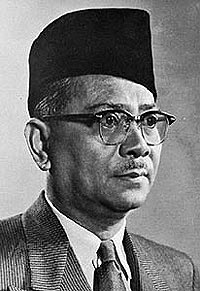 British commercial interests and the Malay aristocracy. The Cambridge-educated Kedah prince (
left
) was able to balance the competing interests of the different races and made material progress the underlying philosophy for nation-building, an usual feat in a world consumed by competing communist, socialist or liberal democratic ideologies.
British commercial interests and the Malay aristocracy. The Cambridge-educated Kedah prince (
left
) was able to balance the competing interests of the different races and made material progress the underlying philosophy for nation-building, an usual feat in a world consumed by competing communist, socialist or liberal democratic ideologies.
Thus, Malaysians should not be surprised if Umno and the MCA continue to hold on to race and material progress as sacred creeds. Equally, there should be little surprise if the ruling classes go through their usual spats over issues related to race and economic policy. As long as Umno and MCA exist, race and money will also be framed as "sacred" issues - issues of state, ethnic survival and whatnot.
But is the recent spat between MCA president Dr Chua Soi Lek and Umno's top brass another hiccup in this long and successful partnership? There are five reasons why the disagreement is of special significance and why the BN leadership should exercise caution in handling this very public spectacle.
Firstly, unlike in the past, the BN's iron-grip over Malaysian politics is at its weakest. Inter-party dilemmas usually occur when the BN's monopoly on Parliament is strong. In the past, these squabbles were the results of intra-coalition jockeying for influence. These spats were a way for the BN to re-calibrate and after several bouts of "internal soul-searching", the BN would discover its own internal balance and continue to present a "united" front.
Securing Malay dominance
Over the last six decades, Umno managed to secure "Malay dominance" over all its coalition partners, often by playing one against the other or confining them to large urban areas and therefore, dependent upon Umno to deliver the Malay votes in mixed constituencies. This time round, as Chua correctly pointed out, Umno needs to cut the MCA some slack.
Lack of political will to put into practice what the BN has been preaching, particularly economic and cultural policies that reflect the 1Malaysia slogan, could really spell "doom" for the Chinese-based party. At a time when the Opposition is strong and making in-roads into the constituencies newly-won in 2008, the BN cannot afford to be unstable. If, as some readers of this website point out, all this is merely play-acting, the risks are simply too
high.
Secondly, there is now great confusion in the BN rank and file. When politicians deny or make statements vehemently refuting allegations that there is a rift between them and the captain of the ship, you can bet that the problem is very real. Former Deputy Prime Minister Musa Hitam can testify to this, especially after slogans emerged that he was one half of the 2M government.
After Musa left the cabinet, then Prime Minister Dr Mahathir Mohamad very calmly clarified that 2M referred to Mahathir Mohamad. All this confusion has to do with 1Malaysia, a slogan that is deliberately vague and too sleek. Something that means something to everybody usually means nothing at all.
Umno divided on fundamental poicy
While Prime Minister Najib Abdul Razak has reaffirmed his pledge to be prime minister to all Malaysians, his deputy is sticking to his guns and staunchly demonstrating that he is Malay first. In short, Umno, the bulwark of the BN, appears to be divided over this very fundamental policy of the Najib government. By asserting that he must put forward the interests of the Chinese community, Dr Chua is obviously in the same camp as his Johor compatriot.
It was Chua who vouched for Muhyiddin's reputation as a fair-minded menteri besar when the "I am Malay first" issue broke
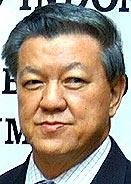 out. Chua had served in the Johor state exco when Muhyiddin was menteri besar. To trade barbs publicly is certainly something unusual. Surely two people who have worked together managing a state government can simply call each other up to set aside their differences of opinion.
That Chua (right) continued to stir up the hornet's nest, first over the Islamisation of Umno and now over economic policies, shows the seriousness of the rift between the two ancient coalition partners. All this does not inspire confidence in the rank and file. A political coalition, the BN must remember, is only as good as its ability to work together.
Thirdly, the MCA's standing in the eyes of the constituency it purports to lead is very bad indeed. Even mainstream political observers understand why the normally docile MCA leadership has to take greater risks to remain relevant.
As a party that is confined to mixed seats and urban areas, the MCA has to do something drastic to push for more material development in a last minute attempt to regain the trust of the Chinese voters. Unfortunately, all these antics will not work simply because the electorate has given the MCA more than 50 years to prove its worth.
The recent charging of Dr Ling Liong Saik over the PKFZ scandal will be unlikely to change the opinion among Malaysians that the MCA puts its own interests over those of their fellow Malaysians. In short, the time for fireworks is over. Action, in this case, one that is translated into governmental policy and that is implemented efficiently, is the only way the MCA can regain its lost credibility.
As the most recent surveys indicate, trust and the willingness to vote for the MCA is very low indeed. For this reason alone, the Umno leadership will have to do some deep soul-searching and make a very accurate calculated risk to alter, improve and implement policies that will help its oldest coalition partner. The threat of political extinction for the MCA is very real.
Fourthly, this spat is happening over a very real fissure that is inhibiting the the BN from evolving into a multi-ethnic political party. For those who continue to be enthralled by the "race delusion", this is a battle between competing ethnic communities.
But the reality is very different. Malaysians are no longer so easily fooled by race-based economic conventions. Here is a show so plainly performed that it is painful to watch. What is essentially a rich man's show is given the veneer of "expressing the needs of the Chinese community".
Well, the Merdeka Centre conducted a survey showing that not many Malaysian Chinese see the MCA as their representatives. I am sure that even fewer see Chinese businessmen as their rightful spokesmen. Although the MCA has always been a party of business interests, it cannot hope to be taken seriously if it thrusts these same businessmen as representatives of Chinese interests and concerns. They may be part of it, but their views are certainly not representative.
Surely, after six decades, Chinese interests are more than merely financial. The MCA is failing to grasp the real issue that is riling up most Malaysians, the Chinese included, which is ethnic equality. Chua is right on one count - the BN seriously needs to keep up with the times.
Deafening silence
Fifth and the final point: this very public spectacle involves the leadership of BN's top coalition partners Umno and MCA yet there is deafening silence from the PM. It might have been very strategic to keep the aspiration for 1Malaysia going while one's deputy goes
around asserting ethnic exclusivity.
But now that the spat involves the president of the MCA, decisive leadership is needed. There can be no sitting on the fence. Malaysians need to be told very clearly where this country is headed. Chua's queries about the NEM, the 10th Malaysian Plan and other economic policy issues may be only one portion, but it is a critical portion that will prove the government's commitment to move Malaysia forward economically and in equitable fashion.
While no one doubts that race continues to be an important issue, it can no longer be the only driver of governmental policies. Affirmative action helps a vulnerable group to get over a hump, but if it is prolonged, the positive returns diminish and there is a very real risk of damage to the community it serves to protect. For this reason alone, the framers of the NEP put in a time-frame for its implementation when they could very well have pushed through a permanent policy.
Moreover, the NEP is supposed to be race-blind. Chua has every right to raise these concerns, discuss it in a rational manner and expect a sincere answer from the government. Are the NEP-like policies a right, permanently exclusive to one ethnic group and can never be dismantled? If the answer is in the affirmative, Malaysians need to know.
In time, this very public spat will be overtaken by another sensational and more dramatic political saga. Since 2008, Malaysians
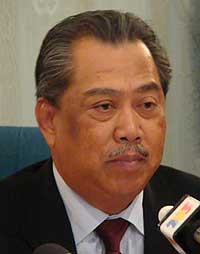 politics has seldom been pacific and there is no reason to expect that it will be so until the next general election. Of course, the DPM can once again put a gag order on the MCA, like he did over the "Allah" issue, but it will not solve some very fundamental problems seeded by the 1952 Umno-MCA partnership.
These problems arose because the coalition decided to allow a united Malaysian nation and identity to evolve on its own. While Malaysians have evolved beyond the narrow confines of their ethnic identity, the BN obviously has not and this is the reason why Chua reminded Muhyiddin ( above left ) about "old politics" and the dredging up of May 13.
It may be a little late to break ranks, but the ball is now in Umno's court. If there is one lesson we can learn from this latest public spectacle, it is that in the eyes of those plagued by the race delusion, politics is truly "a systematic organisation of hatreds".
NEIL KHOR has recently completed his PhD at the University of Cambridge. He is co-author of ‘Non-Sectarian Politics in Malaysia: The Case of Parti Gerakan Rakyat Malaysia’ (2008).


Are you sure you want to delete this comment?
This action cannot be undone.