




Lawless Lawas highlights rural voters' anger
Rural Sarawakians are becoming increasingly vocal about their dissatisfaction with their lack of basic public services, and of their shabby treatment at the hands of corporate and bureaucratic outsiders.
Rural Sarawakians are becoming increasingly vocal about their dissatisfaction with their lack of basic public services, and of their shabby treatment at the hands of corporate and bureaucratic outsiders.
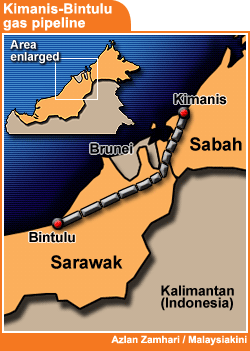 A new flashpoint is the construction of the Sabah-Sarawak Gas Pipeline Project through customary land belonging to Lun Bawang natives around Lawas, a small town near the border between the two east Malaysian states. Lun Bawang villagers have blockaded the access road for the project.
Local villagers have reported heightened tensions between local villagers and two corporate giants, gas producer Petronas and logging company Samling, according to the Sarawak Indigenous Community News website .
Enormous pipes are being laid to channel gas from the Sabah Oil and Gas terminal at Kimanis to the Petronas Liquefied Natural Gas complex in Bintulu in Sarawak, a distance of 500km.
The reported cost to Petronas has been wildly variable, up to RM3 billion. According to Petronas, the pipeline is scheduled to completed by the end of this year.
 "As (the pipeline goes) through this area, there are a lot of objections because it encroaches into the Native Customary Rights land of the locals," said Sarawak PKR chief Baru Bian (
left
), a prominent land rights lawyer, born in nearby Long Semado. "The whole (area) from Lawas to Long Resina to Long Sukang, Long Luping, will be affected by this."
"As (the pipeline goes) through this area, there are a lot of objections because it encroaches into the Native Customary Rights land of the locals," said Sarawak PKR chief Baru Bian (
left
), a prominent land rights lawyer, born in nearby Long Semado. "The whole (area) from Lawas to Long Resina to Long Sukang, Long Luping, will be affected by this."
The state government has claimed the pipeline will benefit 1,800 local welders and fitters, among others.
"It is without doubt a mega project that will definitely create economic spin-offs... during a recent meeting with the state government, Petronas assured that certain scopes of work would be for Malaysian and Sarawakian contractors," gushed Wong Soon Koh, second finance minister, in a recent reply to a question in the state assembly.
Promises dishonoured
"We have been here a long time. Around the 60s, we opened up this area for our village," said Sakai Pengeran, village head of Long Resina, on August 12. Long Resina is a village of 12 households in the heartland of the Lun Bawang in northeastern Sarawak, some 30km from the small administrative centre of Lawas.
The Lun Bawang, hardy and hospitable people famous for their hill rice, are included in the "Orang Ulu" ethnic grouping.
 "This blockade is related to the dispute between the villagers and Samling and the Petronas pipeline, because when Samling entered this area (in 1986) they agreed to pay us compensation of RM40 for every rantai of land (20m) for 60 years," the village chief explained. He added that the villagers are still negotiating with Samling over the compensation payments.
Long Resina was at the centre of a blockade in 2006 against timber extraction by a Samling subsidiary, KTN Timor. Villagers had complained that promises of compensation to native customary rights (NCR) landowners, the local Malay and Lun Bawang communities, had not been honoured .
Some 30 landowners participated in this latest blockade. "The villagers' previous agreement was for the transportation of timber from the log pond (through our land), but now Samling has taken a contract to connect the pipeline through our land. This pipeline does not take people's land into consideration," the village chief argued.
The village head said the protest was not only for Long Resina, but for the villages in the surrounding 20km. "The blockade started yesterday. We don't know how long we'll have to go on."
Nelson Balang Rining, local state assembly representative for Ba'Kelalan, was quoted by the Borneo Post on Aug 11 as saying, "It is just a matter of a small demand from the sub-contractor, that's why the locals did the blockade , but it will be settled soon."
A similar blockade against the mammoth gas pipeline by Penan, Kenyah and Lun Bawang villagers in Long Kevok, Baram, in also in progress.
A local villager has said the Petronas contractor has caused extensive and unnecessary destruction to forests surrounding the pipe-laying work.
Despair over public services
Lawas covers an area of 3811sq-km, three times the size of Malacca. It is home to 35,000 Lun Bawang, Malays, Iban, Kedayan and Chinese people, mostly farmers.
 Public services have come under intense scrutiny in this deprived area.
Local people are angry over multiple reports of police brutality, inaction over syabu, metamphetamines and other drugs flooding the area, substandard health services, and the dangerous condition of the road leading upcountry to Ba'Kelalan - a road bypassed by most state ministers and elected representatives, using helicopters.
Lawrence Jayaraj campaigns tirelessly for better services for Lawas people. His late mother-in-law was Kam Agong, 45, a Lun Bawang woman from Long Semado. Kam Agong's father, Agong Dawat, a war veteran, had been awarded medals for bravery during the Japanese Occupation.
Kam Agong, a mother of nine, died of complications from surgery at the tiny Lawas District Hospital in March 2002. Her family said that Kam Agong had not been asked for informed consent for a Caesarean section. Another admission to the hospital for severe bleeding after the initial surgery was fruitless. She was repeatedly discharged without being referred to a specialist, and died at home.
 The family (
right
) alleged that healthcare workers visited Kam Agong's village after she died, removed all the medical documents and medicines of the deceased, and told her family that Kam Agong's death had been "fated".
The family (
right
) alleged that healthcare workers visited Kam Agong's village after she died, removed all the medical documents and medicines of the deceased, and told her family that Kam Agong's death had been "fated".
"They will victimise the poor, innocent and ignorant," Lawrence Jayaraj said on his website dedicated to the deceased lady,
"They thought (this family) incapable of bringing legal action...they know the predicament of the Lun Bawang community of Long Semado."
The family has lived through hell since Kam Agong's death. They were finally awarded damages of RM136,888 for medical negligence, after eight years of bravely fighting the state bureaucracy.
"We would rather have our mother back," the family said.
Lawrence Jayaraj has criticised the building of a new luxury hotel in Lawas, but not a new hospital. "What the people in Lawas and Long Semado want is a proper hospital and not a Hotel Seri Malaysia. Convert the hotel building into a Lawas General Hospital, it will bring a lot more people to Lawas," he told Malaysiakini .
The district hospital in Lawas is one of the oldest in Sarawak, and is in poor shape, with inadequate staff and no specialists. Senior government officials, including health minister Liow Tiong Lai, have pledged many times to build a new hospital, but nothing has come of the repeated promises over five decades.
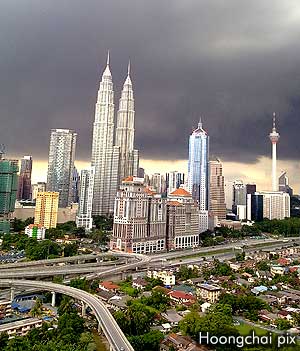 "We are (lobbying) for a better healthcare and well-equipped and professionally trained hospital staff, (a better) education system, for public transport, for job opportunities with appropriate remuneration, for proper schools with effective teaching staff and for proper hostels," he said.
"Generations after generations the communities in Lawas, predominantly the Lun Bawang people, have been neglected and they have accepted everything as fated.
"I hear them praying for a better life, for a better future. But...nothing has changed.
"The children I have met in Long Semadoh are children of God. We say... if we can build the Twin Towers, we can build a brighter future for our children."
KERUAH USIT is a human rights activist - ‘anak Sarawak, bangsa Malaysia’. This weekly column is an effort to provide a voice for marginalised Malaysians. Keruah Usit can be contacted at keruah_usit@yahoo.com .


Are you sure you want to delete this comment?
This action cannot be undone.