




Sabah still assessing extent of coral bleaching
The exact extent of coral bleaching in Sabah waters is yet to be determined despite reports filtering in and causing alarm, according to Sabah Fisheries Director (SFD) Rayner Stuel Galid.
The exact extent of coral bleaching in Sabah waters is yet to be determined despite reports filtering in and causing alarm, according to Sabah Fisheries Director (SFD) Rayner Stuel Galid.
“Sepanggar Bay - in the outskirts of Kota Kinabalu - may be the exception rather than the norm,” said Galid.
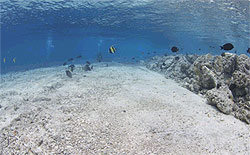 Galid disclosed that the SFD is still looking into observations by two marine biologists, Professor Zulfigar Yassin and Professor Saleem Mustafa.
“We don’t know exactly how big the phenomenon in Sabah is but we are assessing the situation with the Universiti Malaysia Sabah (UMS),” said Galid. “If it (coral bleaching) spreads, it becomes a big worry especially if the corals have no chance to regenerate.”
In addition, the Sabah Parks Department is reportedly checking all marine parks in the state for signs of coral bleaching.
Galid agreed with Saleem of UMS that the problem deserves serious attention due to its impact on coral diversity and reef fisheries in Sabah waters. Where coral bleaching is widespread, it has a huge impact on the productivity of the coral reefs, particularly on the fish population, he added.
“The last coral bleaching was in 1998 during the protracted El Nino event. But it was not as bad as in Peninsular Malaysia.”
Rising temperatures the cause
Galid explained that coral bleaching takes place when the temperature of the seawater rises above 31 degrees Celsius for more than two days consecutively, and when there is pollution. The temperature of the waters around Sabah is generally in the region of 26 to 28 degrees Celsius, he estimates.
“But some of our scientists have measured 30 degrees. Corals are typically most abundant in three to 10 metres-deep waters.”
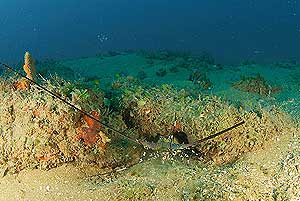 He acknowledged that the waters around the Tunku Abdul Rahman Marine Park off Kota Kinabalu, for example, generally registered between 29 degrees and 30 degrees Celsius. He reckoned this as being on the high side for Sabah but not as worrying as the 31 to 32 degrees Celsius in Peninsular Malaysia.
“So, any bleaching would not be as serious as that in Peninsular Malaysia,” said Galid. “In any case, coral bleaching is a phenomenon that can happen in this region.”
The SFD however thinks that the region is quite resilient to coral bleaching in the sense that it can recover after suffering the phenomenon for a while. The idea, according to the SFD, is to reduce stress and manage the reefs well. The SFD cites nearby areas in the Sulu Sulawesi Marine Eco-region as an example of corals undergoing bleaching and recovering.
Veteran Sabah dive master Clement Lee reported that he has seen some 20 to 30 percent coral bleaching in the waters of the Tunku Abdul Rahman Marine Park that shares the same sea as the east coast of Peninsular Malaysia.
“I have not seen the situation in Sepanggar Bay,” he said. “As far as the East Coast is concerned, the coral condition around Mabul Island, south of Semporna, Sipadan, Sibuan and Mantabuan islands and Darvel Bay is perfect.”
‘90 percent corals lost’
Saleem had reported recently that scientists at the Borneo Marine Research Institute, that he heads, “had discovered widespread coral bleaching in Sepanggar Bay adjacent to the UMS”.
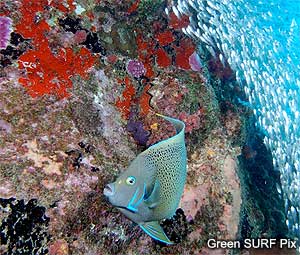 Zulfigar from Universiti Sains Malaysia (USM), in a related report, estimates that Malaysia has lost 90 percent of its corals.
He fears that bleached corals may take years to recover despite mitigating measures such as closure of diver sites, reduced intake of seafood and reduction in carbon emissions. The decline in coral reefs will lead to fewer fishes in the sea and ocean and hurt the fishing industry, he warned, “because the reefs provide a home to many marine species”.
“It is difficult to quantify the extent of coral bleaching as it can be quite subjective,” said Saleem. “But going by the experience of divers in the area, it’s less than that reported in Peninsular Malaysia.”
Saleem and three of his scientists – Aw Soo Ling, Muhd Ali and Abentin Estim – have noted that the bleaching seemed to have started in recent months. They are still examining the coral bleaching problem in greater detail to monitor all possible measures to reduce stress during the phenomenon.
The universally accepted best practices recommended by UMS are careful navigation to avoid contact with the corals, preventing oil and gas spill from boat engines, using buoys rather than anchors wherever possible, and avoiding contact of the human body and diving gear with the corals.
“UMS scientists have previously suggested long-term measures to build resilience in coral reef ecosystems,” said Saleem.
Saleem stressed that the Sabah part of the Sulu and Sulawesi seas were biodiversity hotspots.
He says Sabah is home to 70 to 75 percent of coral reefs found in Malaysia, and the trade in live reef fish earns millions of ringgit annually.


Are you sure you want to delete this comment?
This action cannot be undone.