




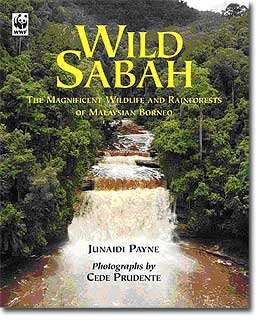
'Wild Sabah' a magnificent photographic evocation
Briton Junaidi Payne, 56, a permanent resident of Sabah where he has lived since 1979, has done a magnificent job on this coffee table book along with Lahad Datu-born photographer Cede Prudente.
BOOK REVIEW Briton Junaidi Payne, 56, a permanent resident of Sabah where he has lived since 1979, has done a magnificent job on this coffee table book along with Lahad Datu-born photographer Cede Prudente.
Payne is considered one of the foremost authorities on the natural history and ecology of the state. His current conservation interests include saving the endangered Sumatran rhinoceros, and methods to restore damaged tropical rainforests
 Sandakan-based Prudente is one of South-East Asia's leading natural history photographers. He has included photographs of rarely seen wildlife like the tarsier, sun bear, flying lemur, grey leaf monkey and the red-naped trogon. Prudente also
worked with
Nick Garbutt in 2006 on
Wild Borneo: The Wildlife and Scenery of Sabah, Sarawak, Brunei and Kalimantan
.
Sandakan-based Prudente is one of South-East Asia's leading natural history photographers. He has included photographs of rarely seen wildlife like the tarsier, sun bear, flying lemur, grey leaf monkey and the red-naped trogon. Prudente also
worked with
Nick Garbutt in 2006 on
Wild Borneo: The Wildlife and Scenery of Sabah, Sarawak, Brunei and Kalimantan
.
Wild Sabah is a fitting tribute to the natural history of the region and takes in the landscapes, scenery and natural species. There are two maps showing the physical terrain, the mineral-rich mud volcanoes, climate, vegetation, and the principal wildlife watching sites. Mountain Kinabalu, the Crocker Range, the Kinabatangan floodplains and the Klias Peninsula make compelling reading.
North Borneo is the largest tract of tropical rainforest in southeast Asia. It covers among the world's largest trees, swamps, mangroves and Mount Kinabalu, the highest mountain in South-East Asia.
Sabah, undoubtedly, is where some of the world's most spectacular and rarest wildlife can be found.
This is a diverse wildlife hotspot embracing some 1,000 vertebrate species (mammals, birds, reptiles and amphibians), more than 10,000 different plant species and probably more than 100,000 invertebrate species.
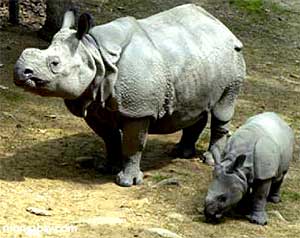
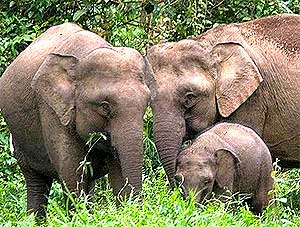 This is home to the endangered Bornean rhinos, elephants, Orang Utan, sun bear, the clouded leopard, giant flying squirrels, huge pythons and hundreds of species of birds.
The book begins with how Sabah got its name, the land, climate and landscape which goes from the marches and beaches to rainforests and mountain tops. There's some information on the geology of the region including rock types and formations.
Sabah land: An unexpected shock
Besides the wildlife, we learn about the trees and forests of Sabah, the logging industry, the people, their culture, customs, traditions, the places they live and how their lifestyles have changed over time.
 Payne (
left
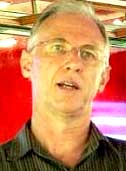
) observes that a surprising two-thirds of Sabah's land area is unsuitable for permanent cultivation. Much of the state consists of steep slopes while the soil suffers from low fertility forcing "a contest, which is still being run in the region, between natural and human forces".
Payne (
left
) observes that a surprising two-thirds of Sabah's land area is unsuitable for permanent cultivation. Much of the state consists of steep slopes while the soil suffers from low fertility forcing "a contest, which is still being run in the region, between natural and human forces".
Payne covers trees and forests in some depth. His initial years in Sabah, from 1979 to 1987, were with the Sabah Forestry Department. He tells the story of the Tabin and Kulamba wildlife reserves which he helped establish.
He also participated in the first state-wide survey of Orang Utans. He spent another ten years with the state ministry of tourism, culture and environment to work out a number of conservation areas, notably the Kinabatangan Wildlife Sanctuary.
Much of the state's original wild forests, continues Payne, has been damaged or lost over the past several decades. "Clearly, the trends of the past few decades are not sustainable, at least in terms of exploitation," he writes. "Much of the former forest lands that produced the large timber volumes of the 1970s and 1990s are now privately owned and under plantations, mainly oil palm."
Logging in some areas compounded by fire and the conversion of forests to plantations has led to massive loss of biodiversity. Payne thinks that lost forests can be restored or regenerated to natural forests in various ways "since the vast degraded forest areas seem to be desolate and unproductive".
 While deforestation has taken a terrible toll on the biodiversity of Sabah, climate change is considered an even greater threat.
Payne finds that there is no evidence of the extinction of wildlife species in historical times.
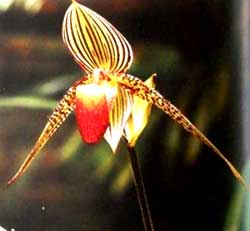
The rare orchids and the Bornean Orang Utans still exist as breeding populations and the Borneo elephants continue to thrive in herds of 10 or more in grassy areas, forest edges and secondary growth, especially in logged areas of the Danum Valley and Tabin. Herds of 100 or more elephants can be seen in the open catchment areas of the Kinabatangan and Segama.
Still, the Bornean rhinoceros has become the most endangered species. "If any wildlife species needs sustained help to prevent extinction, it's this one," said Payne.
The book is replete with Payne's personal experiences, discoveries and adventures on the wild side of Sabah. He joined the 1988 Maliau Basin expedition arranged by the Sabah Foundation and the Worldwide Fund for Nature (WWF) Malaysia.
 One surprising find during the expedition was a shard of celadon ceramic by veteran Sabah biologist Joseph Gasis. This is one of the most remote parts of Sabah and yet someone passed through more than a century ago and left behind a piece of broken pottery.
Payne declares the Tawau Hills, an hour's drive from Tawau town, as the best kept bird-watching paradise in all Borneo for enthusiasts and biologists.
The Tawau Hills Park is primarily a water catchment area for rivers flowing to Tawau and other settlements in the area. This is the home of the rare cream-coloured Red Leaf Monkey.
In Final Thoughts, an epilogue, Payne finds that Sabah is facing the same threats as the rest of the world. Global climate change may have great consequences for marine ecosystems in the Sulu Sea that forms the Coral Triangle off the eastern seaboard of Sabah.
However, for now a combination of marine no exploitation zones and programmes aimed at improved product management provide the chances for species and ecosystems to become better stabilized.
The royalty from the sale of this book will be donated to WWF-Malaysia.
Wild Sabah . Size 260 x 215mm / 10 ¼" x 8 ½". Extent 208 pages. Words 50,000 approx. Illustrations 230 colour photographs, 2 maps.
ISBN 978-1-906780-11-1
Price £29.99 hardback
Available at The MNS Shop, Malaysian Nature Society Headquarters, JKR 641, Jalan Kelantan, Bukit Persekutuan, 50480 Kuala Lumpur


