




Sabah law group cracks whip on errant lawyers
The Sabah Law Association (SLA) is determined to "put its house in order", and has warned that it will not hesitate to rein in the black sheep giving others in the state's legal fraternity a bad name, its president John Sikayun has vowed.
The Sabah Law Association (SLA) is determined to "put its house in order", and has warned that it will not hesitate to rein in the black sheep giving others in the state's legal fraternity a bad name, its president John Sikayun has vowed.
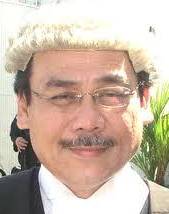 The new beginning, according to the SLA chief (
left
), is reflected by the amendments to the Advocates Remuneration (Amendment) Rules 2010 (ARR) which came into effect yesterday.
The new beginning, according to the SLA chief (
left
), is reflected by the amendments to the Advocates Remuneration (Amendment) Rules 2010 (ARR) which came into effect yesterday.
This is the first time in more than two decades that the ARR had been revised, Sikayun said.
Effective Oct 1, any of the more than 500 practising lawyers in Sabah who do not abide by the ARR will be hauled up before the SLA Accounts and Inquiry Committee for investigation.
To give effect to the ARR, relevant amendments have also been made to provide for greater enforcement. "The rules were there even before, but there was no proper mechanism for compliance."
As a result, the professional services rendered by advocates had often been treated as a commodity in a free market. Sikayun cited "shopping for fees" as among the bad practices.
The only exception to be allowed to the "no discount rules" for the provision of professional legal fees, for example, is in respect of services rendered by advocates to charitable or religious bodies, full-time employees of the law firm concerned, immediate family members of an advocate and a fellow advocate.
Raising fees to match development
While most fees remain the same, the scale of fees for conveyancing and non-contentious cases not involving the court have gone up to some extent, such as winding-up cases (up from RM5,000 to RM6,200) and land searches (up from RM50 to RM 100).
There have also been third parties like developers and bankers who dictate how much lawyers should charge, Sikayun added.
It is time to bring the scale of fees up to date to be commensurate with current economic development, he said.
The others amendments include those addressing the problem of undercutting - which have occurred without regard to the quality, standard and professionalism of the legal services of advocates.
Professional services rendered by advocates are intellectual and creative products, not commodities, and lawyers are professionally bound to provide their professional service and exercise their skills under strict rules of practice and etiquette as officers of the courts, said Sikayun.
Grabbing lawyers undivided attention
"The primary purpose of the scale fees is to set a benchmark to establish a reasonable level of remuneration that is commensurate with the services rendered to an acceptable and recognized standard," he added.
The SLA said that in comparison with Hong Kong, Singapore, Australia, Peninsular Malaysia, and even neighbouring Sarawak, Sabah lawyers' fees were the lowest.
The association believes that with the strict application of the ARR, "lawyers will be able to shift their undivided attention to the protection of their clients by focusing on the provision of high quality professional legal services expected by clients and the public at large".
Another change brought about by SLA pertain to the ‘habit' of its lawyers to pose with their clients for media photographs, which Sikayun said is "tantamount to advertising oneself".
This, he said, is against Rule 48 of the Advocates (Practices and Etiquette) Rules 1988.
"There are a lot of ill practices in the legal profession," said Sikayun. "The SLA is unanimous that both the profession and the public must be protected."
He advised the media to take only candid photographs of lawyers engaged in a conversation with their clients, for example.
"This would help stamp out recurrent accusations that lawyers are fond of posing with their clients at the courts".
When approached, lawyers in Kota Kinabalu generally had no comments to offer on the ARR.
However, they agreed that "posing with clients should be avoided".
"The public want to know about cases in court. The press has the right to publish what transpired in court.
"If the media takes photographs, it's their right, as long as the solicitor did not intentionally ask them to take the photographs," opined lawyer Chin Tek Ming, summing up the general response to the new moves.


Are you sure you want to delete this comment?
This action cannot be undone.