




New dawn for Gerakan?
COMMENT In Penang, once the power base of Parti Gerakan Rakyat, the party is regarded as a remnant from the past. There is little enthusiasm for the party that once governed the state.
COMMENT In Penang, once the power base of Parti Gerakan Rakyat, the party is regarded as a remnant from the past. There is little enthusiasm for the party that once governed the state.
Old grandees had predicted that the Pakatan Rakyat government would collapse within six months of coming to power. Instead, the Pakatan has weathered all kinds of “attacks” and “criticisms” only to emerge stronger than ever. Pakatan has done better than the 1969 Party Gerakan because the coalition is strong enough nationally not to have to compromise and join the BN.
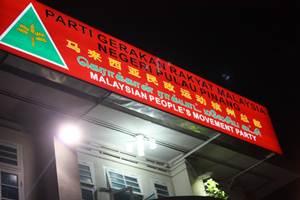 There are now rumblings within Gerakan as members begin to realise that the party is well and truly out of power but is unable to play an effective role in oppositional politics. Gerakan is at a crossroads: if it cannot pull itself together and make a crucial decision about its role in Malaysia, it will be consigned to the dustbin of history.
On hindsight, Gerakan’s fading away could have almost been predicted. Few now remember that Gerakan entered the BN because of Penang’s economic and the party’s political survival. At the time, it seemed that the leaders of the Alliance shared Gerakan’s ultimate aspiration for a united Malaysia.
 Party leaders then thought that the party’s non-sectarian constitution could be emulated by fellow BN parties and be a template for greater national unity. Gerakan was also crucial to the Mahathir government, as its non-racial approach appealed to urban centres and mixed seats.
Although all this did not happen, there is little doubt that Gerakan of the 1970s and 1980s played a constructive role in Penang and in Malaysia. The lurch towards our present-day race-based political formula would have been much more dramatic and less peaceful without Gerakan in the BN.
However, the party was itself being influenced and infiltrated by the very rigid primordial racialists it wanted to reform. The rest is history. But why is Gerakan so moribund when the rest of Malaysia has moved closer to its own party ideals?
Rumblings grown stronger
Today, the rumblings within the party have grown stronger. There is even a group calling to “gerak Gerakan”, implying that the party is in some sort of quagmire.
In the days after the party’s political thrashing, it seemed as though there was a concerted attempt to move the party back to its original ideals. The reality is that after some two years, the party has yet to adjust to being “out of power” in Penang. Other than its lone ministerial role, the party is hardly represented on the national stage.
 Is there a game plan to revive Gerakan? If there is, only party members are aware of it. A political party that keeps its strategies too close to itself risks cutting off the party from the vitality of public opinion and criticism. No political platform can survive without support from the people it purportedly wants to represent and lead.
Most recently, Gerakan came under heavy pressure by Umno to register voters. Without any doubt, the party would be hard done by if it were to attempt recruiting for new members in Penang. If it wants to be appealing again to Penangites and Malaysians, it must prove that it has the ideals and gumption to do things differently. In short, it needs to lead again in the realm of ideas.
There are no signs that the party in Penang, even after the bold call for an emergency general meeting to remove their own state party leader, is prepared to lead with ideas. Thus far, its attempt to earn street creed by taking on the Pakatan on public issues have been a dismal failure.
Penang is undoubtedly cleaner than before 2008. The Pakatan government is managing the multi-ethnic society in a more even handed manner despite everything that the opposition in the state is saying.
 The most recent attempt to say that the RM100 handout is tainted with revenue from gaming is another example of political bankruptcy. How can the Turf Club and other gaming outfits exist without federal government sanction? What about Genting Highlands? What about all the welfare money and support the Pahang government gives to its Muslim population?
On all these issues, Gerakan claims to be able to work behind the scenes to moderate its political partners. If the way Penang Umno is behaving is moderate, one fears to think what it would be like if Gerakan was not there to moderate them?
Days of compromise are over
But the more fundamental question is how can Gerakan tolerate such political bedfellows? The days of compromise are over, the new leadership or aspirants need to clarify once and for all, whether or not the party has a future in a race-based coalition like the BN?
To dream of coming back to power in Penang is to continue to build castles in the air. Even if the Pakatan is defeated, there will not be any real opportunity for Gerakan to form the state government as it will not have enough seats to trump Umno.
Not forgetting that as of 2010, the Malay population is now the majority ethnic group in Penang and based on the race-based logic that governs the BN, it should be Umno that forms the state government. With the non-Malays split three ways, why should Umno allow Gerakan to form the state government?
Is there a future for Gerakan in Malaysian politics? If Gerakan is willing to take the risk, it can leave the BN and play the role of an advocate for ideas. This was the role of the Liberal Party in the United Kingdom.
But to do that, it must be a political vehicle of cutting-edge ideas. It must be a political movement again like in its inception years in the 1960s. In short, ideas and ideology, two words
so reviled by party leaders in the 1990s, needs to be revisited and made central again for the party to recover.
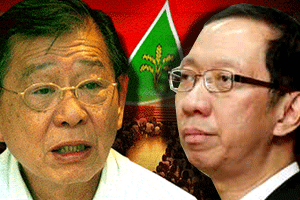
 For that to happen, the party must be willing to come to terms with the reality that it may not be able to govern the state. Dr Teng Hock Nan (
left
) was being realistic when he stated that Gerakan cannot hope to beat the Pakatan in the next general election. He was reviled by so-called party grassroots for stating a fact.
For that to happen, the party must be willing to come to terms with the reality that it may not be able to govern the state. Dr Teng Hock Nan (
left
) was being realistic when he stated that Gerakan cannot hope to beat the Pakatan in the next general election. He was reviled by so-called party grassroots for stating a fact.
If Teng is still willing to lead the party with a vision that the party needs strengthening and in the meantime carve a role for itself as a constructive opposition, Gerakan may just be able to earn the trust of Penangites again. In his 60s now, Teng must have made the decision with the full knowledge that he may never be the Chief Minister.
Other aspirants who seek to revive the party need to face up to the reality that winning political office is not a prize like competitive sports. Becoming a “YB” is just the beginning of the race. It is one’s service and contribution that will decide one’s legacy. If they have any doubts, they only need to look into its own party history and decide for themselves whose legacy has the Pakatan state government appropriated; whose vision is now back in currency.
Whilst this is no time for Gerakan to become nostalgic, looking back into its own party history may yield some inspiration for its revival. If it is not careful, those who seek to “gerak Gerakan” may find themselves losing even this, their party’s legacy.
NEIL KHOR has recently completed his PhD at the University of Cambridge. He is co-author of Non-Sectarian Politics in Malaysia: The Case of Parti Gerakan Rakyat Malaysia (2008).


Are you sure you want to delete this comment?
This action cannot be undone.