




Fresh outcry over mall near Sabah heritage site
A heritage NGO wants the Sabah Housing and Town Development Authority (SHTDA) chair Rubin Balang to step down “for failing to uphold his responsibilities as a government servant” in allowing a controversial development project in Kota Kinabalu.
A heritage NGO wants the Sabah Housing and Town Development Authority (SHTDA) chair Rubin Balang to step down “for failing to uphold his responsibilities as a government servant” in allowing a controversial development project in Kota Kinabalu.
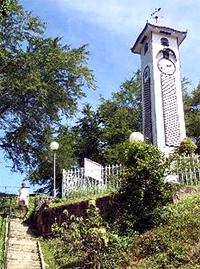
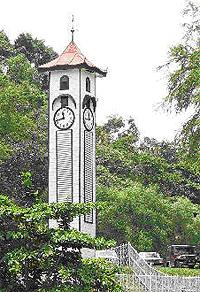
Heritage Sabah made the call in a statement after Balang re-ignited public anger over the weekend with controversial fresh comments on a proposed 16-storey mall-cum-hotel next to the iconic 105-year-old Atkinson Clock Tower in the city.
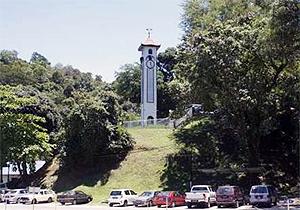 “The people of Sabah have long regarded the clock tower as one of the few historical sites left in the state (from before independence),” said Heritage Sabah spokesperson Richard Nelson Sokial.
“The clock tower is a symbol of the people’s needs versus the personal agenda of some people.”
The heritage activist described Balang’s comments “diminishing the historical value of the clock tower” as an insult to Sabah Museum, historians, advocates of heritage sites and tourism industry players.
He disclosed that “over 2,000 people from all walks of life” have signed an online petition expressing their objections to the commercial development that threatens to dwarf the clock tower. Apparently, this is in addition to hundreds of written petitions.
 “Based on the SHTDA’s profile on its website, its main role is to build low-cost houses in the suburbs and help improve the living conditions of the people in the rural areas,” pointed out Sokial. “Balang is deviating from this role and must step down.”
He reiterated that turning a historical site into a mini-urban jungle has nothing to do with the SHTDA’s portfolio. He expressed disappointment that Balang has continually looked for excuses to diminish the historical value of the Atkinson Clock Tower to go-ahead with his project.
“It goes to show that some people will say just about anything for the sake of a project which is not popular with the people,” he added.
He noted that as the landowner, SHTDA did not even bother to provide proper refuse disposal bins or proper lighting at the Atkinson Clock Tower.
This doesn’t quite tally, continued Sokial, with Balang’s stand that the proposed project “will enhance the value of the clock tower”. He wants to know the SHTDA chair’s “true agenda” since he wants to continue with the project.
Clock tower named after a killer
Balang, in a new take on the clock tower, said that Francis George Atkinson, a British civil servant after whom the heritage site was named, was part of a squad which poisoned the Sungai Pegalan on Jan 26, 1900 in an attempt to poison and kill Mat Salleh, who was said to be camping downstream.
Baling based his account on the book, ‘Datu Paduka Mat Salleh’ (Hero of Sabah) (1894-1900), by an unnamed writer. The clock tower was named after a person who tried to kill “Sabah’s national hero”, according to Balang.
 He wants to go ahead with the proposed project because it will also house SHTDA’s new headquarters. The
only power that can stop
the project, conceded Balang, is the state government.
He wants to go ahead with the proposed project because it will also house SHTDA’s new headquarters. The
only power that can stop
the project, conceded Balang, is the state government.
Sokial did not comment, in his statement, on Mat Salleh who remains a controversial figure in Sabah.
The British North Borneo Chartered Company which ruled Sabah until World War Two had always considered Mat Salleh, a Bajau fugitive from the Philippines, as a murderous outlaw on the run and tried to have him returned to his country many times before having him killed.
Sabah Archives director, Datu Tigabelas Zainal Abidin, is in favour of shifting the clock tower from its present site. He thinks that while the clock tower itself has historical value, the site itself is not where Atkinson died, had his house or his office. It was simply the most suitable site a century ago to put up the clock tower.
He doesn’t want to dwell further on the argument that the site itself has historical value as it has hosted the clock tower for more than a century. He noted, without comment, that Mat Salleh has since been declared a hero although he has previously been considered a traitor.
Clock tower considered a rare structure
State Minister for Tourism, Culture and Environment Masidi Manjun thinks that Balang is confused between heritage, monument, history and nationalism.
He cautioned that any development project near heritage sites must have the approval of the State Heritage and Culture Council and not Sabah Museum. This is in line with section 9(1)(c) of the Heritage and Culture Enactment (Conservation) 1997.
“There are also other laws that protect heritage sites and monuments,” said Masidi. “It’s not a question of whether to allow or disallow the commercial development.”
He cited in particular the Antiquity and Treasure Enactment (Amended) 2006 and Heritage and Culture Enactment (Rehabilitation) 1998.
The Atkinson Clock Tower, according to Masidi, is the only mechanical clock in the state, it’s also the only clock of wood in the country and has been listed in the World Wooden Clock database.
The ‘Lonely Planet Travel Guide’, disclosed Masidi, has placed the clock tower fourth in a ranking of 100 clock towers worldwide. In addition, the clock tower is among the 90 heritage buildings listed as heritage tourist icons in the country.
British colonial rule of Sabah did not begin until after World War Two when the British North Borneo Chartered Company sold the territory to the colonial office in London for 1.2 million sterling.
Like the Brooke Dynasty in neighbouring independent Sarawak, the company couldn’t afford to repair the war damage caused by Japanese occupation during the World War Two period. The Atkinson Clock Tower is one of the few historical sites in Kota Kinabalu that escaped war damage.


Are you sure you want to delete this comment?
This action cannot be undone.