




What if GM mosquitoes reach Singapore?
The planned release of genetically modified (GM) mosquitoes may not only pose risks to Malaysians but also its neighbouring countries.
Lab tests have shown that between 3 to 4 percent of the larvae produced by GM mosquitoes do not die as intended and could eventually breed.
The planned release of genetically modified (GM) mosquitoes may not only pose risks to Malaysians but also its neighbouring countries.
Lab tests have shown that between 3 to 4 percent of the larvae produced by GM mosquitoes do not die as intended and could eventually breed.
If this happens, the mechanism to overcome the lethality in lab-produced GM mosquitoes, among other possible side effects, can be bypassed and they can eventually spread to neighbouring countries.
 This morbid scenerio was raised in a memorandum submitted by the Consumers Association of Penang and Sahabat Alam Malaysia to the cabinet yesterday.
Based on a SciDevNet report, the two groups quote geneticist Ricarda Steinbrecher as saying that it was unclear how some some offspring of GM mosquitoes survive.
“I would suggest that it is far too early for any open field releases. More data are needed from laboratory experiments,” said Steinbrecher.
In the memorandum, the two groups argue that this was not reported by Oxitec, a British company and architect of the GM mosquitoes, and the Malaysian Institute of Medical Research (IMR).
“Oxitec has not been truthful and transparent on important biosafety issues regarding the GM mosquitoes, and it seems the IMR has been complicit,” read the memorandum.
Was there a risk assessment?
The two groups are also questioning if a proper risk assessment was carried out prior to the field trials scheduled to be carried out this month in Bentong, Pahang and Alor Gajah, Malacca.
 They argued that this was necessary in order to comply with the Cartagena Protocol on Biosafety which regulates transboundary movements of living modified organisms which include GM mosquitoes.
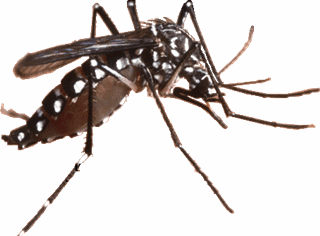
Unintentional transboundary movement of the GM mosquitoes have been recorded such as the introduction of the Asian tiger mosquito ( Aedes Albopictus ) to the United States in the 1990s and the introduction of Aedes Aegypti , which is the target of the GM mosquito project, to Malaysia in the 1970s.
“What is the likelihood that any country can contain GM mosquitoes to remain within its borders in this age of air travel and large-scale movements of people and materials?
“For this reason, releasing a GM mosquito must be considered as a worldwide release which will potentially affect every nation on the planet,” read the memorandum.
Lack of transparency
The two groups also raised the issue of liability and redress in the event the GM mosquitoes pose a problem to humans or the environment.
It was pointed out that the Biosafety Act 2007 is silent on this.
“Does it mean that Oxitec will get away scot-free although it owns patent rights to the GM mosquito? Who, how and where can the communities seek redress should any adverse health and environmental effects occur?” they asked.
Meanwhile, the two groups are also lamenting a lack of transparency in the entire project.
He said similar field trials in the Cayman Islands, that is frequently used as an example by the authorities, were also lacking in transparency.
However, they point out that since the Cayman Islands is a British overseas territory, it is not a signatory to the Cartegena Biosafety Protocol and is thus a convenient testing ground for such experiments.
But now, not only is Malaysia subject to the treaty, it is also subject to the National Biosafety Board’s terms that: “It is mandatory that the applicant through a public forum obtains prior consensus and approval from the inhabitants in the release sites...”
“Even from the time the two GM mosquito field release sites were proposed, the people of Alor Gajah and Bentong were not consulted before the announcement was made.
“There was no public forum where members of the community could have raised their concerns or sought explanation regarding the GM mosquito release from the authorities,” read the memorandum.


Report this comment
Are you sure you want to delete this comment?
This action cannot be undone.