




'Make out-of-state Sarawakians postal voters'
Civil society in Sarawak want the Election Commission to allow Sarawakians working in Peninsular Malaysia, Sabah, Brunei and Singapore to exercise postal voting in the coming state election.
The spokesman for a group of them, Ong Boon Keong, said between 50,000 and 60,000 people of Sarawak could not cast their votes in every election as they did not reside in the state.
Civil society in Sarawak want the Election Commission to allow Sarawakians working in Peninsular Malaysia, Sabah, Brunei and Singapore to exercise postal voting in the coming state election.
The spokesman for a group of them, Ong Boon Keong, said between 50,000 and 60,000 people of Sarawak could not cast their votes in every election as they did not reside in the state.
If they wanted to vote, they would have to take leave from their employers and spend a large sum of money to come over to exercise their rights as Malaysian citizens, Ong said in Kuching today.
In the 2006 state election, he added, the average voter turnout for the 71 seats was a pathetic 61.62 percent.
 "In the 2008 parliamentary election, Sarawak had the nation's lowest turnout, at an average of 58.6 percent for the 31 seats, while Sabah's 25 seats saw a 63.97 percent - in sharp contrast with the average turnout of 76.97 percent for Peninsular Malaysia's 165 seats.
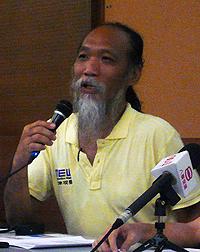
"If Peninsular Malaysia's average voter turnout is a reasonable benchmark, then by the same calculation, 172,000 people did not vote in the last election in Sarawak," Ong ( right ) said.
He said the effective disenfranchisement of the Sarawakian diaspora and out-of- town voters - who on average are higher educated, better exposed and more informed - has artificially preserved the conservative electoral outlook in rural Sarawak.
If spouses of police officers are allowed to become postal voters, then out-of-town Sarawakians have a more valid reason to be entitled to such a convenience, unless the EC has an agenda to register police spouses as postal voters and to suppress the votes of Sarawakians, Ong added.
"The EC can set up a few centres in the Klang Valley, Johor, Penang, Sabah and Brunei, where many Sarawakians reside, and a polling centre each in all the other states, as well as at all overseas missions.
"The EC can even set up polling centres in the major towns of Sarawak for voters from other regions in the state," he said.
'A perfectly practical solution for Sarawak polls'
The postal ballots would then be included in the voters' home constituencies and the totals be added to the direct ballots cast in those constituencies.
"This is perfectly practical for the coming Sarawak election. The granting of postal voting rights to out-of-town Sarawakians requires only a notification in the gazette, which is published fortnightly.
"The EC can then allow a week for interested Sarawakians to register," Ong said.
He said months are not needed to inspect and approve the registration of Sarawakian postal voters.
This is because those registered as postal voters under the election (registration of electors) regulations remain on the ordinary voter list, just like other temporary voter groups such as election workers, election commissioners and civil servants who are out of the country temporarily on polling day.
Only absent voters, including the members of the armed forces and their spouses, civil servants overseas and their spouses, tertiary students overseas and their spouses, and the police need to be placed under a separate list of postal voters as stipulated by the regulations, Ong added.


