




Sabah NGOs cry foul over mangroves destruction
Outraged Sabah green activists have lodged a complaint over the stripping of 600 acres of mangrove forests in Lahad Datu.
Outraged Sabah green activists have lodged a complaint with the State Environmental Protection Department (EPD) over the stripping of 600 acres of mangrove forests in Lahad Datu in the first two phases of the proposed Palm Oil Industrial Cluster (POIC).
The POIC will eventually cover 4,500 acres.
The report by the Sabah Environmental Protection Association (Sepa), complete with pictures, also details the disappearance of a mandatory 60-feet buffer zone in the area and the discharge of waste water directly from the main drains into Darvel Bay.
"POIC should not clear and destroy such a huge chunk of productive natural mangrove forests which are millions of years old," said Sepa president Wong Tack. "These forests are a major ecosystem and the cradle of seafood products and services."
He was commenting on a report earlier this week in the local media that the third phase of the POIC will involve another 3,000 acres and that 400 acres of mangrove forests have already been cleared. The state government also does not rule out reclamation works further into the sea.
Sepa wants clearing works in the 3,000 acre tract aborted and remedial works undertaken in the areas cleared so far.
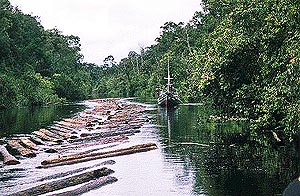 "The state government should stop POIC from clearing those 3,000 acres," said Wong. "These mangrove forests are healthy and should be left intact and untouched in order to protect an invaluable and irreplaceable marine ecosystem."
Mangrove forests, reiterated Wong, are irreplaceable once lost as they are salt water bound.
Greed's weird logic laid out
He is against replacing cleared mangroves with equivalent terrestrial forests tracts as these have nothing like the functions of a marine ecosystem.
Another fallacy worked out by the state government, added Wong, is the replacement of the mangrove forests in Lahad Datu with similar forests in Kudat in the north. He does not see how the new mangrove forests in Kudat will support the marine life in Lahad Datu.
"The mangrove forests in question form the head of the whole Darvel Bay marine ecosystem," said Wong. "It's not possible to counter the loss of such a huge area once its functions are taken out."
Sepa is no longer interested, hence, in piecemeal environmental impact assessments (EIA) and prefers a blanket policy to prevent mangrove destruction.
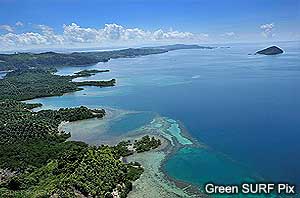 Wong feels that this would be possible if the state government adopts strategic environmental planning incorporating two keep policy thrusts i.e. ensure that highly productive ecosystems are left untouched; and that less sensitive areas are earmarked for industrial development.
Re-visiting the POIC's first and second phases, Sepa will monitor whether the state government sets up a waste water treatment plant to prevent Darvel Bay being turned into "a cesspool of heavy industrial pollution in the decades to come".
The plant, according to Wong, would complement development plans and mandatory EIA reports - incorporating carbon and other emission limits - to be submitted to the state government by would-be investors intending to purchase land in the POIC area.
Fear of smokestacks replacing forests
The NGO expects that hundreds of factories may be set up in the areas cleared so far by POIC. At present, it has been estimated, that there are over two dozen operators in POIC.
Wong urged the state government to abide by the basic principle in EIA reports i.e. to consult with all stakeholders before the implementation of a project.
He noted that even the Lahad Datu Municipal Council is being kept in the dark on the POIC as evident from remarks in the local media attributed to one councilor.
Looking ahead, the Sepa chief lamented that Sabah already has 1.4 million acres planted with oil palm and does not seem to be weaning itself away from over-dependence on one crop. "It should be enough," said Wong. "Let's not depend on just one crop."
The major complaint from Sepa and other NGOs is that plantations are clearing water catchments areas and planting oil palm trees right up to the banks of rivers on which the village people depend for their water supply.
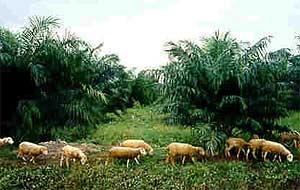 The result is that unplanned development under oil palm acreage is jeopardising the visual beauty that was once the pride of all Sabahans as they traveled from Tamparuli to Ranau and beyond.
The State Industrial Development Ministry, when contacted, claimed that mangrove forests in Sabah are not cleared without consensus in the State Assembly. "This is how Sabah protects its forests," said a spokesperson. "If some mangroves have to be inevitably cleared, there are policies to counter the losses."
The Forest Department, pointed out the spokesperson, has a requirement that "whatever they (developers) remove, they need to replace, if not in the same place, then somewhere else".
He urged NGOs not to paint an ugly picture of industrialisation in Sabah "because industries can be green and environmentally-friendly too".


Are you sure you want to delete this comment?
This action cannot be undone.