




Ex-detainee: ISA strips you of self-respect
When Lim Chin Chin was detained during the infamous Operasi Lalang sweep in 1987, she had no idea of the kind of agony she would be put through.
When Lim Chin Chin was detained during the infamous Operasi Lalang sweep in 1987, she had no idea of the kind of agony she would be put through.
A long-time activist now working with the All Women's Action Society (Awam), Lim recounted how her first two months in detention could have shorn her of all her dignity as a human being.
The loss of identity, not knowing where you are, and not even having any undergarments to wear - these are but some of the trials that detainees face everyday.
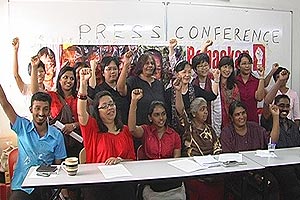 "The EO (Emergency Ordinance) and the ISA have no place in a democratic society. There is not much difference between both laws," she said at a press conference arranged by the Joint Action Group for Gender Equality (JAG) today.
"These laws try to strip you of all rights as a person. They don't call you by name, they call you by a number. As much as you are aware of trying not to let it take effect, it has an effect.
"On top of that, you don't know where you are. You are led, sometimes pulled. You are given a set of clothes, and the pants don't have garters, so you end up tying the top of your pants in fear they might fall or an officer will pull it down.
"They didn't even give us undergarments... they try to demean you as a person, to make you lose your self-respect and with the endless interrogations and stress, even a strong person can succumb to a certain extent to these pressures," Lim said.
'Support is all that will help them'
Turning to current times, Lim said the six Parti Sosialis Rakyat officials detained under the Emergency Ordinance were most likely facing the same trials, and urged all their families, friends and the public to do what they could to voice out and show their support.
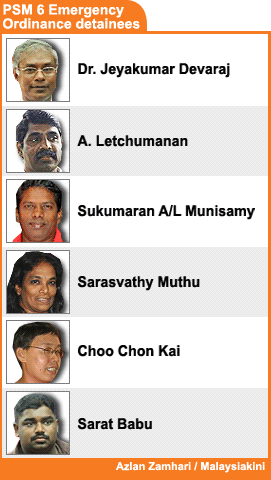 The six, who have been detained since June 24, are Sungai Siput MP Dr Jeyakumar Devaraj, A Letchumanan, M Sukumaran, Sarasvathy Muthu, Choo Chon Kai and Sarat Babu.
Lim said one of the worst psychological challenges detainees face is the fact that they have almost no way of knowing what is happening outside.
And the only way they can know is through their families and friends in the rare visits they are allowed.
Lim pointed out that public shows of support, though they may not be immediately known to the detainees, would greatly bolster their spirits if they knew that they have not been forgotten.
"It's very important that we don't give in to pressures from the police. They will try to intimidate groups and families, but it is important to keep the pressure so the police know we won't give up," she said.
But most important of all is support from those the detainees hold most dear, especially their families.
"I've heard of detainees berated by their families for what they have done... that is not the way to go.
"... they need to encourage the detainees, when they can. That is the one thing they need the most," Lim added.


Are you sure you want to delete this comment?
This action cannot be undone.