




EC chief: More woes with biometrics than indelible ink
The Election Commission (EC) chief today conceded that the use of indelible ink to avoid double voting is less problematic than using a biometric system.
The Election Commission (EC) chief today conceded that the use of indelible ink to avoid double voting is less problematic than using a biometric system.
Speaking to reporters in Kuala Lumpur, EC chairperson Abdul Aziz Yusof said that while biometrics is the “perfect system” in theory, loopholes exist in practice.
 “The argument is that (someone with multiple identity cards) can vote once and then bring another card to a different stream, and it will match his thumbprint and he will be allowed to vote again.
“The prerequisite for the system to work is for each person to have only one identity card,” he said.
Comparing it to indelible ink, Aziz said the biometric system could also malfunction on the day of voting and complicate the process.
“We have had a dry run with 50 people and the average time per person is 10 seconds, but some had problems where the machine could not detect their thumbprints.
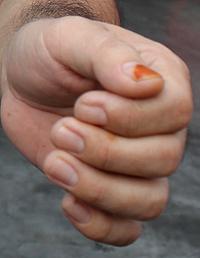
“With indelible ink, you just have to dip the finger in the ink,” he said.
He noted that the biometric system was also “very expensive” in comparison, and required at least seven months lead time before implementation.
Aziz refuted his deputy Wan Ahmad Wan Omar’s claim that indelible ink could be used by irresponsible parties to mark naive voters to disqualify them from voting.
Wan Ahmad said that the commission buckled to pressure to use indelible ink in 2008, only to call it off at the very last minute following claims that another batch of ink had been imported by another party, suspectedly for sinister purposes.
“This cannot happen as the colour of the ink is not known until the day... there can be so many colours. We can also maybe have some sort of pattern,” Aziz said.
He also noted that there would not be a shortage of supply as the ink could be bought from various sources.
Biometrics, indelible ink or combo in next GE
As such, he said, the commission was currently reviewing which system to use for the next general election.
“It can be indelible ink, biometrics or both systems combined to make it foolproof... God willing, by the next general election,” he said.
However, Aziz said, the Attorney-General’s Chambers was still studying the legal aspects of the move, particularly if it was to be made mandatory.
This is because the federal constitution states that no registered voter can be stopped from voting.
A constitutional amendment is not required if the use of either system, or both, is made “voluntary”, but this, he agreed, would not stop possible double voting.
“That’s why we want to make sure that everybody will use it. If they don’t want to, they will need to fill in a form, for example.
“(But) there will be people would not want to use (the ink) as they think it’s haram, for example, or if they are allergic," he said.
Aziz said if the system was made mandatory, a constitutional amendment would have to be tabled in Parliament, and can only be passed if there is a two-thirds majority vote.
“We are aiming for the next parliamentary sitting (in October)... but politics can make things hard for the EC. (Politicians) can work together to block (the amendment),” he added.
Related stories :
DAP reveals 'clone wives' of army voter
'Parties complain roll is dirty but try to register the dead'
Postal votes to be extended to all M'sians overseas
Amendment to postal votes to be tabled in October
EC deputy chief told to stop flip flopping
'By-election losses spur Pakatan's reform demand'
NGO wants MACC to probe phantom voter 'syndicate'
KJ: Polls panel won't look only into Bersih demands
Study: Utusan gave widest coverage to Bersih


Are you sure you want to delete this comment?
This action cannot be undone.