




Why Penangites won't tolerate losing Penang Hill
COMMENT For those unfamiliar with the chain of hills stretching across Penang Island like a green spine of this turtle-shaped island, Penang Hill, as it is popularly known, is symbolic of Penang’s strong place-identity.
COMMENT For those unfamiliar with the chain of hills stretching across Penang Island like a green spine of this turtle-shaped island, Penang Hill, as it is popularly known, is symbolic of Penang’s strong place-identity.
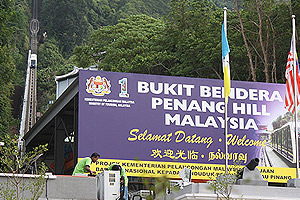 The hills form a natural barrier to development, keeping urbanisation in a corridor wedged between it and the sea. Associated with the hill is not only a unique heritage but also all environmental causes so important to the well-being of Penang. One of the world’s oldest “highland” sanatoriums, Penang Hill is hazardous to the reputations of politicians who have attempted to scar it with “development”.
Apart from spending many childhood holidays in governmental bungalows as well as the Catholic “Brother’s Bungalow”, I first became aware of the significance of Penang Hill in 1988-89. In high school at the time, the Save Penang Hill campaign taught many of us never to take our natural environment for granted.
This was at the tail-end of Dr Lim Chong Eu’s career as chief minister when the catch-phrase across the country was “development”. Often unbridled and unchallenged, the environment was more often than not a victim of development projects.
Fresh from electoral victory albeit having its leader losing his state seat to DAP’s Lim Kit Siang, the Gerakan-led state government had little appetite to push the proposed Penang Hill development project any further.
Since then, under the Local Area Plan, Penang Hill attracted very little investments from developers but continued to be a sanctuary for the people of Penang. Many family members, mine included, come home to Penang for reunion dinner and a hike up the hill. The affinity that Penangites have for the hill cannot be underestimated.
In more recent times, developers have begun to re-focus on Penang Hill. There are three projects associated with Penang Hill that have been soundly rejected by the people of Penang. The first was the ill-conceived Penang Global City Centre (PGCC) project, which was situated at Batu Gantong on land owned by the Penang Turf Club.
This was a massive development at the foot of the hills. Despite having the support of (then PM) Abdullah Ahmad Badawi, the project came up against a solid wall of protest from Penang’s vocal non-governmental organisations. Not since the Save Penang Hill campaign was civil society so active and united.
Projects that rubbed Penangites the wrong way
Two other projects that have rubbed Penangites the wrong way are the Arches at the Botanical Gardens and the recent upgrading of the Penang Hill railway. These were federal government-funded projects that were initiated without as much consultation with the people as would have been useful.
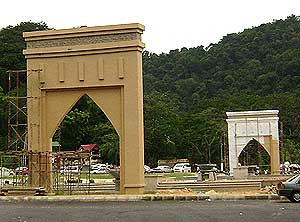 The Botanical Gardens, established about the same time as the first sanatorium was built in Penang Hill, is a natural gateway up the hills. It is regarded as an extension of the wider environmental welfare of the state. It was not so much the style of the arches but that the project signified more concrete structures in the Botanical Gardens.
What the people of Penang wanted was more resources channelled to upgrading human capital and improving the administration of the gardens. There was already a long-term master plan to guide development in the gardens but this was not followed.
More importantly, since the 1990s, the Botanical Gardens was put under “Tourism”, which resulted in it being managed as a tourism asset. Despite the best efforts of the “Friends of the Botanical Gardens”, the budgeting process leaves much to be desired although the “concretisation” of the gardens have abated somewhat. After much protest including an online survey, the arches have come down to be replaced with a pond of wilting water-lilies!
The second project was the recent Penang Hill Railway upgrading, which to some Penangites ruined the experience of going up the hill via the old funicular railway. Whilst the train is bringing up passengers in their thousands, there are few facilities ready for them. To add salt to injury, the frequent breakdowns again point to a lack of investment in human capital and management skills.
All this have continued to rankle Penangites, who feel that both the federal and state governments should behave more professionally when it comes to the welfare of the people of Penang.
What Penang Hill represents is not only the strong place-based identity of the community that calls themselves Penangites but the very real multi-generational attachment that they have with their island home. These emotional ties are carried by the children of Penang far and wide hence the deep concern about any development plans for Penang Hill that is fast making the rounds in the mainstream media, Facebook and blogs.
There is now a Penang Hill Development Authority (PHDA) but hopefully one not with a capital “D” in development. It might have been helpful if the word conservation was inserted into the PHDA, as one aspect of its charter is the sustainable development and conservation of the hills.
Recently, the state government announced that international hoteliers Aman Group will be involved in the development of Crag Hotel, an impressive bungalow complex that once housed the Uplands School and that formed part of the set for the French movie Indo-Chine. There are also early attempts to restore government bungalows, many are now in a run-down condition.
Whilst developers can submit all the plans they like, development in Penang Hill must abide by two sets of rules. One, the legal aspects including development guidelines established in the Local Plan and the Special Area Plan; as well as the Environmental Impact Studies but more importantly, it must satisfy community wishes.
Respecting the ‘spirit of place’
Development must respect the “spirit of place”, which can only come about if developers consult meaningfully with the people of Penang and various special interest groups.
Of course Penang Hill needs developing but in a sensitive and public-interest led model. There are many things that need improving including the various paths leading up the hill; the facilities that need to be upgraded to meet the expectations of the visitors going up there by the high-speed train; some rapidly expanding farms that need to be managed; and the continued public access that must not be hindered by private interests.
As the Penang state government has not responded officially (at the time of writing) to the media frenzy and public reactions to certain statements by the former chief minister and a KL-based developer, it may be opportune to highlight to the state government the strong and passionate attachment of the people of Penang to their wonderful green lung.
We have already lost a lot of public access to our beaches through unregulated development and I am confident that the people of Penang will not tolerate losing Penang Hill in the same way.
For aspiring developers, it might not be prudent to pursue development projects with the aim of achieving super-normal profits especially when the focus is on Penang Hill or its environs. You can be sure that no media company will be able to charm the people of Penang or to distract them from the chief objective of protecting Penang Hill. In fact, this is now the guiding principle for development in Penang state.
NEIL KHOR completed his PhD at Cambridge University and now writes occasionally on matters that he thinks requires better historical treatment. He is quietly optimistic about Malaysia's future.


Are you sure you want to delete this comment?
This action cannot be undone.