




EC's excuse over indelible ink 'unconvincing'
The Election Commission’s (EC) reasons in making a sudden U-turn on the use of indelible ink during the March 2008 general election were “not convincing”, says a US diplomatic cable leaked two days ago.
The Election Commission’s (EC) reasons in making a sudden U-turn on the use of indelible ink during the March 2008 general election were “not convincing”, says a US diplomatic cable leaked two days ago.
The EC had proposed using indelible ink in the last general election but at the eleventh hour, three days before March 8, 2008, former EC chief Abdul Rashid Abdul Rahman announced that its use was abandoned.
US diplomats in a leaked cable, however, opined that Abdul Rashid’s “abrupt about-face on March 4" clearly suggested pressures from the BN-ruled government.
 “In a hastily announced press conference and flanked by both the (former) inspector-general of police (IGP) Musa Hassan, and the attorney-general (AG) Abdul Gani Patail, Rashid stuttered through a prepared statement officially terminating the fraud prevention method that the EC had embraced only nine months ago,” the cable says.
The policy reversal, which later came under severe scrutiny, was due to the fact that four police reports had been made over an alleged plan to sabotage the election process by smuggling in unidentified quantities of indelible ink into the country, Rashid claimed.
“The EC’s grounds for reversing itself on the use of indelible ink do not appear very convincing. Regardless, the EC has damaged its credibility on the eve of the election and invited greater suspicion of Malaysia’s electoral process,” the cable says.
The revocation was condemned by opposition parties as well as election watchdog groups that claimed there were “phantom voters” in the electoral roll, which could hamper efforts for a clean and fair voting process.
“Although both Umno and PAS leaders have been guilty in the past of recruiting phantom voters, PAS leaders accuse the EC of allowing Umno to pad the electoral roll with its supporters to help Umno win Kelantan and maintain its hold in Terengganu,” the cable says.
Observer teams sent to six key states
It said the embassy had dispatched election observer teams to six
key states during the March 2008 general election that ended with BN losing its two-thirds parliamentary majority, for the first time after 1969, and five states to the opposition Pakatan Rakyat.
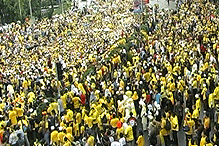 Prior to the 2008 general election, the Coalition for Clean and Fair Elections (Bersih) held a mammoth rally in the Kuala Lumpur city centre, demanding that eight of its suggestions to improve the balloting process be implemented - including the use of indelible ink.
“Proponents of electoral reform had lobbied for the introduction of indelible ink and hailed the EC’s original decision to institute this measure, which would have represented the most significant improvement in the integrity of the elections since the last polls in 2004,” the leaked cable says.
Having failed to push their demands through the first time, Bersih 2.0 on July 9 this year held another massive rally, with tens of thousands of supporters insisting that the EC implements their demands.
After much hesitation, the government proposed the setting up of a parliamentary select committee to look into the demands, stopping short, however, of pledging that the reforms would take effect before the next general election, which is widely speculated to be held by the end of the year.


Are you sure you want to delete this comment?
This action cannot be undone.