




Revision of history - in search for truth
COMMENT I read with interest Malaysiakini ’s coverage on the launching of a book ‘ Historical Facts and Fiction ’ by prominent scholar Syed Muhammad Naquib al-Attas. The event was launched by Higher Education Minister Khaled Nordin. I have not yet read this surely interesting book and look forward to doing so soon.
COMMENT I read with interest Malaysiakini ’s coverage on the launching of a book ‘ Historical Facts and Fiction ’ by prominent scholar Syed Muhammad Naquib al-Attas. The event was launched by Higher Education Minister Khaled Nordin. I have not yet read this surely interesting book and look forward to doing so soon.
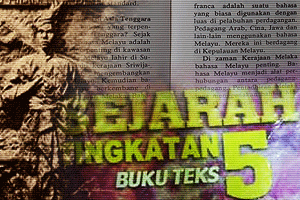
Of equal interest to me has been that following the launch, the minister apparently commented that there is a need for the revision of Malaysian history. There are versions of it that are still uncovered, he reportedly said. For example, while present history books stated that Islam came into the Malay archipelago in the early 15th century, it apparently came to our shores as early as the 8th century; by the Arab nobility, not by some Indian (Gujerati) traders as widely believed.
 I look forward to seeing Malaysian history given a thorough revision.
I have the following interlocking reasons for saying this:
- The present day history textbooks used in schools are known to be decked with errors, omissions, selective hyperbolism, and lopsidedly centring on the Malay and Islamic civilisations.
- The Education Ministry has announced that history is to be made into a compulsory subject in schools.
- As history is to be made compulsory, its teaching should be objective, and its facts and evidence and other details accurate. This is to protect the integrity of historical truth.
- We have to teach the young truthful history.
Defining what truth is
But one most difficult part of writing or revising history is to define what truth is. Philosophers say that truth is not absolute: that what is truth to one is myth to another, a hero to one is a traitor to another. We are also familiar with food for one is poison to another.
Take the case of Mat Sabu’s statement gripping the nation as an illustration. He says that the heroes in the Bukit Kepong massacre in 1950 were not the police defenders of the police station and their families, but instead the insurgents led by one person by the name of Mat Indera.
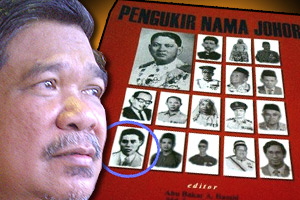 Mat Sabu’s point has been that at the material time Malaya was not yet independent, and so Mat Indera was attacking the police station that to him represented the British colonial government. To Mat Sabu, Mat Indera was an activist for independence. That’s his version of truth.
But to Khaled, the Bukit Kepong statement “was a half-baked political statement which had caused confusion”. That’s his version in turn.
So who is telling the truth? Indeed, seeking truth is most difficult, so how do we get about to teach true history and not myth or fiction?
To answer this complex question let me digress a bit by asking what is history. It is an account or record of events. It is a very technical (i.e. measurable) subject as it deals with the who, what, where, when and how of events, things and people, space and time. These are in turn translated and translatable into facts and figures, measurements, and evidence. This being so, the accuracy of these principles can be determined.
Conversely any error can be detected and pin-pointed; and corrected.
So for history to be credible we should ensure these accounts or measurements are accurate. Failing to do so would do injustice to our future generation who would discover or uncover any inaccuracy, any untruth anyway! And this is the ‘easy’ part.
The more difficult part is when these records are subjected to interpretations of the researchers and writers. Being human they might be partial and subjective to their own views, assessments, judgments and specific agenda, and this would be reflected in their work. As in the case of Mat Sabu and the minister, each is partial to his own opinion and judgment, as indeed food for one is poison to another.
How then do we teach history to ensure its objectivity and minimise the judgmental element of writers and recorders?
Again this is a very complex question with no easy answer. But I can try to make a suggestion, and it centres on the word ‘intellectual’ or more precisely, we have to enable our young to intellectualise.
Who is an intellectual?
An intellectual is one person who seeks truth. He is that one who, when confronted with a problem, goes about talking to people, reading about the issue at hand, all in the hope of getting the best alternative solution or answer to it. He does not accept any simple and ready solution without giving it a good and thorough study. He is a rational and scientific thinker.
He is the flexible thinker, who can reason things out and allow to the possibility that he can be wrong; that other people can have their viewpoints as well.
Before this narration gets out of hand, let me digress by citing an example of a typically non-intellectual mind. It centres on two words, communism and terrorism.
 Communism is the advocacy of a system of government where there is no class in society and where private ownership is abolished. It is a dying system of government as most countries in the world today have favoured or chosen democracy or professes to do so.
Terrorism is the systematic use of violence and intimidation to achieve some goal of one person or group against another; it is a criminal activity. One relates to a system of government, while the other to an act of criminality! They are truly poles apart in concept and meaning.
But we in Malaysia have been taught with the notion that these two otherwise different concepts are one and the same, that they are both apples. We ended with the thinking and belief that communism is terrorism and that a communist is a terrorist! There is a lot of confusion here, yes, minister?
This absence of (or inability for) rationalisation has resulted in our minds being bounded by the prejudices we have inherited from our elders, thus making us go through a period of confusion and contradiction, four of countless hundreds and thousands of which I list below to illustrate:
- The country belongs to the Malays, the rest being ‘ pendatangs ’.
- The country was not colonised, but was a protectorate of the British Empire.
- Western culture is immoral and decadent.
- In the international arena, the government is having close relations with communist China.
I do believe that if we teach our young to conceptualise and intellectualise they will realise there is only one human race so there is no ‘pendatang’ and all natural born citizens have equal right to the country of their birth; that colony and protectorate are essentially synonymous; that if western culture is immoral and decadent, what do we call ours? (Hint: which one is the pot?)
And that the 1.3 billion inhabitants of communist China are not terrorists, so we can have good relationship with this country as we do now.
Mainly they have the capability to look into the issues, make a proper analysis and evaluation and then come up with their own flexible and independent judgment! They can then make up their minds whether or not Mat Sabu makes sense or not based on the merits of the case. They will not look into the issue like a ‘half-baked politician’ trying to score brownie points.
Nor will they resort to Hishammuddin Hussein’s wish to link Mat Sabu and his Bukit Kepong contention with the ISA, but failing this he is asking for the AG to take any action deemed necessary.
And how do we educate our young to be an intellectual i.e. be able to intellectualise? This is another complex question with no easy answer. But I do say this can begin with opening the closed and ethnocentric mind, best done (to me) by developing a person’s sense of the individual followed by developing his ability to conceptualise and seeking alternatives.
These can all be done by secularising education. And in the context of this writing, by revising history text books: get rid of the lopsidedness and selective hyperbolism, correct the errors, be truthful.
The fact of the matter is that these days people are more literate, more scientific, more technical; they are more demanding for facts, truth and accuracy. And, in this post-modern era of the computer, the Internet and Wikileaks, almost nothing escapes the people’s scrutiny. Truth cannot be denied. In the long run the people get it. Truth has a way of prevailing in the end.
AB SULAIMAN is an observer of human traits and foibles, especially within the context of religion and culture. As a liberal, he marvels at the way orthodoxy fights to maintain its credibility in a devilishly fast-changing world. He hopes to provide some understanding to the issues at hand and wherever possible, suggest some solutions. He holds a Bachelor in Social Sciences (Leicester, UK) and a Diploma in Public Administration, Universiti Malaya.


Are you sure you want to delete this comment?
This action cannot be undone.