




MCA against M'sians abroad being allowed to vote
The proposal to allow Malaysians living overseas to vote during general elections has been rejected by the MCA, which announced today that these people are "out of touch" with the country.
The proposal to allow Malaysians living overseas to vote during general elections has been rejected by the MCA, which announced today that these people are "out of touch" with the country.
Presenting the party's views at the parliamentary select committee on electoral reform, central committee member Ei Kim Hock said extending the vote to Malaysians residing abroad would be unreasonable as they receive "doubtful" information.
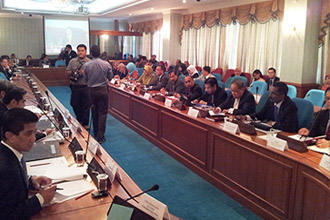 "Voters residing overseas should not be allowed to vote. We view this seriously as those who reside abroad are out of touch and do not truly understand the situation in Malaysia.
"We are doubtful over the kind of information they receive... The future of the nation should be with those who remain in the country," Ei said.
In their memorandum submitted to the committee, MCA said that what Malaysians overseas read about the country is “biased” and “wrong”.
“They are getting bits and pieces of news from various sources to try to form a picture of what is happening in the country,” the memorandum read.
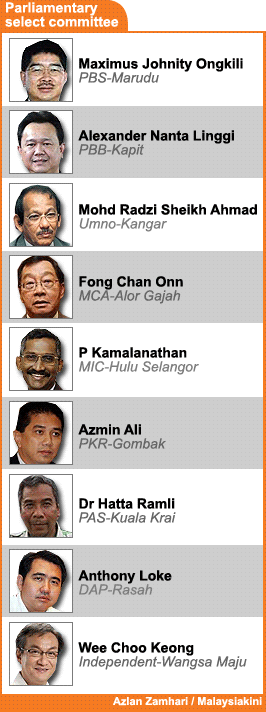 MCA’s proposal, however, found opposition from PSC member Anthony Loke (DAP-Rasah) who said that Malaysians overseas can get information from all sources, including popular mainstream media website of MCA-owned newspaper
The Star
.
MCA’s proposal, however, found opposition from PSC member Anthony Loke (DAP-Rasah) who said that Malaysians overseas can get information from all sources, including popular mainstream media website of MCA-owned newspaper
The Star
.
He added that many capable Malaysians are working in international agencies and should not be denied the vote simply because they are overseas.
PSC member Wee Choo Keong (Ind-Wangsa Maju) agreed, saying that the type of information received by a voter should not be a yardstick to measure whether they should be allowed to vote.
“We don’t know, they may be reading information on the Internet from good sources. How can we determine that (all Malaysians overseas) are reading not so good sources?” he said, adding that voting is a constitutional right of all citizens.
The Election Commission had previously announced that it is extending the vote to Malaysians residing overseas in the form of advance voting. The law currently provides this to full-time students and civil servants on duty abroad.
Later today, in the wake of public criticism, Ei issued a statement clarifying that MCA was against the proposed overseas postal voting as it may not be feasible immediately.
“There are still many technical problems which must not be overlooked and need to be further studied,” he said.
“Unless, all technical problems have been filtered and resolved, then only can we proceed with a smooth overseas postal ballot.”
He said overseas voting would involve Malaysian embassy and Consulate office staff.
“Does this mean every Malaysian embassy and Malaysian consulate-general office must prepare 222 parliamentary ballot boxes and 505 state assembly ballot boxes?
“This means that at every general election, each Malaysian diplomatic mission abroad must prepare more than 700 ballot boxes.”
Automatic registration ‘wasteful’
MCA also supported the retention of the current postal voting system as it has been in use and familiar, but this was questioned by fellow partyman Fong Chan Onn (MCA-Alor Gajah) who said that the system should be improved if it was found lacking.
It also called on the Election Commission to have an “efficient” and “periodical system of cleaning up the (electoral) database to weed out deceased voters and/or those who have relinquished their Malaysian citizenship”.
MCA also said that it is “neutral” on the use of the indelible ink and will adhere to any policy set by the Election Commission, but opposed automatic voter registration, arguing that it is “wasteful”.
 The Selangor Youth Council, represented by its deputy president Badrul Hisham Badrudin (
left
) earlier today, on the other hand, proposed automatic registration.
The Selangor Youth Council, represented by its deputy president Badrul Hisham Badrudin (
left
) earlier today, on the other hand, proposed automatic registration.
However, the council proposed that those who fail to vote in one general election be de-registered.
“They will have to re-register if they want to vote in another election,” Badrul Hisham said, insisting that the age threshold be kept at 21.
The youth council also proposed that no individual be allowed to serve as a state assemblyperson and parliamentarian at the same time.
In addition, it proposed that service periods be limited to two terms for assemblypersons and three terms for MPs.
Society of the Blind in Malaysia (SBM) chairperson Loh Kong Ken proposed to the nine-person panel that blind voters be allowed to be assisted by a person whom they trust, whether or not this person is an immediate family member as provided by the law.
“One classic analogy SBM can quote here is Shahrir Abdul Samad, who is serving the BN while his brother Khalid is an MP serving his constituency on the PAS ticket.
“An immediate family member who has different political inclinations will not agree to vote for the candidate desired by the blind voter,” he said.
Related stories
'Withholding allocations till election win is corruption'
HRP asks panel for 53 Indian majority constituencies
Ex-cops want ex-cons barred from contesting in polls


Are you sure you want to delete this comment?
This action cannot be undone.