




Suaram: Malaysia snubbing UN official for two years
The Malaysian government has for two years been snubbing a request by the UN Special Rapporteur on the right to freedom of peaceful assembly and of association, Maina Kiai, for an official visit to the country.
The Malaysian government has for two years been snubbing a request by the UN Special Rapporteur on the right to freedom of peaceful assembly and of association, Maina Kiai, for an official visit to the country.
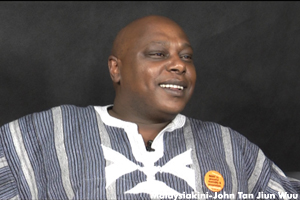 According to human rights NGO Suaram, Kiai (
left
) sent a request to the government for an official visit to access the country in 2011 and the request was officially accepted in August last year.
According to human rights NGO Suaram, Kiai (
left
) sent a request to the government for an official visit to access the country in 2011 and the request was officially accepted in August last year.
However, Putrajaya has still refused to provide with him dates for the visit.
Suaram's executive director E Nalini said: "He (Kiai) has really been pushing the Malaysian permanent mission to the Human Rights Council (HRC) to set a date but at the end of the day, it comes back to the capital and they haven't been willing."
According to Nalini, Kiai told the HRC in June that he regretted the Malaysian government didn't want to give him a date to visit the country and assess the local situation.
Unable to get an official visit, Kiai came to Malaysia last September on an "academic trip" and met with various NGOs, including Suaram.
This revelation came during an interview with an international team of observers from Asian Forum for Human Rights and Development (Forum-Asia) earlier this week. Suaram is helping facilitate the trip.
The team is in Malaysia to document abuses of freedom of expression and peaceful assembly in the context of the recent general election and will present their report to Kiai, who is expected to raise the Malaysian situation at the HRC and the UN General Assembly.
The team received some snubbing of their own. The Attorney-General's Chambers and Ministry of Home Affairs were not willing to set a time to meet with the group and the Ministry of Foreign Affairs replied that it wasn't in their purview.
'Malaysia like the dark old days of Korea'
The team hopes its findings will provide a regional context to government abuses. Asked about their findings so far, a team member compared the laws in Malaysia with those in conflict areas.
Sri Lankan legal rights advocate Kishali Pinto-Jayawardena said: "If you look at specific areas, if you look at Kashmir or at the south of Thailand, there are a lot of similarities in the way the Malaysian government reacts (to peaceful assembly)."
Professor Kyong Whan of South Korea, a former chairperson of the National Human Rights Commission of Korea, said the Malaysian situation was similar to that of Korea 30 years ago.
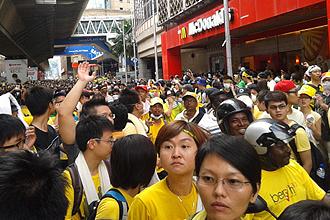 "When I took a look at the Malaysian laws I am really reminded of the dark old days (in Korea). How could this happen in this day?" Kyong asked.
"For example, foreigners and minors are not allowed to participate in public assemblies. This is ridiculous and I've never heard of any law that totally goes against globalism and the interest in human rights.
"The main difference between Korea and Malaysia is that since 1987, we have had a change by vote," Kyong said, adding: "The key problem is that you haven't had any peaceful transition of power."


Are you sure you want to delete this comment?
This action cannot be undone.