




Tax-dodgers 'traitors to the nation'?
COMMENT Those who evade paying income tax are “traitors to the country”. This comment, attributed to the prime minister, was made with reference to the patriotic duty of every citizen to contribute to the nation’s coffers.
As they say, only two things in life are certain: taxes and death.
Taking an extremely cynical view, we can divide a country into different types of people.
COMMENT Those who evade paying income tax are “traitors to the country”. This comment, attributed to the prime minister, was made with reference to the patriotic duty of every citizen to contribute to the nation’s coffers.
As they say, only two things in life are certain: taxes and death.
Taking an extremely cynical view, we can divide a country into different types of people.
 There are the producers - people who work very hard to produce food, dig up natural resources, build roads, handle transactions, trade with other nations to produce a profit and who contribute a certain amount of their surplus to keep the country going.
A second group can be categorised as public servants. They keep the government machinery going often by implementing policies, enforce the laws to keep the peace and assist the government in developing public policy.
However, there is little incentive for this group to generate or produce any surplus. They are not supposed to. Instead their role is to help regulate, arbitrate and facilitate the producers in generating funds that keeps the nation going.
The political and the religious class provide leadership and spiritual guidance. They do not produce nor do they actually do get their hands dirty in administration. They sit at the top of the pyramid and justify their top position by providing stability and direction.
If a country is a ship, this group of people are steering and keeping our spirits up. Obviously, this class is closely related to the top tier civil servants and the biggest producers. In fact, they are quite indistinguishable.
The reason for the description of the pecking order above is to make clear the reality of life in all human societies. In fact, this is true even for animals especially amongst mammals. So, the act of paying taxes is akin to all of us agreeing to contribute a certain portion of our surplus to keep the country going.
But the pact is more complicated that it seems. For in exchange for agreeing to contribute to the common pot, there are several things that the non-producers have agreed to honour.
In ‘Sejarah Melayu’, the rakyat agrees to obey the raja if the latter agrees to protect them, keep the peace, dispense justice and never abuse the power conferred onto him. In the Magna Carta, the English king can rule so long as he agrees to share power with the aristocracy, who in return will protect the realm and ensure justice prevails. In the Medina Constitution, Muslims agree to live as a community governed by a constitution that guarantees human dignity and the sanctity of life.
In every civilisation throughout the ages, so long as the rulers are able to provide leadership, keep the peace, ensure justice and respect human dignity, there has been little reason for citizens to rise up against them.
Laundry list of misadventures
Turning back to Malaysia, lets see if indeed these ingredients are all intact. On the issue of justice, there is much left to be desired.
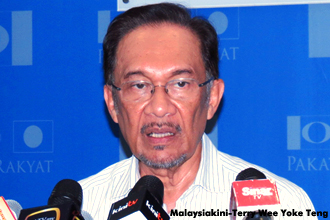 I am not sure a third prosecution of Anwar Ibrahim led by an ex-Umno lawyer will convince Malaysians about our justice system. Perhaps, this is one way the government is letting us know that due process is guaranteed and even a former deputy premier is not exempted. In other cases, like the PKFZ case involving Dr Ling Liong Sik, one is not so sure about the abilities of the prosecution or that public funds will ever be recovered.
Safety is another key area that the ruling class agreed to provide. I doubt one has to write very much to convince Malaysians that the crime rate is on the decline. Obviously, if the government says so, it must be true. Unfortunately, the reality is that we feel unsafe.
To be fair, there is Ops Cantas and the reintroduction of detention without trial. So, expect the crime rate to drop now that such preemptive laws are back in operation. Incidentally, these same laws are open to much abuse but we must trust the people spending our tax ringgit; otherwise there would be chaos.
What about the management of our finances? The country is trying hard to improve productivity and lower the budget deficit. At the same time, we are all asked to put up with a slew of price hikes.
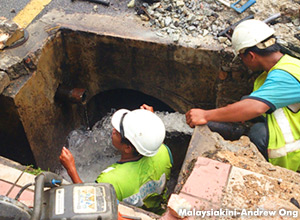
If you are living in KL, assessment rates will be up for public amenities that are frankly not that good. This is a city that has a massive rat infestation problem, that suffers from leaking water pipes with a wastage rate of 70 percent, whose roads have been dug up so often no one really knows what is under them any more, and whose public transportation system is not even moving 20 percent of citizens.
Remember our civil servants? This group has been neglected for so long that they have suddenly become amongst the lowest-paid group. Forty years ago, the civil service attracted the best and brightest in the country into its ranks.
No longer up to it, the government had to spend RM 7.2 billion last year to employ consultants to draw up policy and special programmes. I am sure some of these consultants really do have very specialised knowledge and the world has become truly very complicated but if we are paying RM 7.2 billion a year, we really need to trim our very bloated civil service.
The reality is that our civil service is a welfare state within a state. I mean no disrespect to civil servants, having been raised by a single parent who served the nation with great dedication. But the reality is that we have expanded the civil service without thinking very much about quality. As a result, top officers no longer get competitive market rates.
Would a world class architect work as head of the municipal council’s building department for RM7,000 a month? Will a fully qualified engineer go into the civil service when his starting salary is RM 2,500? For that matter, can our universities attract top scholars when professors are paid RM 15,000 a month?
The answer does not lie with more salaries alone, it lies with a policy that ensures quality. The consequences are dire. We cannot ensure peace because so many are so badly paid that they will have to supplement their income by taking bribes. Incompetence in prosecution can lead to even more ‘big fish’ escaping the legal dragnet.
 A judiciary that does not appreciate the tradition that they belong to, will try to create precedents that will further erode public confidence. An education system that is not merit-based, not led by the best ideas and does not have freedom of thought have now sunk into mediocrity.
Ultimately, we end up with a laundry list of misadventures, corruption and wasted resources; crimes that have no criminals only incompetents.
But no government is able to do serious reforms without going out of power. The only PM that had the balls to take on the civil service was Dr Mahathir Mohamad and even he, in the end, capitulated. About the only things that remained are the name tags and the punch-cards.
So, we will continue to apply band-aid, rely on consultants and keep expanding the welfare state. But this requires even more taxes, a further reduction in subsidies and even more natural resources.
Balancing the books
Caught between a rock and hard place, the government will now have to bite the bullet by introducing a slew of very unpopular measures to balance the books.
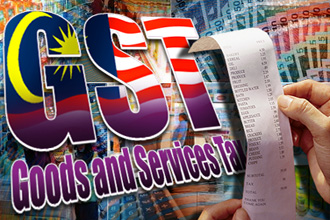 The Goods and Services Tax will give them an additional RM 6 billion, which means more Malaysians will have to pay and chances are, it will be the middle and lower income groups.
Assessment rates will have to be raised to lower the burden of the federal government. Subsidies will have to be reduced but in exchange BR1M, which can be seen as negative taxation, will be increased.
Ultimately, to really balance the book, one has to collect more taxes and use up more natural resources. Someone somewhere, including in the next generation, will have to pay. Chances are, it will be the producers and the public servants. The latter will get a bit back in the form of BR1M but it will not be enough.
Unfortunately, the option of a new broom to sweep clean the administration of wastage and corruption is not available to the federal government. One can see budget surpluses in Penang and Selangor although a lot more can be done especially in the area of investments into state infrastructure.
The same policy should be applied to all Malaysian states with the federal, state and local governments working together despite political differences. But chances are, it will have to be up to the producers and civil society that will have to take the lead; as well as pay for any improvements. Some are already hiring private security guards to keep them safe.
It is okay to call tax dodgers ‘traitors’ but the same label should apply to those who are incompetent, who waste public funds going overseas on private invitations, endanger the nation’s stability by issuing Mykad to illegal migrants, buy expensive clocks 100 times the market price and who preside over multi-billion dollar losses.
As Mahathir told a BBC reporter after BN lost the two-thirds majority in 2008: “In some countries like Japan, after such a disaster, the leader should take responsibility and commit hara-kiri. In Malaysia, we are not so harsh to our political and religious leaders but if nothing is done, sooner or later, somebody will shout: death to all traitors.”
NEIL KHOR completed his PhD at Cambridge University and now writes occasionally on matters that he thinks require better historical treatment. He is quietly optimistic about Malaysia's future.


Are you sure you want to delete this comment?
This action cannot be undone.