




Where's the Malaysian Mandela?
COMMENT Among mortals, there are saints, heroes and geniuses - and then there was Nelson Mandela, who saved a nation that was torn apart by apartheid.
To do a 'Mandela' is to put the nation before self, to save it and to seek the common good of others, including political enemies, from an elevated position of supreme power.
To do a 'Mandela' is also to forgive those who have harmed you and to do them only good even when you are in a position to exact retribution.
COMMENT Among mortals, there are saints, heroes and geniuses - and then there was Nelson Mandela, who saved a nation that was torn apart by apartheid.
To do a 'Mandela' is to put the nation before self, to save it and to seek the common good of others, including political enemies, from an elevated position of supreme power.
To do a 'Mandela' is also to forgive those who have harmed you and to do them only good even when you are in a position to exact retribution.
His iconic stature was set in history when he exhorted Black Africans not to bathe their nation in the bloodbath of revenge, after he was elected president and became immortalised as the ‘Founder of the Rainbow Nation’.
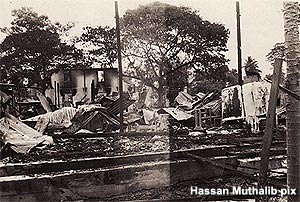 How different is that from those who conspired against their country by creating chaos and corpses as in Cambodia's 'Killing Fields' or Malaysia's May 13, 1969 killing spree?
Mandela told his nation to meet the future by treating the past in a redemptive, restoring and reconciling manner.
If other countries had followed the Mandela way, there would be no bloodshed. Syria would not be today's killing fields or Bangkok a place of political and civil unrest.
Mandela was to political freedom, equal rights and democracy what Mother Teresa was to the poor and what Mahatma Gandhi and Martin Luther King Jr were to the non-violent movement for political change and civil justice.
And for that he is still relevant, in particular, to Malaysia which is tainted by racial discrimination and a form of neo-apartheid.
Mandela’s legacy is the story you only read about in the New Testament to ‘love your neighbour as yourself’ and ‘to overcome evil with love’ and the love that ‘keeps no record of wrongs suffered’.
If a silent witness speaks of one's faith by the testimony of an upright and principled life, Mandela - the politician unfairly demonised as a 'terrorist' - has no equal in the political arena anywhere.
World leaders and their spinmeisters rubbed shoulders with him. Some the opposite of his persona had hoped that the association would have the 'Mandela magic' rub off on them, but it often backfired.
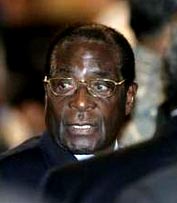 Mandela was the only African leader who dared tell Zimbabwe president Robert Mugabe (right) to step down, but guess who invited the latter home for dinner in Malaysia?
Still, Mandela was not without shortcomings, reveals the outspoken South African archbishop emeritus Desmond Tutu, a fellow Nobel Peace laureate.
Among Mandela's weaknesses was “his steadfast loyalty to his organisation and to some of his colleagues who ultimately let him down, retaining in his cabinet underperforming, frankly incompetent ministers”.
In Malaysia Tutu's words would resound to cries of ‘cronyism’.
“This had laid the seeds for greater seeds of mediocrity and corruptibility that were to come,” said Tutu, who often laments South Africa's post-democratic flaws, according to a report in the Advertiser.
When Mandela retired from political life he did what other good presidents like Jimmy Carter did - he helped the poor and disadvantaged, and joined the fight against Aids, to which he had lost a son.
Step up to ‘Mandela leadership’
Mandela's legacy must speak to a country like Malaysia where race supremacy is still the raison d'etre for the federal ruling coalition’s political agenda.
Those who harbour similar ideas to those of the white supremacists who once oppressed Mandela should not applaud him, for they would be guilty of hypocrisy.
His non-racist ideals can be a strong catalyst and unifying platform for the change Malaysians desperately want but are obstructed from getting due to gerrymandering and malapportionment in the electoral system.
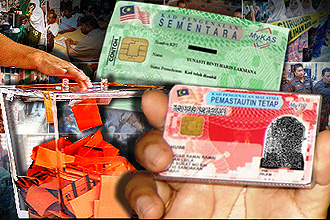 The political playing field is not level. Brainwashing is pervasive, money politics a corrupting ballot-fixer, and there is cheating by way of ‘citizenship for votes’ - these are our obstacles to freedom.
Malaysia was once ahead of South Africa in social cohesiveness and political liberties but Mandela’s nation has leap-frogged us to become a modern democracy.
It required his nation to recant past wrongs and rent asunder the evil doctrine of race supremacy. Even the Dutch Reformed Church that supported apartheid has said ‘sorry’.
But in Malaysia the charade goes on.
Mahathirism and Mandela's ideals are ideological chalk and cheese, and diametrically opposed. Truth and reconciliation would not have been possible in South Africa if Mandela had insisted on a nation built on race supremacy.
There never will be unity in Malaysia, no matter how many unity councils are formed, when the fundamental flaw of a house divided by race and religion exists and those in power depend on the doctrine of racial and religious dichotomy to stay in power.
In Singapore we see diversity as a strength because its government is dead serious about unity and we have seen them renew their determination to strengthen that unity in recent days.
Where there is oppression and inequality and a country is riven by race-based government policies, supported by a network of individuals and groups that divide the country on the pretext of defending race and religion against false enemies, the need for a ‘Mandela leadership’ becomes desperately urgent.
Malaysia's own freedom fighters are no less determined that Mandela was in his fight for justice.
Justice is not about honouring laws or the esoteric province of the courts alone, but a country's moral and social responsibility to honour the rights and dignity of every citizen regardless of race, religion or rank.
There is no justice when there is racial discrimination. The clamour for contracts, as if a God-given right attached to political power, are shameful and indecent.
Will corrupt politicians fiddle like Nero while the country burns? Will there be a Malaysian Mandela to stop them?
While Opposition leader Anwar Ibrahim may never achieve the stature of Mandela, Malaysians may draw inspiration from a man who, although unfairly jailed, has exhibited the forgiving attitude that personified Mandela.
The 'Mandela' thing for the government to do would be to drop all charges against Anwar and patriotic citizens including Haris Ibrahim, who is unfairly facing the false charge of sedition.
Malaysians have reason to hope. They can take courage from history because it is on their side, as the life of Mandela has shown.
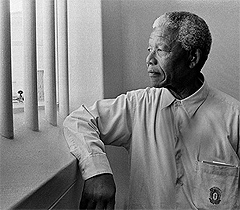 His ideals and aspiration - famously written on a piece of paper while he faced his accusers in court before he was jailed on Robben Island - still speak to us.
He wrote: "During my lifetime I have dedicated myself to this struggle of the African people. I have fought against White domination, and I have fought against Black domination.
“I have cherished the ideal of a democratic and free society in which all persons live together in harmony and with equal opportunities. It is an ideal which I hope to live for and to achieve. But if needs be, it is an ideal for which I am prepared to die."
And he scribbled in April 1964: "The invincibility of our cause and the certainty of our final victory are the impenetrable armour of those who consistently uphold their faith in freedom and justice in spite of political persecution."
Mandela was a political saint for freedom and equality. He lived and died for his people and the world has been a beneficiary of this.
But who will stand in the gap for Malaysia?
STEVE OH wrote the novel and composed the musical ‘Tiger King of the Golden Jungle’. He believes in good governance.


Are you sure you want to delete this comment?
This action cannot be undone.