




'Searchers were looking for Orang Asli kids at home'
The missing students from SK Tohoi could have been found earlier if there had been trust between the authorities and the parents of the missing Orang Asli children, says activist Colin Nicholas.
“There is no trust between the police and the parents,” he told Malaysiakini today.
The Centre for Orang Asli Concerns (COAC) coordinator said the authorities were working on the assumption that the children made it back home and parents were hiding them back in the village.
Parents of the missing pupils, Colin said, thought the children went home, and were looking along logging roads leading towards their village.
“They (the police and parents) were not working together. That is why everything broke down."
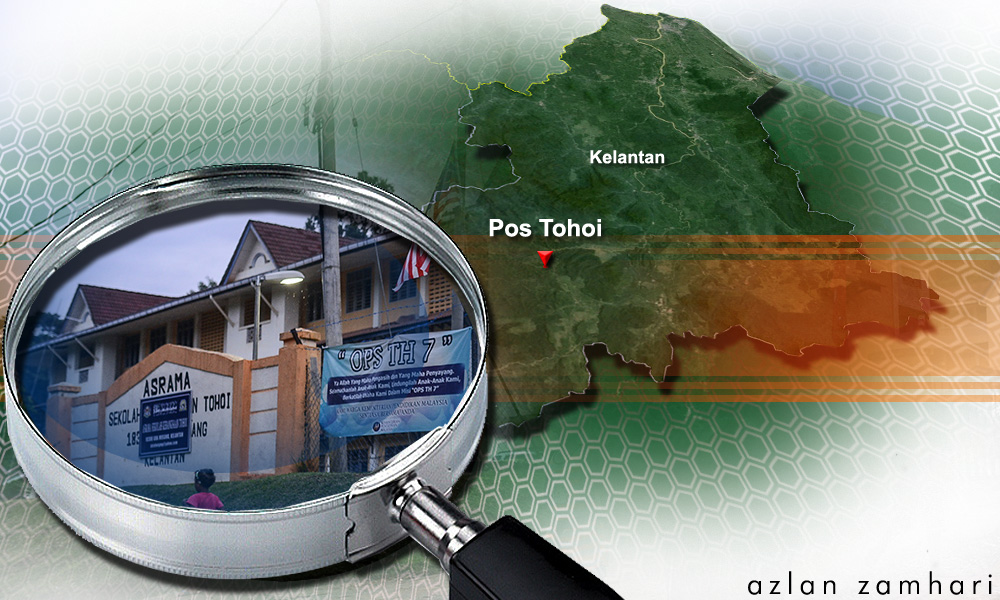 Pos Tohoi is 41 kilometres overland from Gua Musang, and is accessible only through logging trails.
The six girls and a boy - aged between seven and 11 - had been missing from Aug 23, and the first set of remains were found only 47 days later on Oct 8, and two survivors a day later.
The ones found safe were Miksudiar Alui, 11, and Norieen Yaakob, 10, while Sasa Sobrie, eight, and Ika Ayel, nine, were confirmed dead.
The skeletal remains of Juvina David, seven, were identified by her father today.
Police still consider Haikal Yaakob, eight, and Linda Rosli, eight, missing despite the discovery of one more skeletal remains which is yet unidentified.
COAC, on their latest Facebook post, said the seven children were actually the younger siblings of three girls who were "beaten with a stick" earlier for swimming without permission.
"When they found that their elder siblings were missing from school, they had assumed they had gone home, as they had apparently planned in the interim two days, and they too wanted to follow them.
"But the older ones later returned to the school on their own accord or were brought back in the afternoon.
"Only much later that day did the school authorities realise that the seven were missing," said COAC.
Children hiding, not lost
Steps taken in the search are rooted in the strong undercurrents of “prejudice and discrimination” which the authorities have of the Orang Asli community, he argued.
“That is the mindset, in terms of how the (search) operation was carried out."
“If ever anyone is to be blamed, I would say it is in how the search process was organised, how transparent it was, how inclusive it was. It wasn’t. Parents were excluded,” he explained.
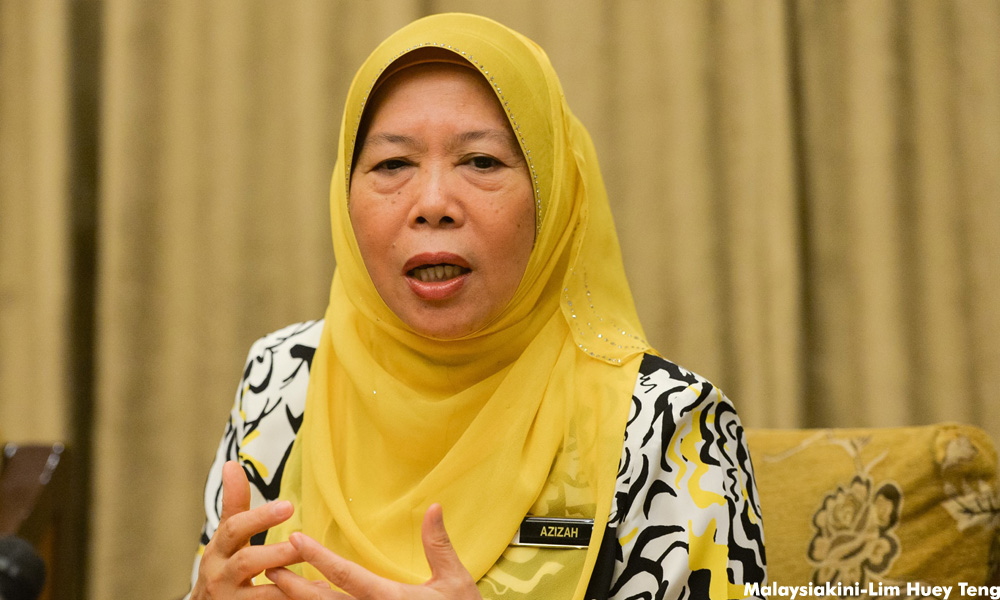 Women, Family and Community Development Deputy Minister Azizah Mohd Dun
(photo)
said the authorities
did all it could
to look for the children.
More than 400 personnel were deployed, involving the police, Fire and Rescue Department, Rela (People's Volunteer Corps), Civil Defence Department, and the Orang Asli Development Department.
The search operations also utilised two RMAF helicopters and tracker dogs but did not get anywhere.
"One of the main reasons why it took so long (for survivors to be found) was that the children were hiding; they were not lost.
"Even when the rescue team sighted them (the two survivors), they had to be coaxed out by Temiar-speaking people to come out," said Colin.
The strategy of the search mission was to look for children missing in the jungle, said Colin.
"The girls were hiding under the roots of trees. If their (the children) intention was to hide, people will not find them. This is compounded by their fear of potential punishment from the school authorities.
 When contacted yesterday, Kelantan Orang Asli Village Network youth chief Dendi Johari
(photo)
said
the Orang Asli folks were looking for the children on the logging roads earlier in the mission.
"Then, our search mission was to focus on the logging tracks. At one point, we even suspected the children were kidnapped. We were at out wits' end," he explained.
Dendi is from Kampung Jader, Pos Simpoh, about four hours drive by 4x4 vehicle away, and has been helping the search from day one.
The community activist said he and other Orang Asli had also explored the area where the remains and the survivors were found.
"We have looked in that area. Maybe we missed it. (But) we have scoured the area," he said.
Senoi Praaq trekkers turned things around
Things turned around only when the Senoi Praaq trekkers, an elite unit of the Royal Malaysian Police made up almost entirely of Orang Asli, were brought in.
"They (the search operation earlier) were not working on the assumption of (children in) extreme fear, hiding, and not wanting to be found.
"If the Senoi Praaq were sent in from the beginning, things would have turned out differently.
"The Senoi Praaq are the most qualified for the search mission. They know the language; some are even from the area. They would put their mind in the mind of the (missing) children," Colin said.
Kelantan police chief Mazlan Lazim said the search will continue for one more missing child.
About 100 SAR team members were scouring the area for the child in the vicinity of Sungai Perias, he was reported by Bernama as saying.
Related reports
'Set up inquiry on possible negligence in Orang Asli tragedy'


Report this comment
Are you sure you want to delete this comment?
This action cannot be undone.