



'Kicked around', Kelantan victims face flood season in tents
“We are like a football, kicked around.”
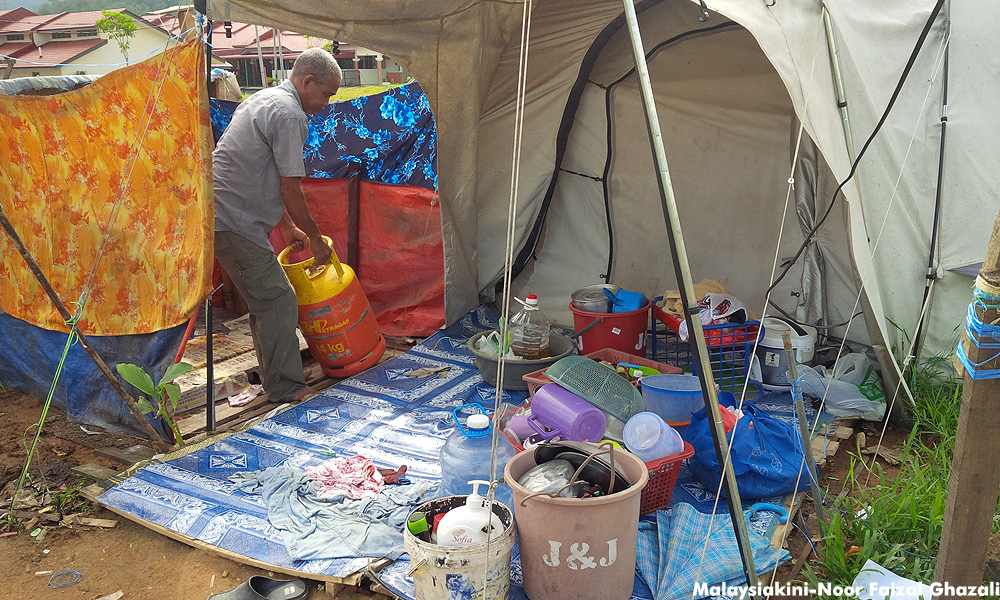
The forty-plus woman, who only wanted to be known as Kak Ju, has been living in a tent since floodwaters which rose in Kelantan a year ago, subsided in January.
“Sometimes we are pushed to the right, and sometimes, we’re pushed to the left,” she said.
Kak Ju and her family are in a bind, because they were already squatting on government land before the 2014 east coast floods which displaced up to 200,000 people.
“We are like a football, kicked around.”
The 40-plus woman, who only wanted to be known as Kak Ju, has been living in a tent since floodwaters which rose in Kelantan a year ago, subsided in January.
“Sometimes we are pushed to the right, and sometimes, we’re pushed to the left,” she said.
Kak Ju and her family are in a bind, because they were already squatting on government land before the 2014 east coast floods which displaced up to 200,000 people.
 If they had their own land, she said, the house she saw ravaged by the raging waters last December could have been replaced with the help of many aid agencies.
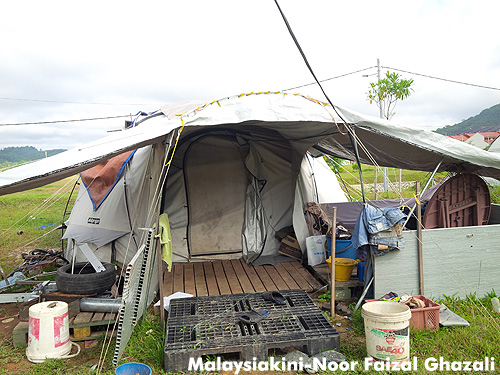
Tired of being kicked around, Kak Ju and her husband decided to stay put in the National Security Council tent with their three children in Bandar Utama, Gua Musang, and bear the risk as the flood season rolls by again.
They are defying the government’s instructions to move to a National Service camp in Taman Etno Botani in the same district.
The decision to dig their heels in was not to seek sympathy, she said, but because living in a tent was more comfortable than a cramped dormitory.
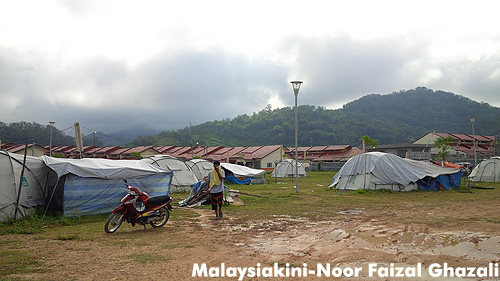
“There are less people here now, while it is really cramped there. We’re more comfortable here.
“Even if we move there, we know we would have to shift again when the National Service term starts,” she said when met recently.
Kak Ju’s family is one of five still living in tents in the area which was first set up for displaced persons in the district.
They are still waiting for new homes, promised by many agencies.
“Many people have come to meet us. We’re confused. So many of them claim they will give us homes, even before we were moved here.
“But we still have yet to get a clear guarantee of when we will get these homes. It’s all turning into rumours,” the housewife tells Malaysiakini.
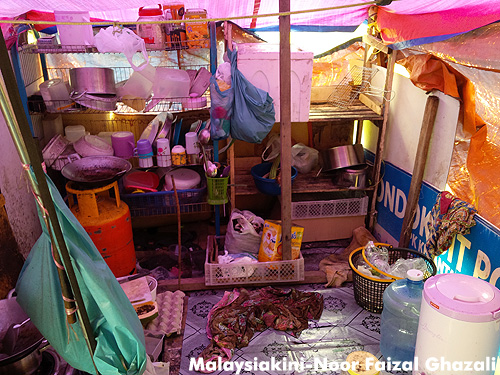
Unlike those in the National Service camp, Kak Ju and other tent-dwellers prepare their food and the stream of aid that came from well-wishers soon after the floods have run dry.
“We cannot afford to rent a house, rent is just too high. We were once promised rented premises by an NGO, but even that did not pan out,” she said.
Another tent-dweller, who only wants to be known as Abang Lah, said his family was torn over whether to move to the National Service camp.
Abang Lah, who is in his 50s, was reluctant to speak to the media, claiming that his statements had been misconstrued before.
“It’s a lot easier for us to run our business if we live here. Space at the National Service camp is limited, we cannot keep our trading wares anywhere.
“We also have a lot of thing to carry, so it is complicated to move,” said the goreng pisang seller.
Kelantan was worst hit in the 2014 floods, with floodwaters breaching the levels of the flood of 1967 which crippled the state.
The Kuala Krai district suffered the most, with 1,927 homes washed away.
Recorded rainfall was 1,295 mm after three days of non-stop rain in Gua Musang, the equivalent of 64 days of rain on average days.
Today about 100 families are still homeless, although some have been given keys to their new homes in time for this year’s monsoon.
Part 1 : Victims still wait for homes, a year after the floods


Are you sure you want to delete this comment?
This action cannot be undone.