


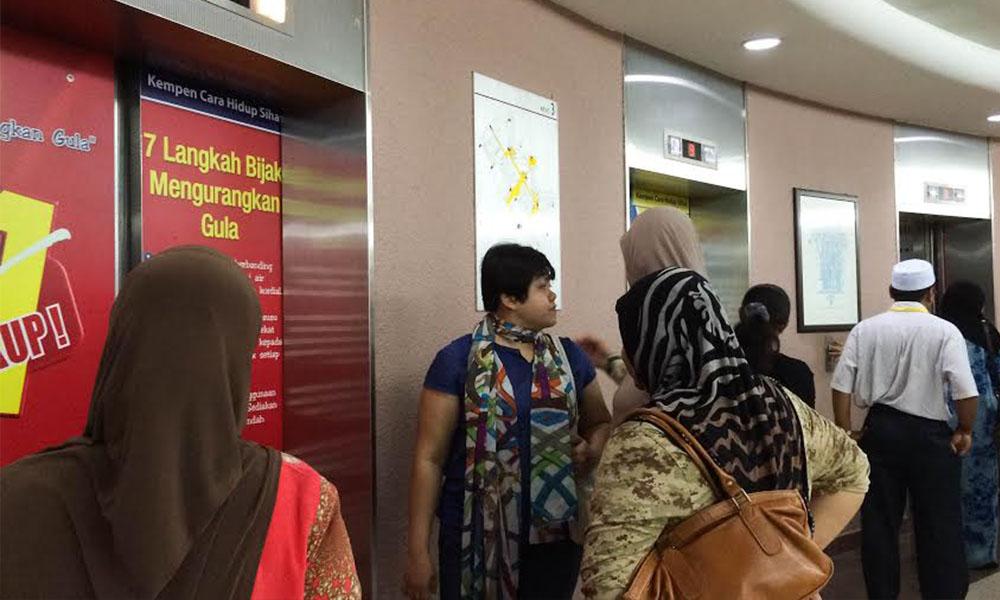

Hospital horror - after air-con glitches, now lifts malfunction
SPECIAL REPORT After malfunctioning air-conditioning units left patients and healthcare professionals sweating in several public hospitals, lifts that fail to rise to the occasion have left staff and patients huffing and puffing in another hospital.
‘Another Malaysian hospital horror story’, reads the title of an email sent to Malaysiakini , upon inquiries sent asking for further tales of nagging concerns behind the doors of our local public hospitals.
In the first of this three-part special report, we take a closer look at one hospital feeling the impact of a government policy - introduced in 1997 for a 15-year period - to appoint third-party companies as Hospital Support Services (HSS) providers.
Despite having appointed private contractors as HSS providers in charge of performing general maintenance works, the Health Ministry has, on various occasions, been forced to step in – at an additional cost – to ensure that patients and staff alike would not have to endure further sufferings.
This particular story from a hospital down south - Hospital Sultanah Aminah Johor Baru (HSAJB) - follows a recent series of news reports last month on air-conditioning units breaking down in public hospitals in Kuantan, Selayang, Malacca and Segamat.
Of course, this is in addition to previous tales of collapsing roofs, lack of medical equipment and the all-too-common concerns of overcrowding in wards.
In any case, here is what the writer of the email below, who does not want to be named, has to say on malfunctioning lifts at the hospital, which is now close to 150 years old.
‘ Ongoing upgrading works’
"HSAJB consists of many blocks – there is a main building that houses the surgical sub-specialities, and there are a few other blocks for the pediatric and internal medicine units. In the department I work in, the two blocks that house our patients have been affected over the past two weeks by non-functioning lifts.
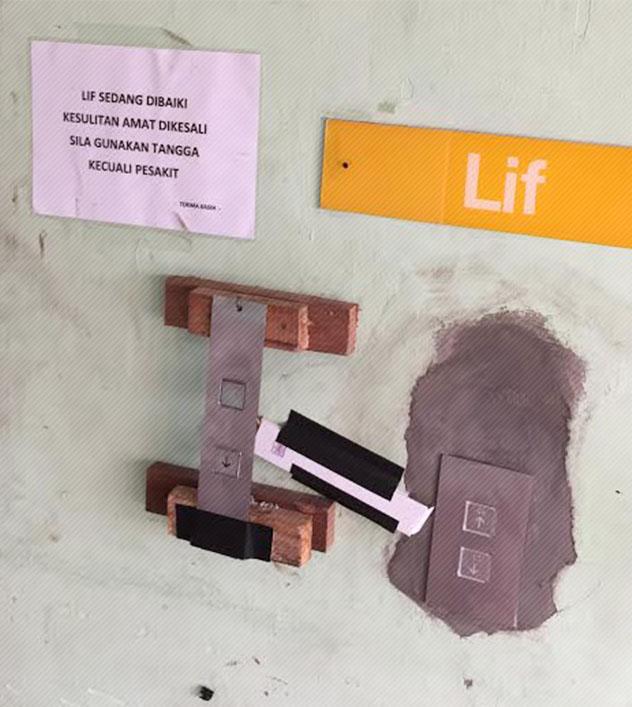
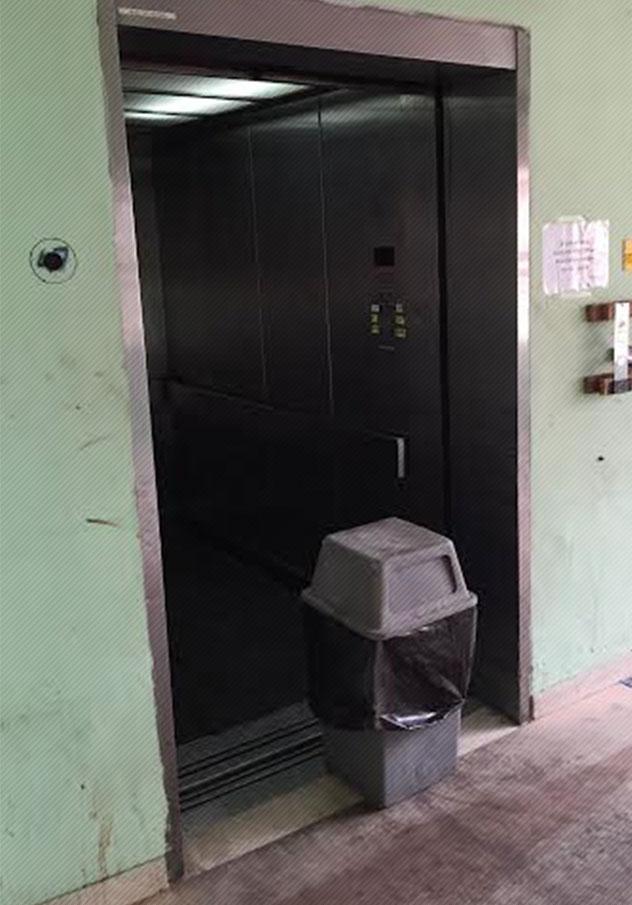 "These two blocks have been using two lifts ever since they were constructed (in the late 1990s, I think) and as long as I have been working here, they have been frequently out of order. Over the past three months or so, the lifts have been in the process of being ‘upgraded’ but the work has been painfully slow.
‘ Patients forced to climb four flights of stairs’
"In most buildings and under most circumstances, this would not be a major problem and people would just walk up the stairs while grumbling. But this is a hospital. With sick people. In fact, most of them are very sick.
"What the hospital has been doing over the past fortnight is make the ‘well’ patients walk up three to four flights of stairs, and place the sicker patients in the lower two wards that are accessible by another lift in another block connected by an elevated walkway or the pathway on the ground floor.
"This has resulted in sick people, who are not supposed to exert themselves climbing up four flights of stairs, and similarly ill people who have already been warded earlier, encountering much difficulties getting down the same flights of stairs to get to the ground floor.
"These warded patients have to make this trip down because of a variety of reasons – either they need to be discharged, or they have scans to get done, or they need some other form of medical therapy or intervention, which requires them to be in some place else.
‘ Added burden to hospital staff’
"As you can imagine, a lack of access via these lifts also prevents important procedures and investigations which require large machines from reaching the patients.
"I cannot count the number of times I have had to get help to carry these patients down these flights of stairs just so they could go home, or go off and do a scan, or for whatever other reasons.
"We have to place the patient on a wheelchair, hoist him or her up, and inch our way downwards through a slippery and poorly-lit stairwell, step by step.
"Obviously, carrying patients down like this is dangerous, not just for the patient but also for those doing the heavy lifting. One fall and atr least five people will be warded, not just one.
‘Imbalanced system compromises patients healthcare’
"When patients are allocated wards based on something as illogical as lift access, it makes the wards very bottom-heavy in terms of workload.
"The wards on the lower floors get all the ill patients coming in on stretchers and wheelchairs, and the wards with only stair access get patients who can walk and are for most of the time, less ill.
"An imbalanced system such as this, coupled with logistic difficulties for getting important tests and treatments carried out compromises the health care of the patient. It endangers patients' lives because we cannot do whatever little we previously could manage, with the strained resources we have.
"It tires and burns out the workforce unjustifiably, and it unbalances an already lopsided system.
‘ Perfect representation of bigger problems’
"What irks me to no end is that this is not a new problem to this hospital. I understand that for such an old building that experiences such an immense amount of human traffic, lift breakdowns are expected. But months to fix a lift?
"No information or updates to the people who need the lifts the most? In one of the biggest hospitals in Malaysia? That’s utter rubbish. This issue with the lifts is just a tiny, but perfect representation of the problems that plague our healthcare system.
"To me, it seems like we spend whatever little finances we have servicing a bloated and ineffective government workforce, and very little on actually improving the other parts of the machinery which are sorely lacking.
"Things like facilities, technology, medications and training of healthcare staff. Things like functioning lifts."
Malaysiakini understands that some of the lifts must be completely replaced and this is beyond the regular maintenance service provided by Pantai Medivest Sdn Bhd, the HSS provider appointed for hospitals in the southern region.
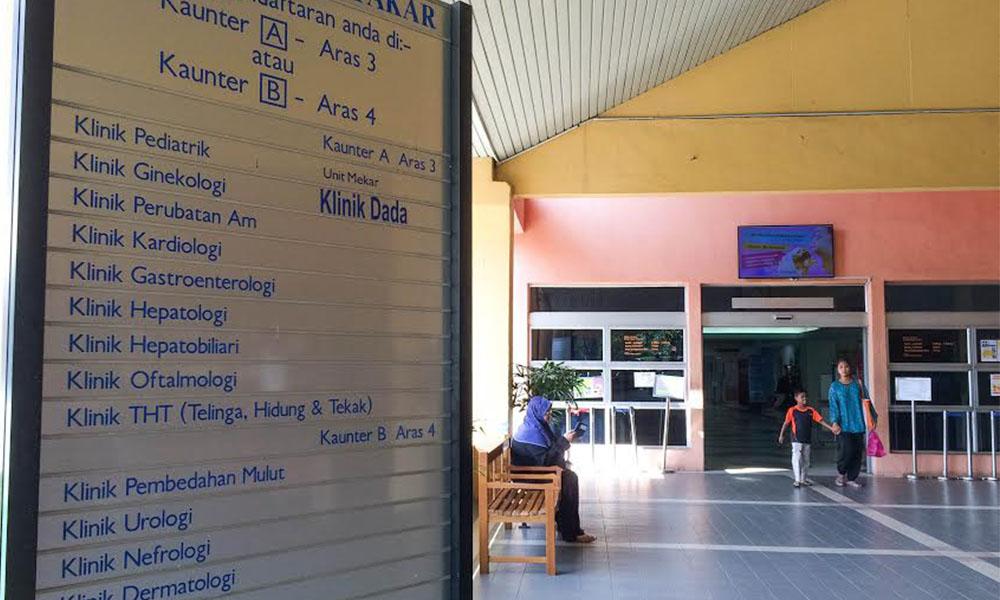 “The lifts are already being upgraded. In the meantime, everyday there is a staff from Medivest on standby but for the lifts that need to be replaced, it would take time because most of the parts need to be imported,” said a source who declined to be named.
“We (the hospital) have no control over the contractors because any project worth more than RM500,000 will be handled by the Health Ministry,” said the source.
Malaysiakini has contacted HSAJB director Dr Rooshaimi Merican Abdul Rahim Merican for an official response.
After nearly a month, Malaysiakini was made to understand that Rooshaimi’s response has been forwarded for approval by the Johor Health Department.
Following the government’s decision to liberalise the public healthcare centre, three companies were awarded a 15-year HSS contract that was reported to be worth RM7.5 billion.
One of the companies even had its concession agreement renewed for another 10 years.
In an email response, a representative from Pantai Medivest told Malaysiakini that they cannot disclose any report on the condition of hospitals under its management without prior consent and approval from the Health Ministry.


Report this comment
Are you sure you want to delete this comment?
This action cannot be undone.