


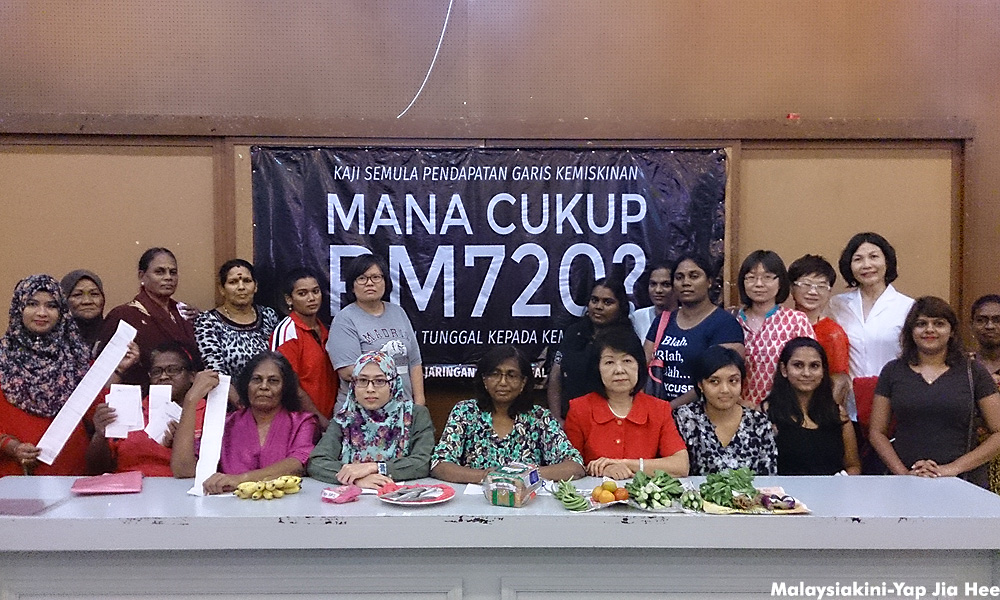

Not enough being done to help single mothers, says NGO
Not enough is being done to help single mothers, said NGO Jaringan Ibu Tunggal (JIT), which has been fighting to represent the target group and ensure that their welfare are being given the attention they deserve by authorities and civil society.
Speaking at a press conference, JIT pointed out that first of all the RM720 baseline poverty mark used by the Women, Family and Community Development Ministry to gauge on if a single mother household require assistance, is way off the mark, as the recent hike in living costs would have pushed the poverty mark to higher than that.
Not enough is being done to help single mothers, said NGO Jaringan Ibu Tunggal (JIT), which has been fighting to represent the target group and ensure that their welfare are being given the attention they deserve by authorities and civil society.
Speaking at a press conference, JIT pointed out that first of all the RM720 baseline poverty mark used by the Women, Family and Community Development Ministry to gauge on if a single mother household require assistance, is way off the mark, as the recent hike in living costs would have pushed the poverty mark to higher than that.
JIT argued that the amount is definitely not enough, after taking into account food and other basic necessities, and found that the poverty-line for single mothers living in cities should be RM1,500 a month.
This differs from calculations by the ministry which claimed that RM720 monthly is enough for urban single mothers to get by.
JIT expressed its disappointment with the ministry which still uses what they believe are outdated and irrelevant poverty line measurement which does not reflect the reality of today's higher living costs.
Thus, the NGO urged the ministry to increase the poverty line measurement for single urban mothers to RM1,500 monthly, as RM720 per month is not sufficient.
Ministry guidelines stated that the amount should include enough money for the minimum requirements of food and non-food basic needs to ensure the entire household remains healthy as measured by the World Health Organisation's balanced diet concept.
However, the poverty line calculations by JIT showed that using current cost of living as a guide, just food and other basic needs needed by a single mother and a family of four children, would cost RM1,725.
Among the basic foods used by JIT in its poverty line calculations are rice, milk powder, flour, dhal, cooking oil, shallots, anchovies, mee hoon, fish, chicken, sardines, vegetables, fruits and bread.
While other non-food needs included people's housing project (PPR) rental, school bus fees, pocket money, stationary expenditures, tuition, kindergarten fees, day-care fees, electricity bill, water bill, telephone bill, car installments, petrol, medical and clinical charges.
RM720 poverty line indicator as irrelevant
JIT coordinator Veronica Anne Retnam said their baseline is based on a member household which is for a single mother with four kids, two in primary school, one in kindergarten and one in a day-care centre.
She also added that their poverty line calculations used cheaper food prices in wet markets as opposed to the supermarket retail costs which would have been higher.
"We find the RM720 poverty line indicator as irrelevant and must be recalculated in line with rising living costs. We recommend that the poverty baseline be set to RM1,500 a month," said Veronica.
The NGO posited that because of the difference between the outdated ministry poverty baseline and real life conditions, many single mothers who are in need of assistance may have fallen through the cracks in the system and left to fend for themselves.
In light of this, Veronica wants the government to work harder to ensure that aid reaches all single mothers, which must also include realignment of the poverty baseline culculations.
"We are made to understand that 61,600 single mothers have been given assistance totaling to RM151 million in aid, but statistics from parliamentary replies show that there are 830,000 single mothers nationwide, way more than the ones helped.
"Does this mean that all the others have no problems making a living, or are there reasons why the Welfare Department's aid did not filter down to all the majority of the women in the target group.
"We want to know who are the target groups (and how many have been reached) in the Single Mother Empowerment Action Plan launched in 2015?" she asked.
Other than updating the poverty line for single mothers, JIT called upon the ministry to give more publicity to the counseling service provided by the Welfare Department for single mothers so that they know they have a place to turn to when faced with problems.
Veronica said due to lack of officers and publicity, a lot of single mothers as well as victims of domestic abuse are left to fend for themselves.
JIT also proposed that the ministry expand the numbers of day-care centres managed by Welfare Department by purchasing low cost houses in PPR areas to operate as child care facilities.
"The ministry announced that it has only 149 child care centres nationwide, which is not sufficient.
"We propose that each PPR should have its own child care facility," said Veronica.
JIT also urged the ministry to work with the Land Public Transport Commission (Spad) to issue special transport passes for single mothers to provide discounts or even free transportation.
She argued that the problems of transportation can be quite a problem for single mothers who once depended on their husbands to move around. The same is also true for wives whose husbands are incarcerated, in rehabilitation and the like.
"How far is this need of single mothers being looked after by the Welfare Department and are they being given specific attention?" she asked.
Dissatisfied with feedback from ministry
JIT also proposed that the government give a special quota for single mothers in every low-cost housing projects as well as give them a special price, lower than that in the open market.
The group said such measures will go far in helping to reach more single mothers in need of help.
But indeed, more tellingly for the NGO of how bad the situation on the ground is, is that the above demands are not new as they have met with Deputy Women, Family and Community Development Minister Chew Mei Fun on July 14 last year and have sent in the same list of demands prior to this.
However the NGO is still dissatisfied with the feedback from the ministry in relation to the issues that they hae raised and will continue to apply pressure so that their demands will finally be met.
In conjunction with International Women's Day, JIT urged the ministry to pay more attention to problems faced by single mothers.


Are you sure you want to delete this comment?
This action cannot be undone.